Green-cracking Russula vs Yellow Knight
Russula virescens compared with Tricholoma equestre — how to tell them apart in the field.
This is a dangerous confusion.
At least one of these species is toxic. Never eat a wild mushroom based on a photo comparison alone — verify with local experts.
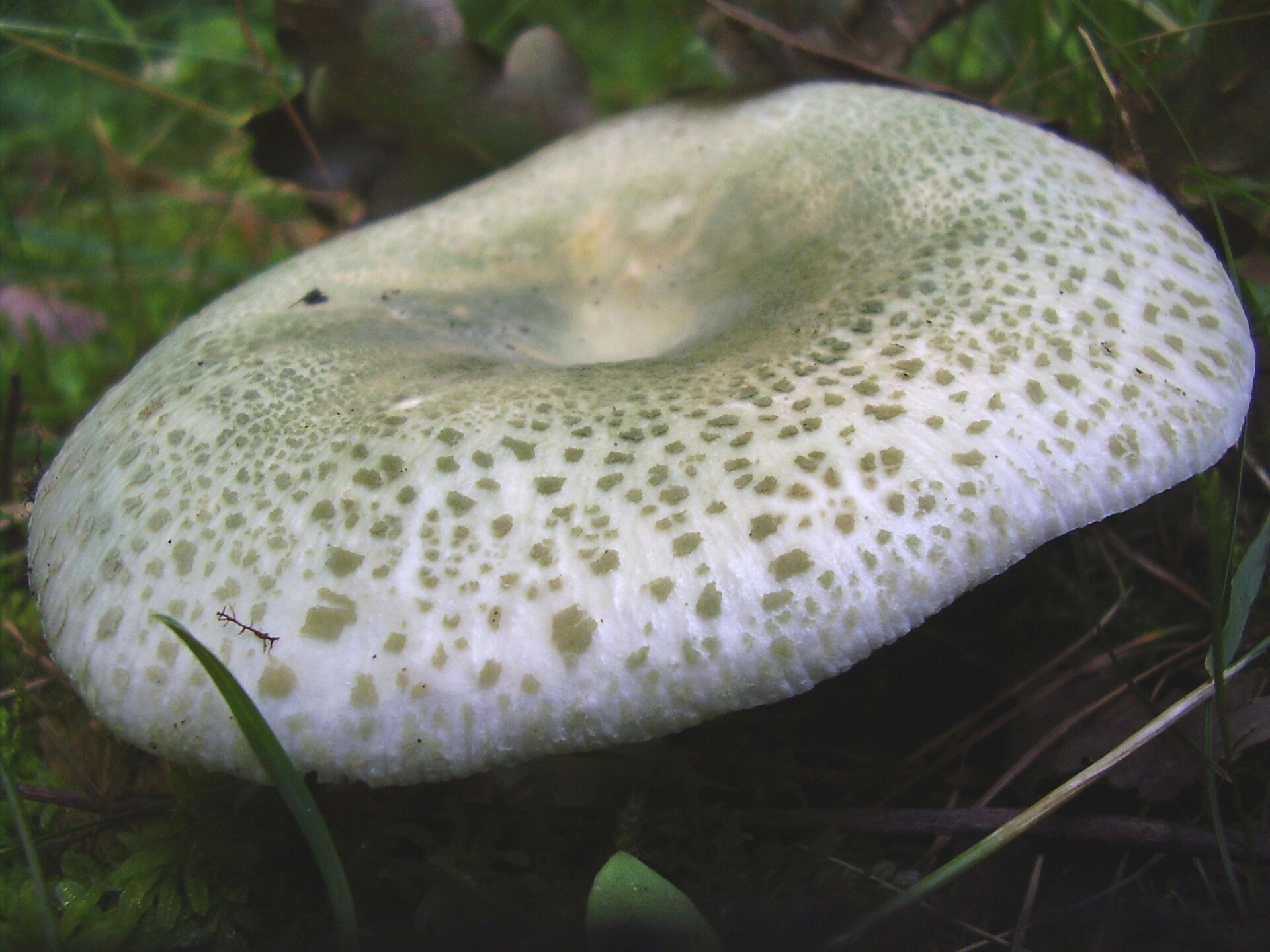
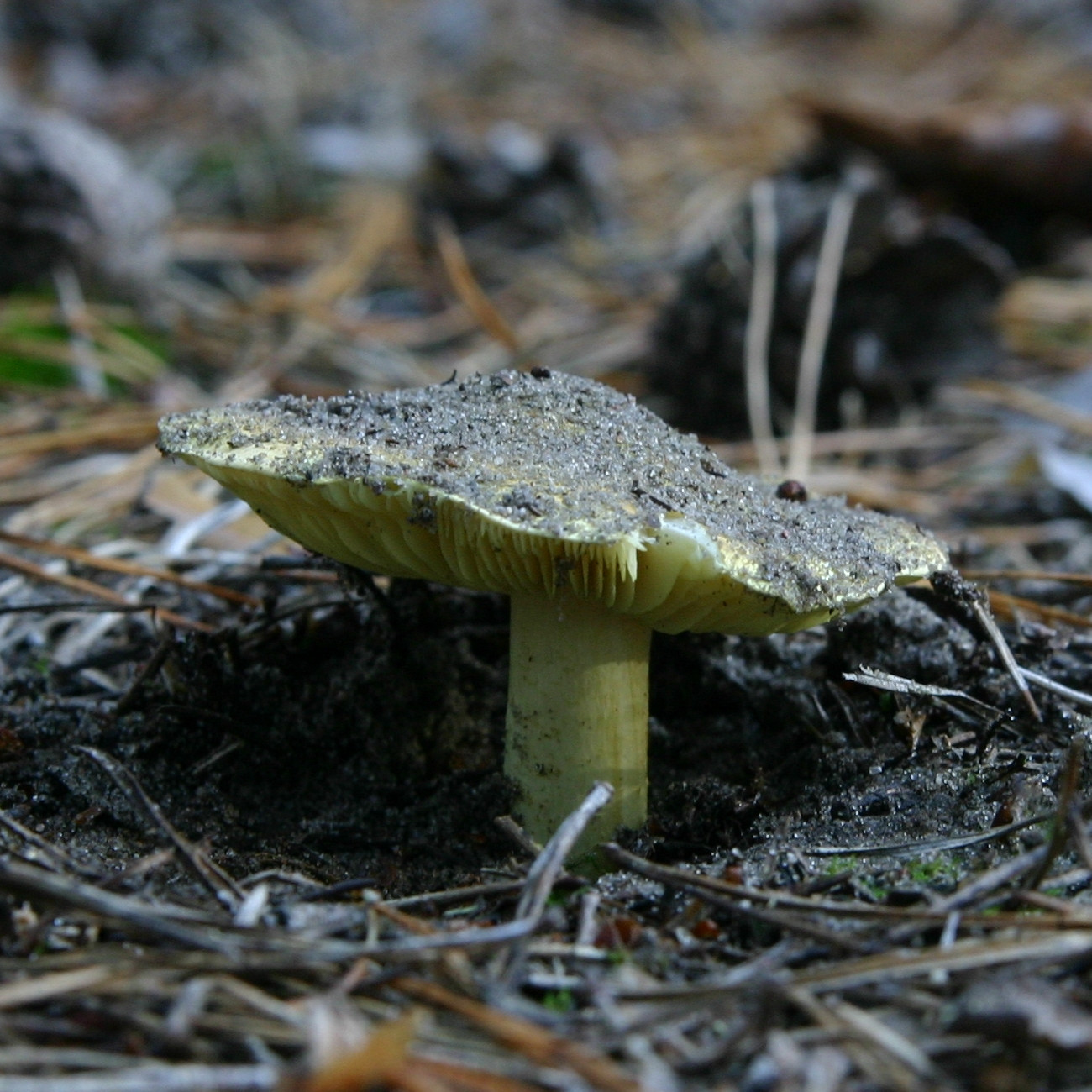
How to Tell Them Apart
Has a green-cracked cap surface (like dried mud) and brittle white gills. Completely different texture: Russula gills snap cleanly when pressed. A prized edible with no known toxicity.
Side-by-Side Identification
| Trait | Green-cracking Russula | Yellow Knight |
|---|---|---|
| Cap | 5-15 cm across. Convex when young, flattening with a slight depression in the center at maturity. The surface is the key feature: the cuticle (skin) cracks into a distinctive mosaic pattern of green, blue-green, or sage-colored patches separated by whitish cracks. The effect looks like cracked plaster or dried mud. Color ranges from pale mint green to deep verdigris. | 5-12 cm across. Convex, flattening with age. Bright greenish-yellow to sulfur-yellow, often with brownish tones at the center. Surface smooth, slightly sticky when wet. Often has soil particles stuck to it. |
| Gills | White to pale cream, closely spaced, brittle (they snap cleanly rather than bending, a classic Russula trait). Attached to the stem or slightly free. Do not change color significantly with age. | Bright sulfur-yellow, sinuate (notched at the stem), closely spaced. The vivid yellow color is distinctive and persistent. |
| Stem | 4-8 cm tall, 2-4 cm thick. White, solid, sturdy. No ring, no volva. Surface is smooth to slightly mealy. The flesh is white throughout, firm, and does not change color when cut. | 4-8 cm tall, stout, pale yellow to sulfur-yellow. Solid and firm. No ring. Often partially buried in sandy soil. |
| Spore print | White to very pale cream. | White. |
| Odor | Mild, pleasant. Slightly nutty. No strong or distinctive smell. | Mealy or farinaceous (like fresh flour). Pleasant. |
| Habitat | Mycorrhizal with deciduous hardwoods, especially oaks (Quercus spp.) and beeches (Fagus spp.). Found in deciduous and mixed forests, along paths and forest edges, and in well-drained soils. Prefers slightly acidic to neutral soils. Often fruits on slopes and ridges rather than in wet bottomlands. | Mycorrhizal with pines, especially Scots pine and maritime pine. Found in sandy pine forests, coastal dunes with pine plantations, and dry sandy heathlands. Strongly associated with poor, sandy soils. |
| Season | June through October, with peak fruiting in July and August in most of its range. One of the earlier Russula species to appear each season. | October through December. A late-season mushroom that fruits after most other species have finished. |
Found one of these in the wild? Don't rely on memory — identify it from a photo with Orangutany and check it against both species before you touch it.