Teonanácatl vs Liberty Cap
Psilocybe mexicana compared with Psilocybe semilanceata — how to tell them apart in the field.
This is a dangerous confusion.
At least one of these species is toxic. Never eat a wild mushroom based on a photo comparison alone — verify with local experts.
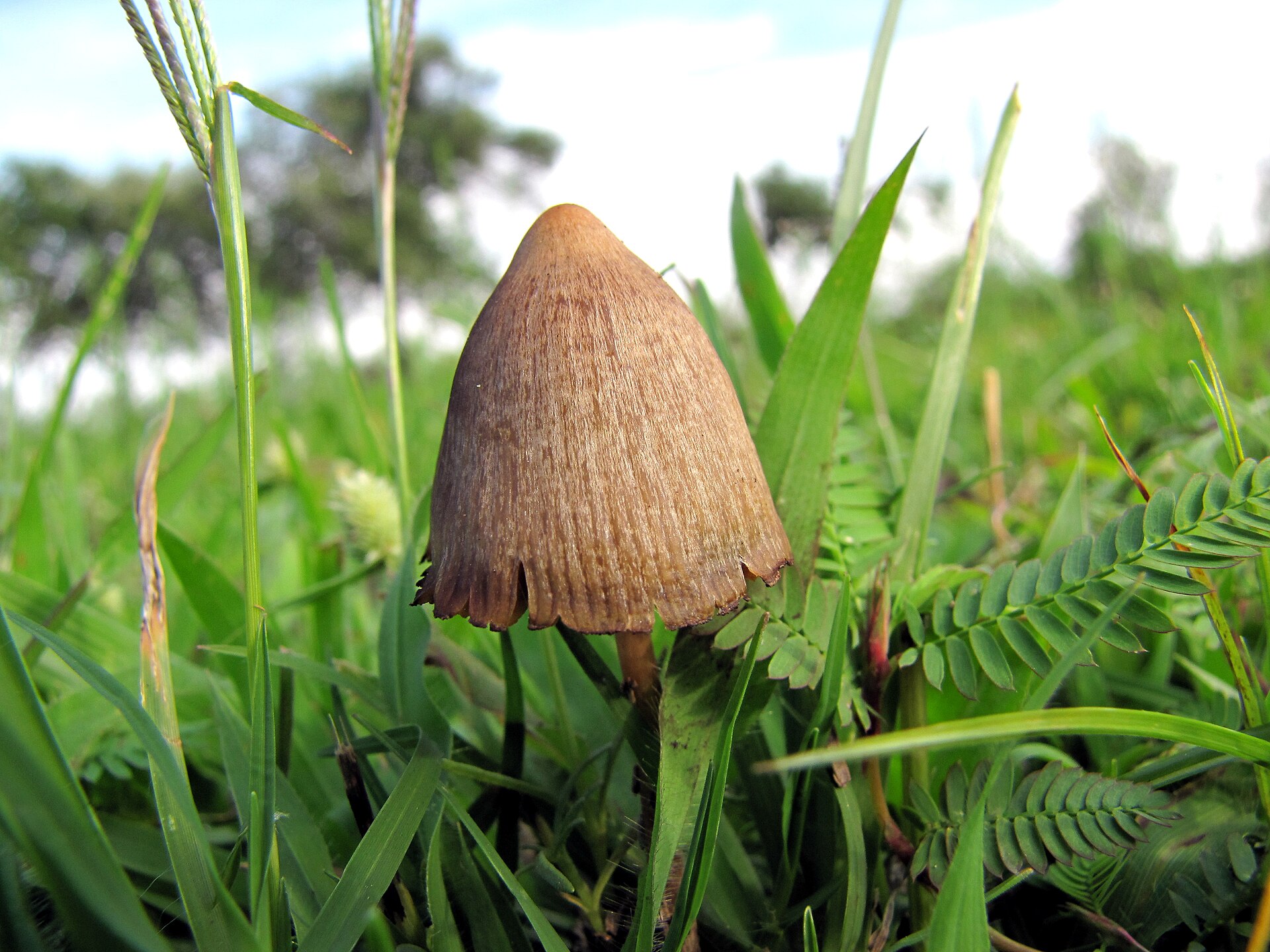
Teonanácatl / Mexican Magic Mushroom
Psilocybe mexicana
ToxicPsychoactive
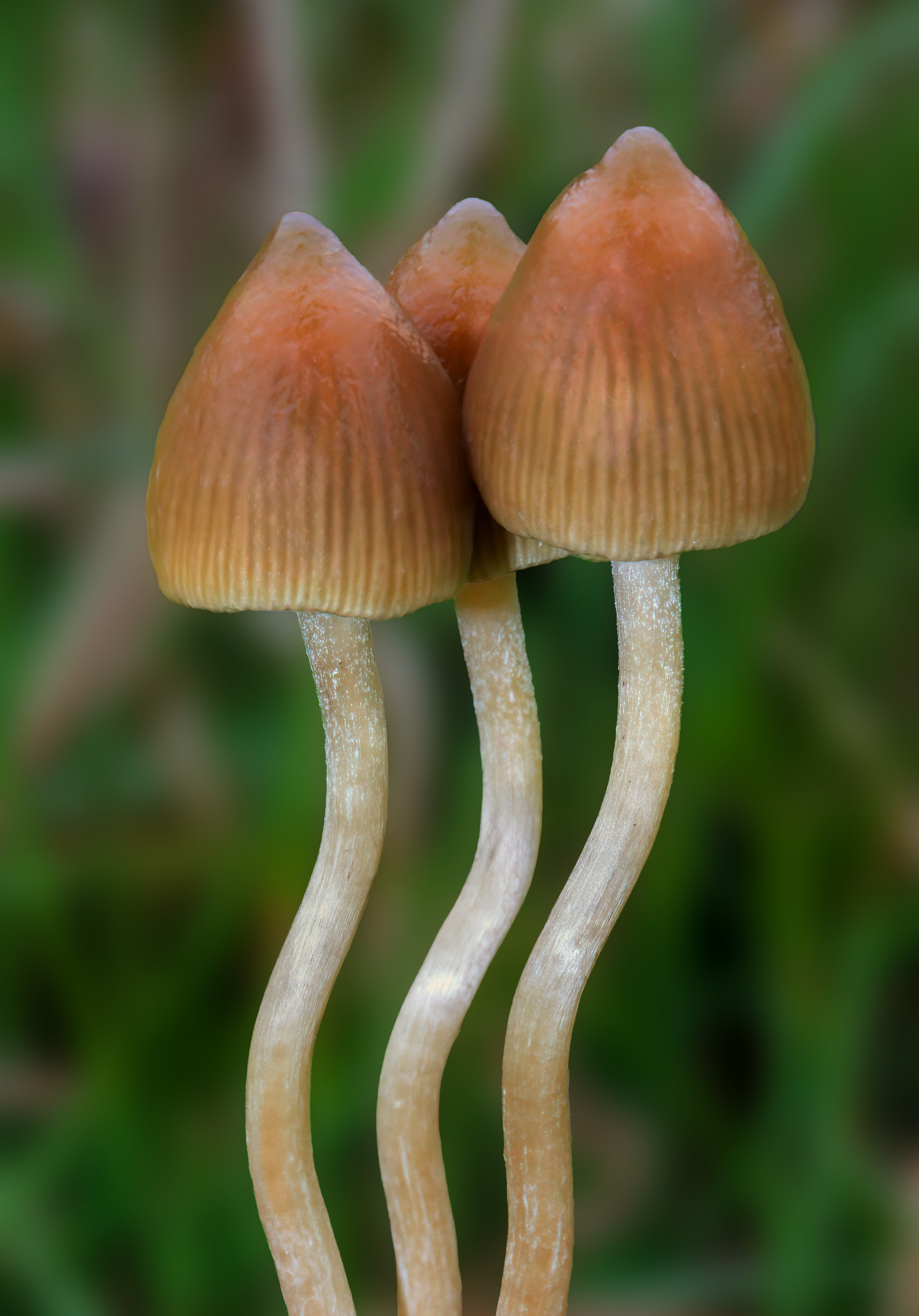
Liberty Cap
Psilocybe semilanceata
ToxicPsychoactive
How to Tell Them Apart
Similar small size and conical cap, but grows in cool temperate grasslands of Europe and North America, not tropical highlands. Has a more pronounced nipple-like umbo and gelatinous pellicle.
Side-by-Side Identification
| Trait | Teonanácatl | Liberty Cap |
|---|---|---|
| Cap | 1-3 cm across. Conical to campanulate (bell-shaped), sometimes with a small umbo. Straw-yellow to brown, darker when moist, paler when dry. Surface smooth, slightly hygrophanous. Margin sometimes slightly translucent-striate when wet. | 0.5–2.5 cm across. Distinctly conical to bell-shaped with a pointed nipple (umbo) at the top that persists even when the cap opens. Cream to light brown when dry, darker olive-brown when wet. The surface has a translucent, slightly sticky quality when moist — you can see the gills through the cap if you hold it up to light. Develops a wavy margin with age. |
| Gills | Adnate to adnexed, moderately spaced. Gray to purple-brown at maturity. Edges whitish. | Narrowly attached to the stem (adnate). Start pale grey, mature to dark purple-brown as spores develop. Edges remain lighter — a white or pale fringe along the gill edge is a good diagnostic feature. |
| Stem | 4-12 cm tall, 1-3 mm thick. Thin, wiry, and flexible. Yellowish to reddish-brown, darker toward the base. Hollow. May show faint blue-green bruising when handled. | 4–10 cm tall but only 1–3 mm thick — extremely slender and wiry. Pale cream to yellowish, often with a slight blue-green tinge at the base when handled. Tough and flexible — you can bend it without it snapping. No ring. |
| Spore print | Dark purple-brown. | Dark purple-brown to blackish. Essential for confirming ID — many small brown mushrooms look similar but have different spore colors. |
| Bruising | Blue-green bruising on stem and cap when damaged, though often faint. Indicates presence of psilocybin. | — |
| Odor | — | Slightly musty, like damp hay. Nothing distinctive. |
| Habitat | Grows in small groups on mossy, grassy slopes and trails in subtropical cloud forests, often among mosses and grasses at elevations of 1,000-1,800 meters. Also found in meadows and roadsides at the margins of forests. Occasionally in disturbed grassy areas. | Unimproved grasslands — sheep and cattle pastures that haven't been treated with artificial fertilizers. Grows in the grass, not on dung. Loves acidic, boggy soil. Often found on hillsides, moorlands, and old meadows. Doesn't grow in gardens, forests, or plowed fields. |
| Season | May through October, corresponding with the rainy season in southern Mexico and Central America. Peak fruiting in June through August. | September through November in the Northern Hemisphere. Triggered by the first cold rains after summer — usually when night temperatures drop below 10°C. Peak season is mid-September to mid-October in the UK and Northern Europe. |
Found one of these in the wild? Don't rely on memory — identify it from a photo with Orangutany and check it against both species before you touch it.