Flying Saucer vs Blue Ringer
Psilocybe azurescens compared with Psilocybe stuntzii — how to tell them apart in the field.
This is a dangerous confusion.
At least one of these species is toxic. Never eat a wild mushroom based on a photo comparison alone — verify with local experts.
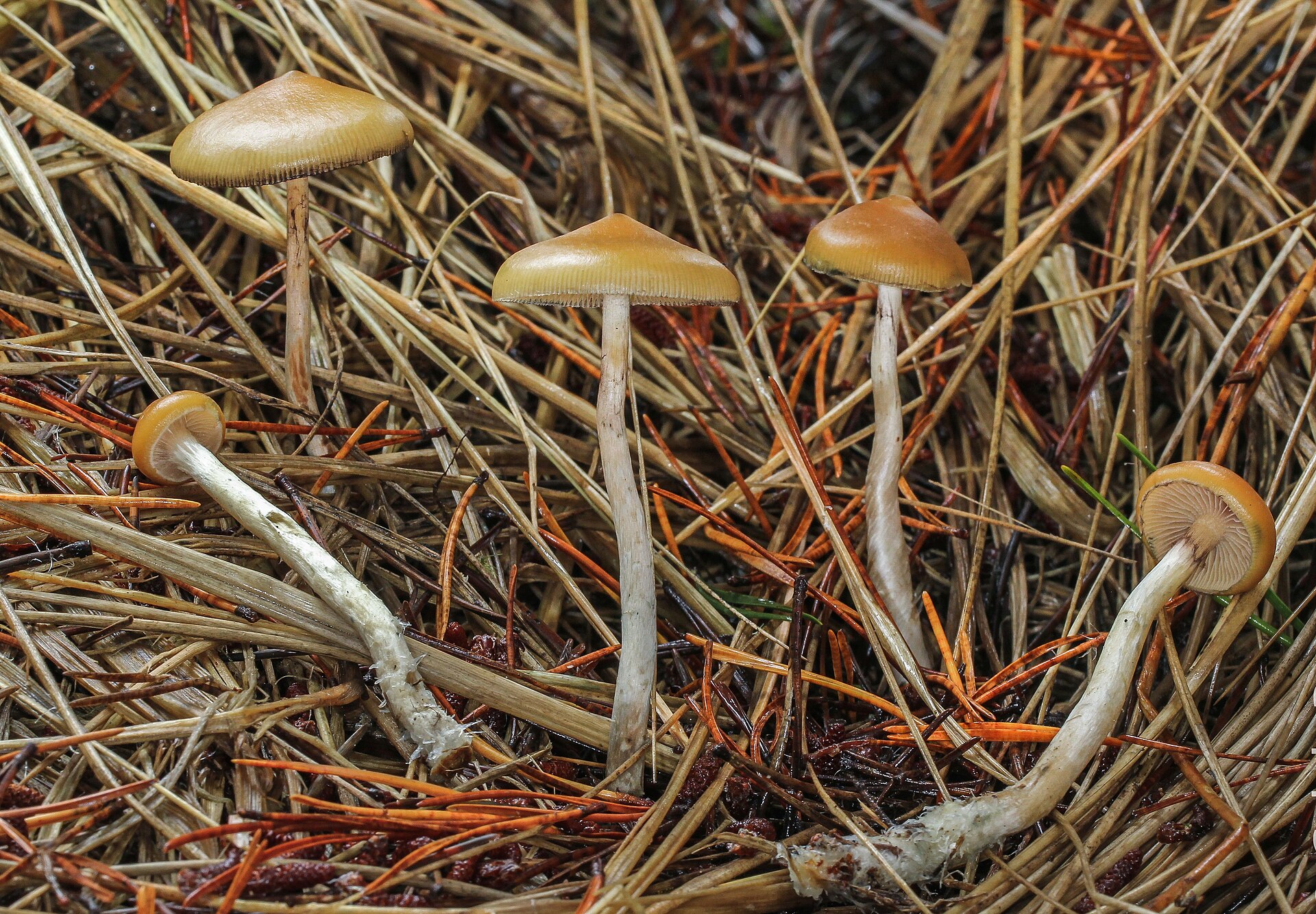
Flying Saucer
Psilocybe azurescens
ToxicPsychoactive
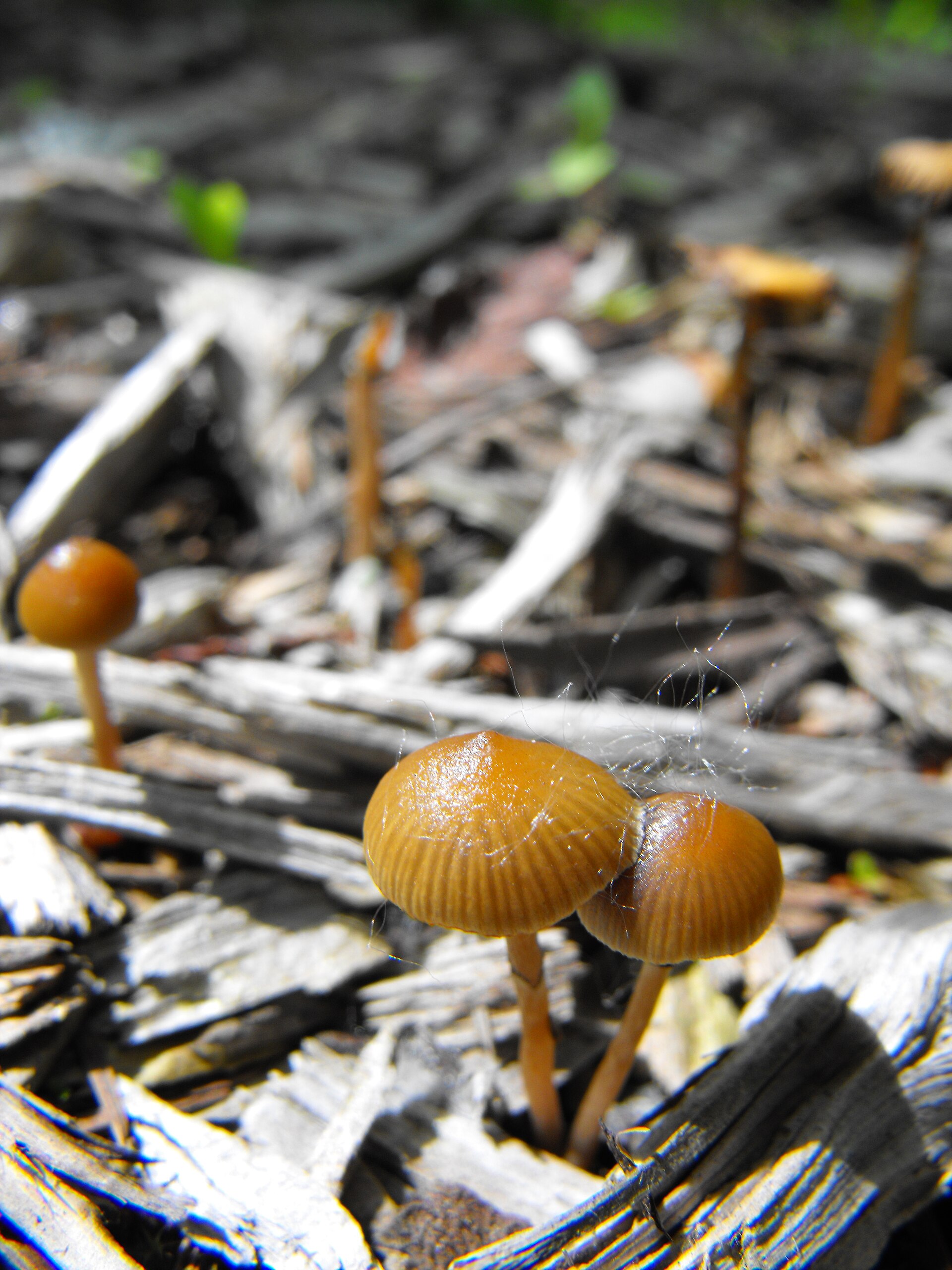
Blue Ringer / Stuntz's Blue Legs
Psilocybe stuntzii
ToxicPsychoactive
How to Tell Them Apart
Larger and more potent, with a caramel-colored cap and broadly convex shape. Primarily coastal, growing in dune grasses and sandy soils rather than wood chips. The most potent known Psilocybe species.
Side-by-Side Identification
| Trait | Flying Saucer | Blue Ringer |
|---|---|---|
| Cap | 3-10 cm across. Convex, expanding to broadly convex or flat with a pronounced central umbo. Caramel to chestnut brown when moist, drying to a pale straw color or buff (strongly hygrophanous). Surface is smooth, slightly viscid when wet, often with a silky sheen when dry. Bruises intensely blue-black. | 1-4 cm across. Convex to broadly convex or nearly flat with age. Dark olive-brown to chestnut-brown when moist, drying to yellowish-tan or straw-colored from the center outward. Hygrophanous with a characteristic dark marginal band. Surface smooth, slightly sticky when wet. Pellicle separable. |
| Gills | Broadly attached (adnate) to slightly descending. Two-toned: pale brown at first, darkening to dark chocolate-brown or purple-brown. Bruise blue-black when damaged. Edges may be slightly lighter. | Adnate to slightly decurrent, close. Pale brown when young, becoming dark purple-brown as spores mature. Edges may appear slightly lighter. |
| Stem | 9-20 cm tall, 3-6 mm thick. White, silky-fibrous, often curved at the base. Bruises intensely blue throughout. Has a fibrous annular zone from the partial veil, often stained dark by deposited spores. Base densely covered with white rhizomorphs that bind into the sandy substrate. | 3-6 cm tall, 2-4 mm thick. Whitish to pale brownish, darkening toward the base. A fragile partial veil leaves a thin annular zone that often catches purple-brown spores, creating the "blue ring" when it bruises. Bruises blue-green. |
| Spore print | Dark purple-brown to purple-black. | Dark purple-brown. CRITICAL: must distinguish from Galerina marginata's rusty-brown spore print. |
| Bruising | — | Blue-green bruising on stem and cap, often visible on the annular zone. The ring area frequently appears blue-green from combined spore deposit and bruising. |
| Odor | Farinaceous (mealy), similar to fresh flour or cucumber. | — |
| Habitat | Saprotrophic on decaying wood buried in sandy coastal soils. Associated with European beachgrass (Ammophila arenaria) and coastal dune environments. Grows in sandy, wood-rich substrates, including driftwood deposits, woody debris piles, and wood chip mulch near the coast. Strongly associated with the maritime climate of the Pacific Northwest coast. | Wood chips, bark mulch, freshly landscaped areas, garden beds, and new lawns with wood-chip amendments. Also on decaying conifer and deciduous wood debris, sawdust, and composted bark. Common in urban and suburban settings. |
| Season | Late September through January, with peak fruiting in late October through November. Triggered by autumn rains and cool coastal temperatures between 5-15C (40-60F). Some years produce massive flushes; other years are sparse, depending on rainfall timing. | September through December in the Pacific Northwest. Peak fruiting in October and November. Can appear as early as late August after the first fall rains. |
Found one of these in the wild? Don't rely on memory — identify it from a photo with Orangutany and check it against both species before you touch it.