Oyster Mushroom vs Summer Oyster
Pleurotus ostreatus compared with Pleurotus pulmonarius — how to tell them apart in the field.
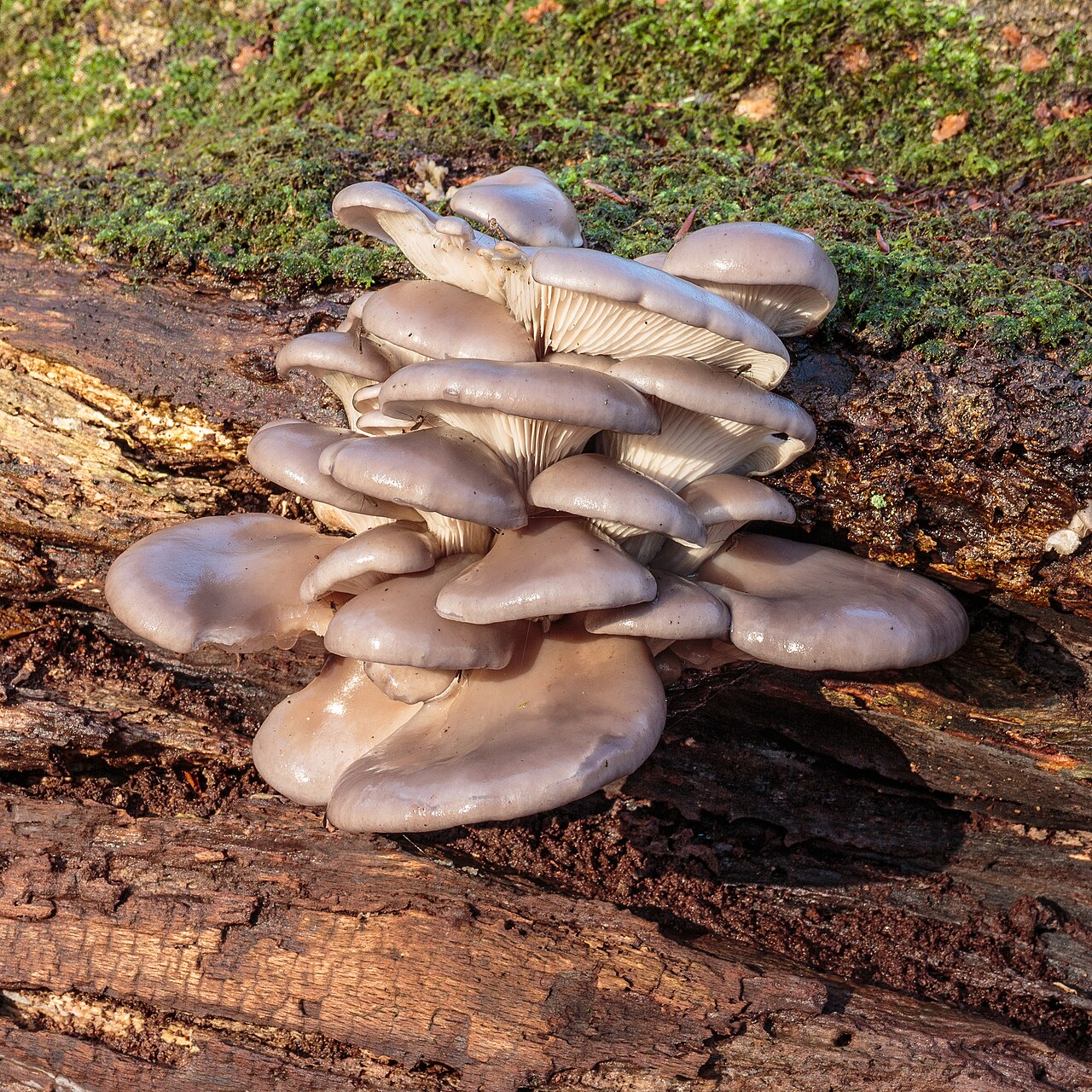
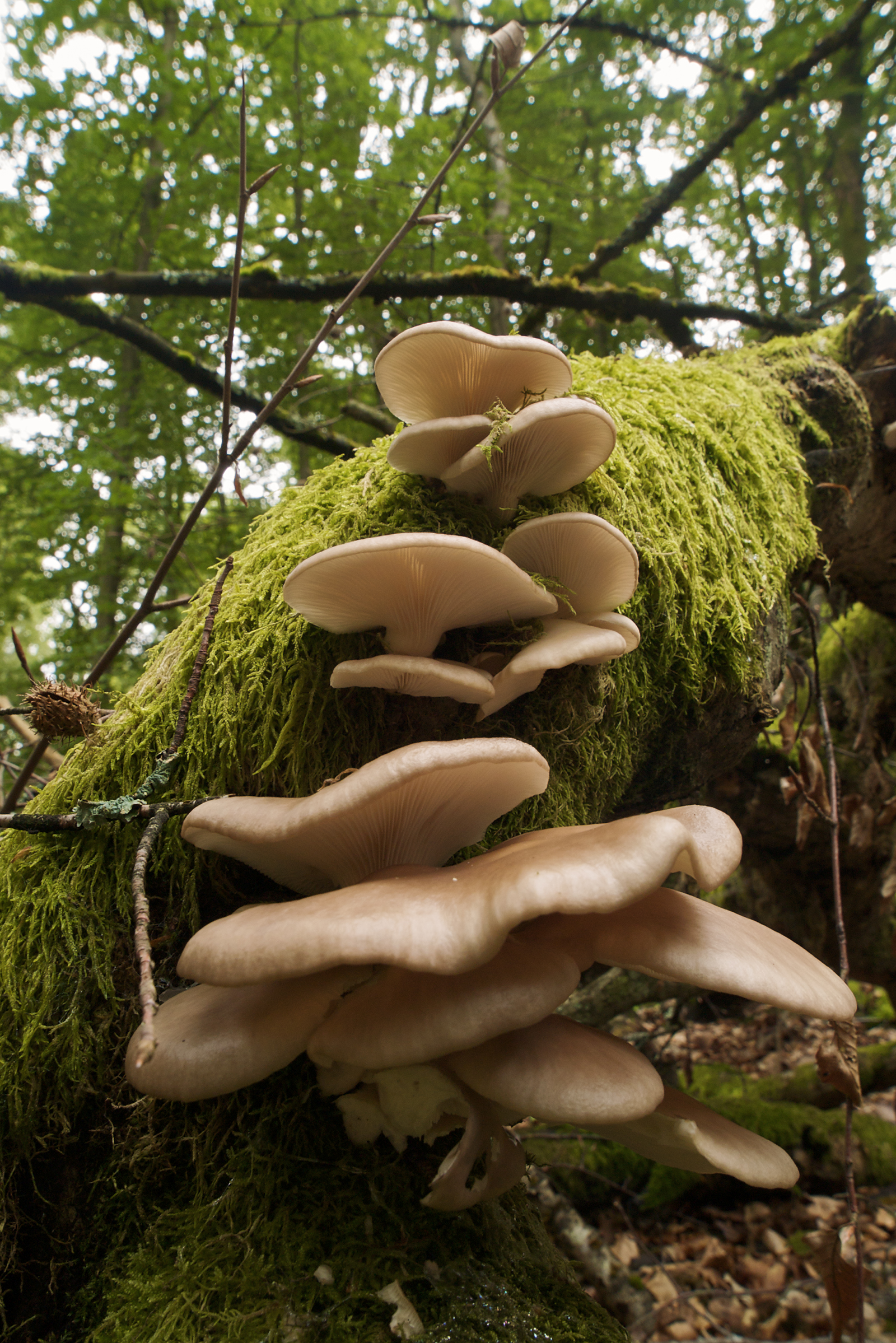
How to Tell Them Apart
The most common confusion. P. ostreatus is darker (gray to gray-brown caps), thicker-fleshed, and fruits in cooler seasons (autumn through spring). If you find a pale, thin oyster mushroom on hardwood in July, it's almost certainly P. pulmonarius. Both are excellent edibles.
Side-by-Side Identification
| Trait | Oyster Mushroom | Summer Oyster |
|---|---|---|
| Cap | 5–25 cm across. Fan-shaped or oyster-shaped (hence the name), smooth, with edges that roll inward when young and flatten or wave with age. Color ranges from white to cream to gray to brown, sometimes with lilac or bluish tones — depends on temperature and age. Younger caps tend darker. | 5–15 cm across. Fan-shaped, semicircular, or spatula-shaped. White to pale cream, pale gray, or pale buff — distinctly lighter than P. ostreatus. Surface smooth, dry. Margin inrolled when young, becoming wavy with age. Flesh thin and white. |
| Gills | White to cream, closely spaced, and decurrent — meaning they run down the stem rather than stopping at it. This is one of the key ID features. No partial veil or ring. | White to cream, decurrent (running down the stem). Closely spaced. Moderately thin. Produce a white to pale lilac spore print. |
| Stem | Short, stubby, off-center or sometimes completely absent (especially in shelf-growing specimens). White, often fuzzy at the base. When present, typically 1–3 cm long. | Short, lateral (off-center or absent), 1–3 cm long. White, firm, often hairy at the base. Many specimens are essentially stemless, attached directly to the substrate. |
| Spore print | White to pale lilac-gray. Drop a cap gill-side down on dark paper overnight. | White to pale lilac. |
| Odor | Pleasant, mild, slightly anise-like or like fresh grain. Nothing unpleasant. | Pleasant, mild, slightly anise-like or mealy. Less strongly scented than P. ostreatus. |
| Habitat | Grows on dead or dying hardwood — especially beech, oak, aspen, poplar, and elm. Fruits in overlapping shelving clusters on logs, stumps, and standing dead trees. Occasionally found on conifers. Loves cool, damp conditions. | Saprotrophic on dead or dying hardwood trees — especially beech, oak, maple, birch, aspen, and poplar. Grows on logs, stumps, fallen branches, and standing dead trunks. Occasionally on injured living trees. Found in deciduous and mixed forests, parks, and urban areas with mature hardwoods. Fruits in overlapping shelf-like clusters. |
| Season | Primarily autumn through early winter, but can fruit in spring in cooler climates. Some varieties fruit year-round in temperate regions. Tolerates light frost — one of the last mushrooms still fruiting when temperatures drop. | Late spring through early autumn, typically May through September. Peak fruiting in June through August — exactly when P. ostreatus is dormant. Can occasionally fruit into October in warm years. |
Found one of these in the wild? Don't rely on memory — identify it from a photo with Orangutany and check it against both species before you touch it.