Blue Meanies vs Golden Teacher
Panaeolus cyanescens compared with Psilocybe cubensis — how to tell them apart in the field.
This is a dangerous confusion.
At least one of these species is toxic. Never eat a wild mushroom based on a photo comparison alone — verify with local experts.
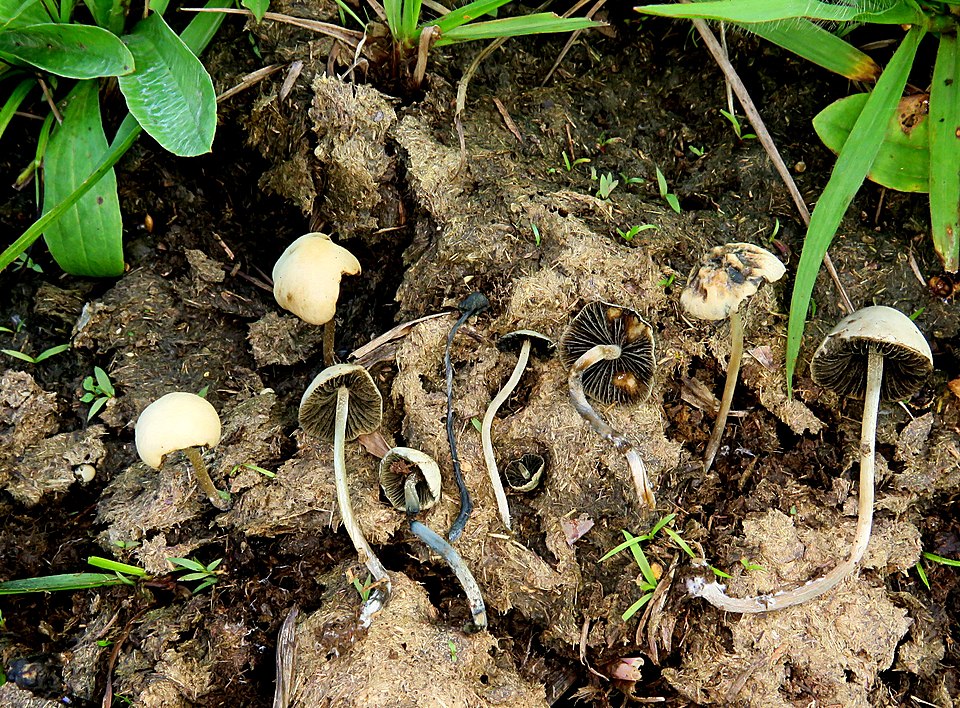
Blue Meanies
Panaeolus cyanescens
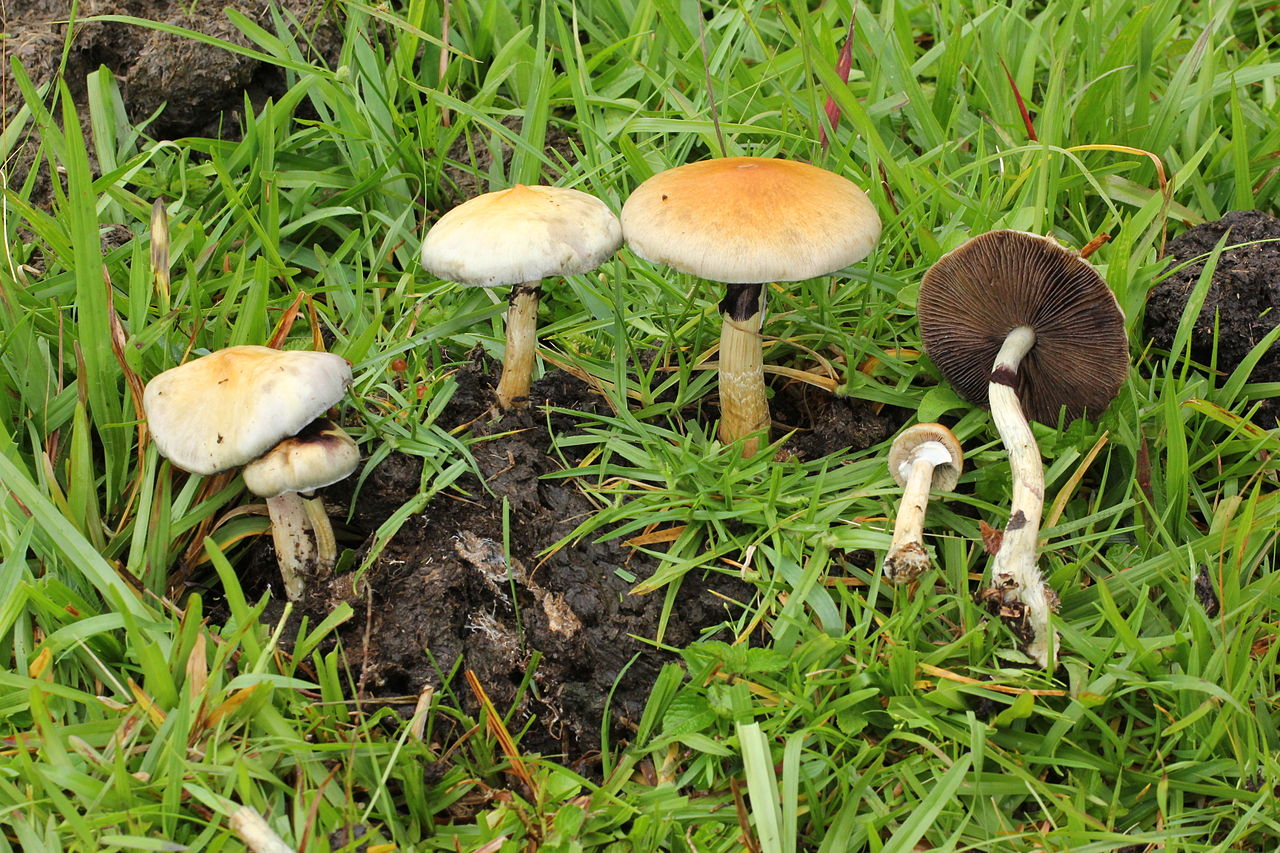
Golden Teacher / Magic Mushroom
Psilocybe cubensis
How to Tell Them Apart
Also psychoactive, same habitat on dung. P. cubensis is much larger and sturdier, with a golden-brown cap, a persistent ring on the stem, and a purple-brown spore print (not jet black). P. cyanescens is smaller, paler, more fragile, and ringless.
Also psychoactive and also grows on dung. Lighter colored — pale buff to whitish cap that cracks in dry weather. Thinner and more fragile than P. cubensis. Gills are mottled black and gray. Spore print is jet black (not purple-brown).
Side-by-Side Identification
| Trait | Blue Meanies | Golden Teacher |
|---|---|---|
| Cap | 1.5-4 cm across. Hemispheric to convex, rarely fully flattening. Pale buff to light grayish-brown when moist, drying to off-white or cream. Surface is smooth, dry, and often develops a network of fine cracks in dry or windy conditions. Bruises blue-green when damaged. | 2-8 cm across. Convex when young, flattening with age, often with a slight central bump (umbo). Golden-brown to pale yellowish when dry, darker caramel-brown when wet. Surface is smooth and slightly sticky. Bruises blue when damaged — this is the key tell for psilocybin content. |
| Gills | Broadly attached (adnate). Mottled gray and black in a distinctive patchy pattern as spores mature unevenly across the gill surface. This mottling is characteristic of Panaeolus. Edges may appear slightly whitish. | Closely spaced, attached to the stem (adnate to adnexed). Start out pale gray, darken to deep purple-brown as spores mature. Edges may appear slightly lighter or mottled. |
| Stem | 7-12 cm tall, 2-4 mm thick. Slender, straight, and fragile. Pale gray to whitish, often with a slight powdery coating near the apex. Bruises blue when handled. No ring (the partial veil is evanescent and usually gone by maturity). | 4-15 cm tall, 0.5-1.5 cm thick. White to off-white, often with a thin partial veil ring (annulus) that catches falling spores and turns purplish-black. Bruises blue when handled — a hallmark of psilocybin-containing species. Base may have whitish mycelial strands. |
| Spore print | Jet black. This is a key distinction from Psilocybe species, which have purple-brown to dark purple-brown spore prints. | Dark purple-brown to nearly black. Always take a spore print when identifying — this rules out many lookalikes. |
| Bruising | — | Distinctive blue-green bruising on cap and stem within minutes of handling or cutting. Caused by oxidation of psilocin. This is the single most important field identification feature. |
| Odor | Mild, slightly farinaceous. Not distinctive. | — |
| Habitat | Coprophilic, growing directly on or adjacent to cattle, horse, and water buffalo dung. Also found on well-manured pasture soils. Prefers warm, humid tropical and subtropical conditions. Common in lowland pastures near sea level. | Coprophilic — grows directly on or near cattle and horse dung in tropical and subtropical pastures. Also found in well-manured grasslands and occasionally on enriched soils. Prefers warm, humid conditions with temperatures above 20C (68F). |
| Season | Year-round in tropical regions, peaking after heavy rains. In subtropical areas like Hawaii and the Gulf Coast, primarily late spring through early fall. Fruits rapidly after warm rains and can appear and disappear within 24-48 hours. | Year-round in tropical regions. In subtropical areas like the U.S. Gulf Coast, primarily spring through fall after warm rains. Peak fruiting follows periods of heavy rainfall when temperatures are between 21-27C (70-80F). |
Found one of these in the wild? Don't rely on memory — identify it from a photo with Orangutany and check it against both species before you touch it.