Black Morel vs Common Morel
Morchella elata compared with Morchella esculenta — how to tell them apart in the field.
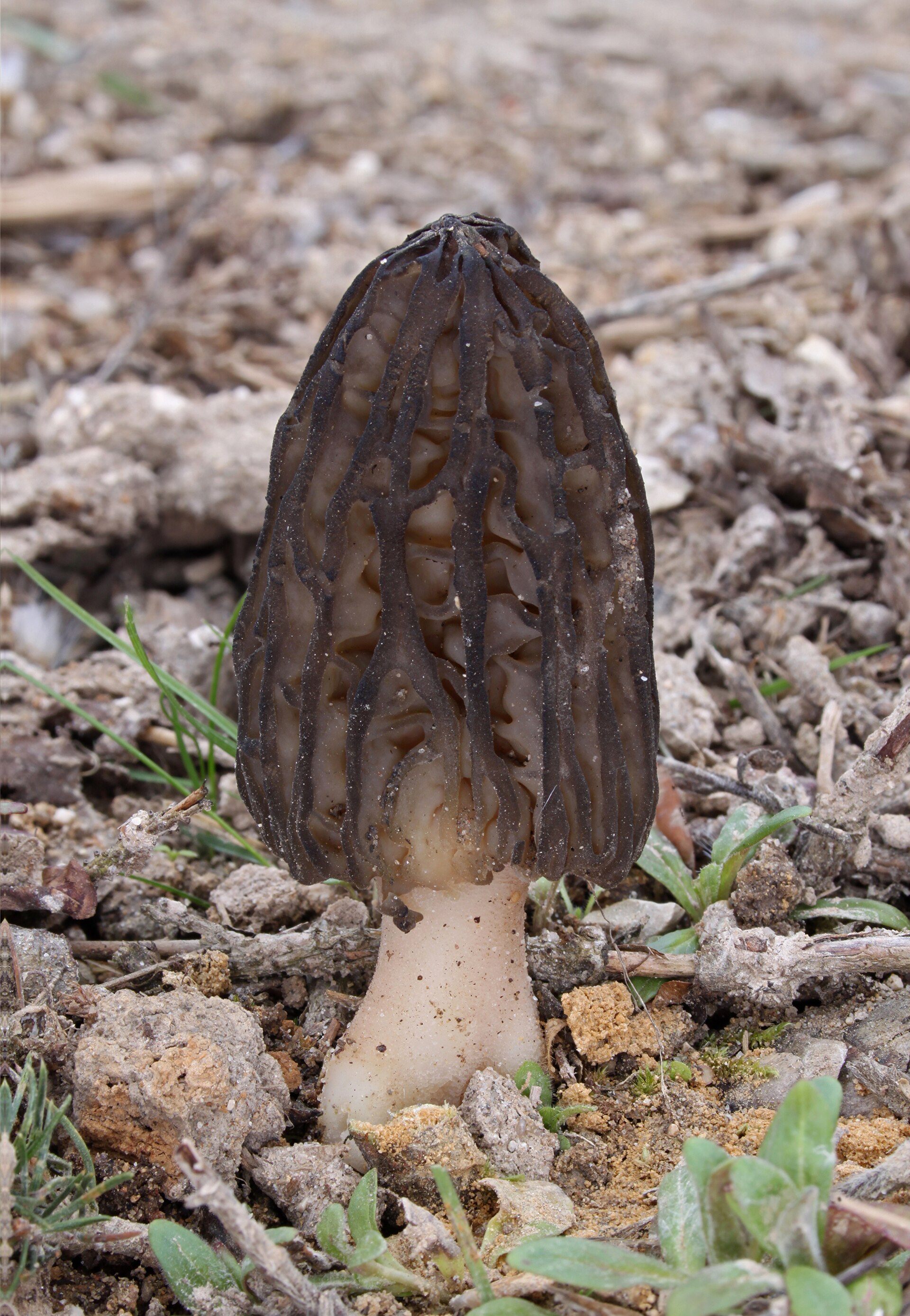
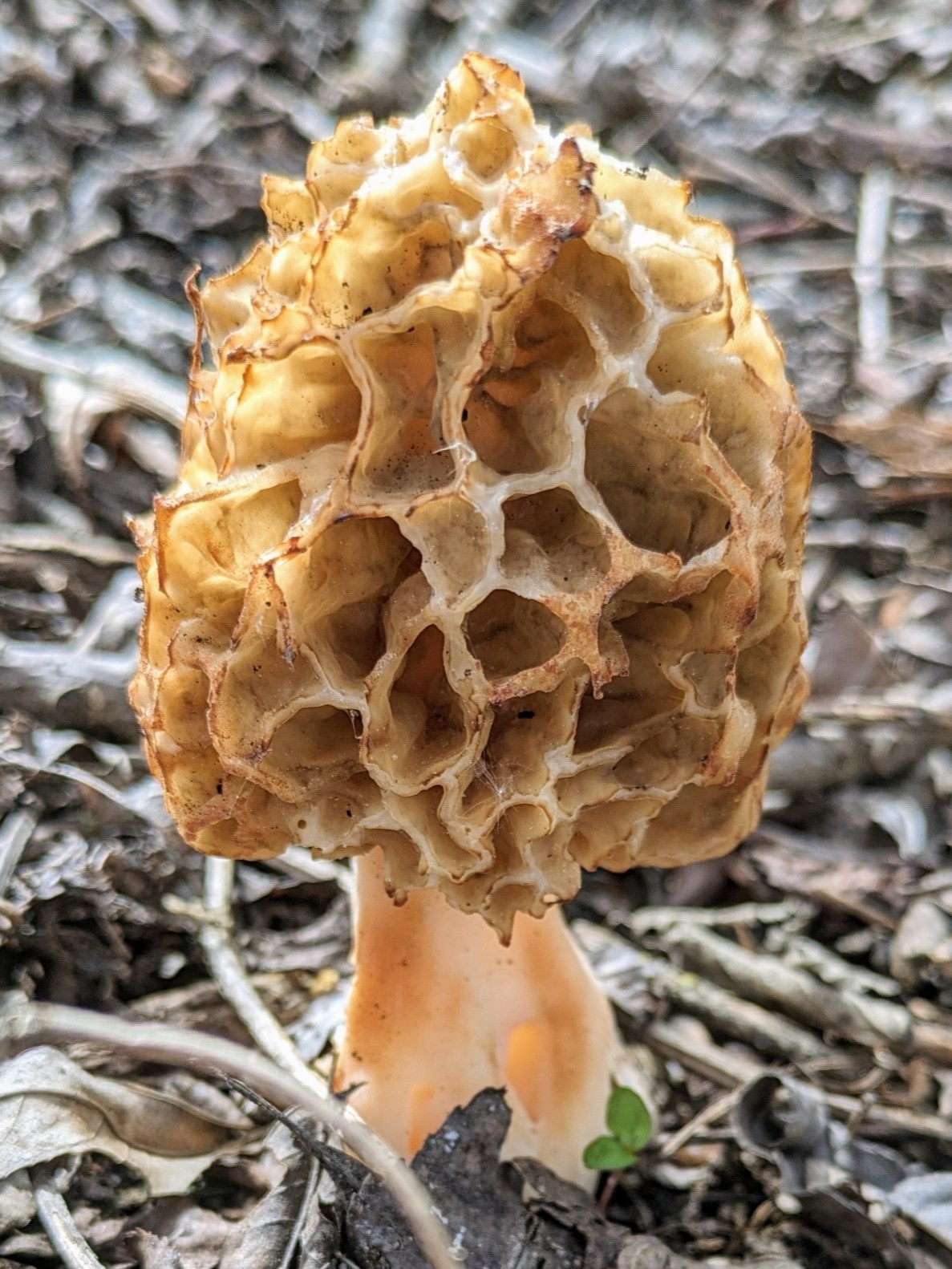
How to Tell Them Apart
Lighter colored, with yellowish to tan pits and paler ridges. Tends to be rounder and less conical. Both species are excellent edibles. Black morels generally fruit earlier in the season and are more associated with conifers and fire.
Actually a true morel and perfectly edible — just a different species. Darker ridges (brown to nearly black) with more vertically oriented pits. Tends to fruit slightly earlier and in more coniferous habitats. Some foragers prefer the flavor. The main reason to distinguish them is for your own records.
Side-by-Side Identification
| Trait | Black Morel | Common Morel |
|---|---|---|
| Cap | 3-10 cm tall, conical to elongated-conical. Surface covered in a honeycomb pattern of pits and ridges. Ridges are dark brown to black, pits are lighter brown to grayish. The cap is attached directly to the stem at the base (not hanging free like a Verpa). Completely hollow inside. | 3-8 cm tall, 3-6 cm wide. Honeycomb-like surface covered in irregular pits and ridges. Ranges from pale cream to yellowish-brown to dark tan. The cap is completely hollow inside — slice one in half lengthwise to confirm. The pits are rounded and the ridges are lighter in color. |
| Gills | None. Morels are ascomycetes, not gilled mushrooms. Spores are produced on the inner surfaces of the pits. | No gills at all — morels have a pitted, sponge-like cap surface instead. The exterior is covered in ridges and pits (the pits are where the spores are produced). This is one of the easiest ways to tell a true morel from most other mushrooms. |
| Stem | 3-8 cm tall, pale whitish to cream, sometimes with a granular or slightly roughened surface. Completely hollow from base to tip. The cap attaches at the very bottom of the head, with no skirt-like overhang. | 3-7 cm tall, white to pale cream, hollow all the way through. The stem attaches directly to the bottom edge of the cap — the cap and stem form one continuous hollow chamber. Slightly granular or mealy texture on the surface. |
| Spore print | Cream to pale yellow-orange. | Cream to yellowish — though most foragers identify morels by sight rather than spore print. |
| Odor | Earthy, pleasant, with a slightly smoky quality that intensifies when dried. | Pleasant, earthy, slightly nutty. Fresh morels smell like the forest floor on a warm spring day. |
| Habitat | Coniferous forests, especially after wildfire (burn morels). Also found in undisturbed forests under spruce, fir, pine, and Douglas fir. Favors disturbed ground, stream banks, logging roads, and areas with recent soil disturbance. Burn-site morels can fruit in extraordinary quantities the spring following a fire. | Extremely variable. Found in old orchards, river bottoms, tulip poplar stands, dying elm trees, ash forests, and recently burned areas. Loves disturbed ground — old logging roads, flood plains, and the edges of paths. Mycorrhizal with various hardwoods and conifers, but also appears as a saprobe on dead wood. |
| Season | March through June depending on latitude and elevation. Among the earliest spring mushrooms. Burn morel season typically peaks in May and June at higher elevations in western North America. | March through May in most of North America, depending on latitude and elevation. Peak is April in the Midwest and mid-Atlantic. Follows a northward wave as temperatures warm — southern states get them first. |
Found one of these in the wild? Don't rely on memory — identify it from a photo with Orangutany and check it against both species before you touch it.