Common Puffball vs Common Earthball
Lycoperdon perlatum compared with Scleroderma citrinum — how to tell them apart in the field.
This is a dangerous confusion.
At least one of these species is toxic. Never eat a wild mushroom based on a photo comparison alone — verify with local experts.
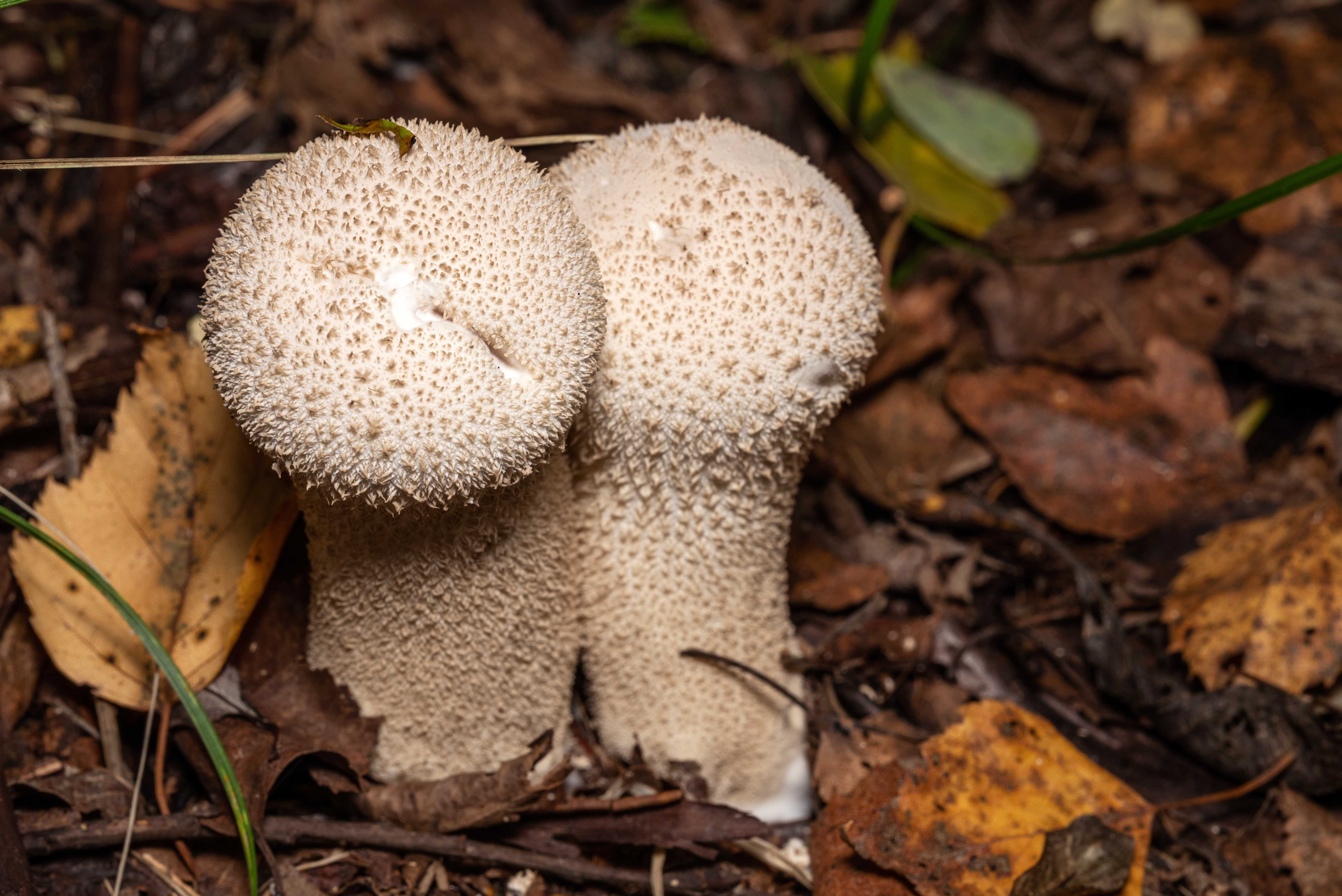
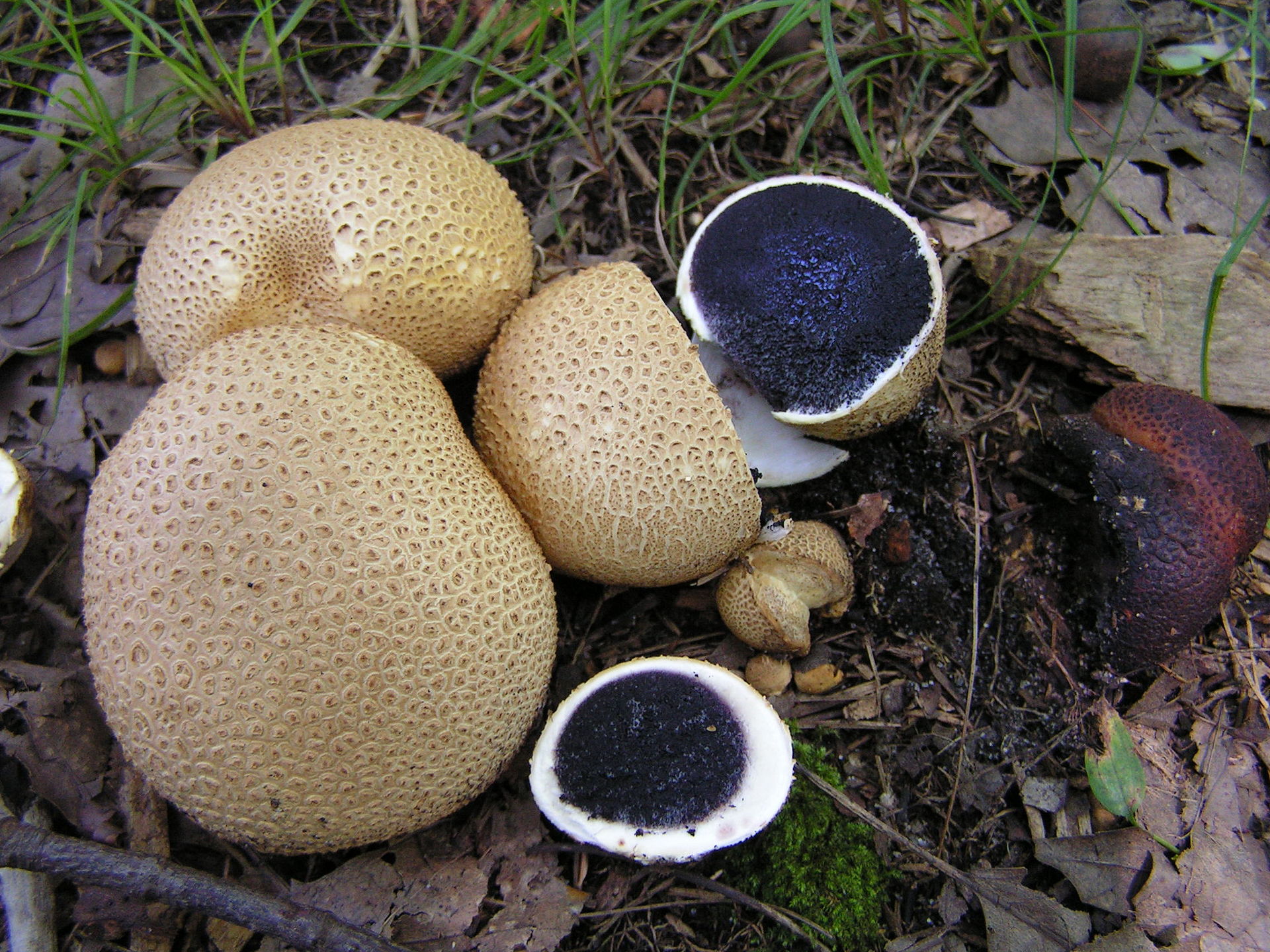
How to Tell Them Apart
The key confusion species. Common Puffballs have thin, papery skin, a white interior that stays white until it turns to olive-brown spore dust, and a distinct pore at the top for spore release. Earthballs have thick, tough skin and a dark purple-black interior from the start. Always cut open before eating.
Side-by-Side Identification
| Trait | Common Puffball | Common Earthball |
|---|---|---|
| Cap | 2-6 cm across, 3-7 cm tall. Pear-shaped to club-shaped (wider on top, tapering to a stem-like base). White when young, aging to yellowish-brown. Surface covered with short conical spines or "gems" (tiny warts) that rub off easily, leaving a faint reticulated pattern underneath. Mature specimens develop an opening (ostiole) at the top where spores puff out. | 3-10 cm across, roughly spherical, with no true cap or stem structure. Surface is thick (2-3 mm), tough, and leathery, covered in coarse, irregular warts or scales. Color is dirty yellow to ochre-brown. There is no opening at the top like a true puffball; the skin simply cracks irregularly when mature. |
| Gills | No gills. The interior (gleba) is the spore-producing tissue. When young and edible, it's solid white like a marshmallow. As spores mature, the interior turns yellow, then olive-green, then brown and powdery. A mature puffball is basically a bag of spore dust. | None. Interior (gleba) is initially firm and marbled purple-black with white veins, becoming powdery dark brown-olive spore mass at maturity. |
| Stem | Not a true stem — the lower portion is a sterile base that's more spongy and dense. It persists after the spore mass has dispersed, often seen as empty brown cups on the forest floor in winter. | No true stem. May have a short, root-like base attaching it to the soil. |
| Spore print | Olive-brown spore mass (not a traditional spore print — you'd collect the spore dust directly). | Dark brown to olive-brown (released as spore mass when the skin cracks). |
| Odor | Mild and pleasant when young. Older specimens smell musty or slightly unpleasant. | Unpleasant; rubbery, metallic, or chemical. Distinctly different from the mild, pleasant smell of edible puffballs. |
| Habitat | Incredibly versatile. Found in deciduous and coniferous forests, grasslands, lawns, parks, garden mulch, gravel paths, and roadsides. Grows on soil, leaf litter, and decaying organic matter. Saprotrophic — feeds on dead plant material rather than forming tree partnerships. | Mycorrhizal with broadleaf and coniferous trees, especially birch, oak, and pine. Found on acidic soils in woodlands, heathlands, parks, and gardens. Often on disturbed ground, along paths, and in gravel areas. Frequently in large groups. |
| Season | Late summer through late autumn. Peak season is August through November in the Northern Hemisphere. Can appear as early as July after warm rains. | July through November. Most abundant in September and October. |
Found one of these in the wild? Don't rely on memory — identify it from a photo with Orangutany and check it against both species before you touch it.