Saffron Milk Cap vs Woolly Milk Cap
Lactarius deliciosus compared with Lactarius torminosus — how to tell them apart in the field.
This is a dangerous confusion.
At least one of these species is toxic. Never eat a wild mushroom based on a photo comparison alone — verify with local experts.
How to Tell Them Apart
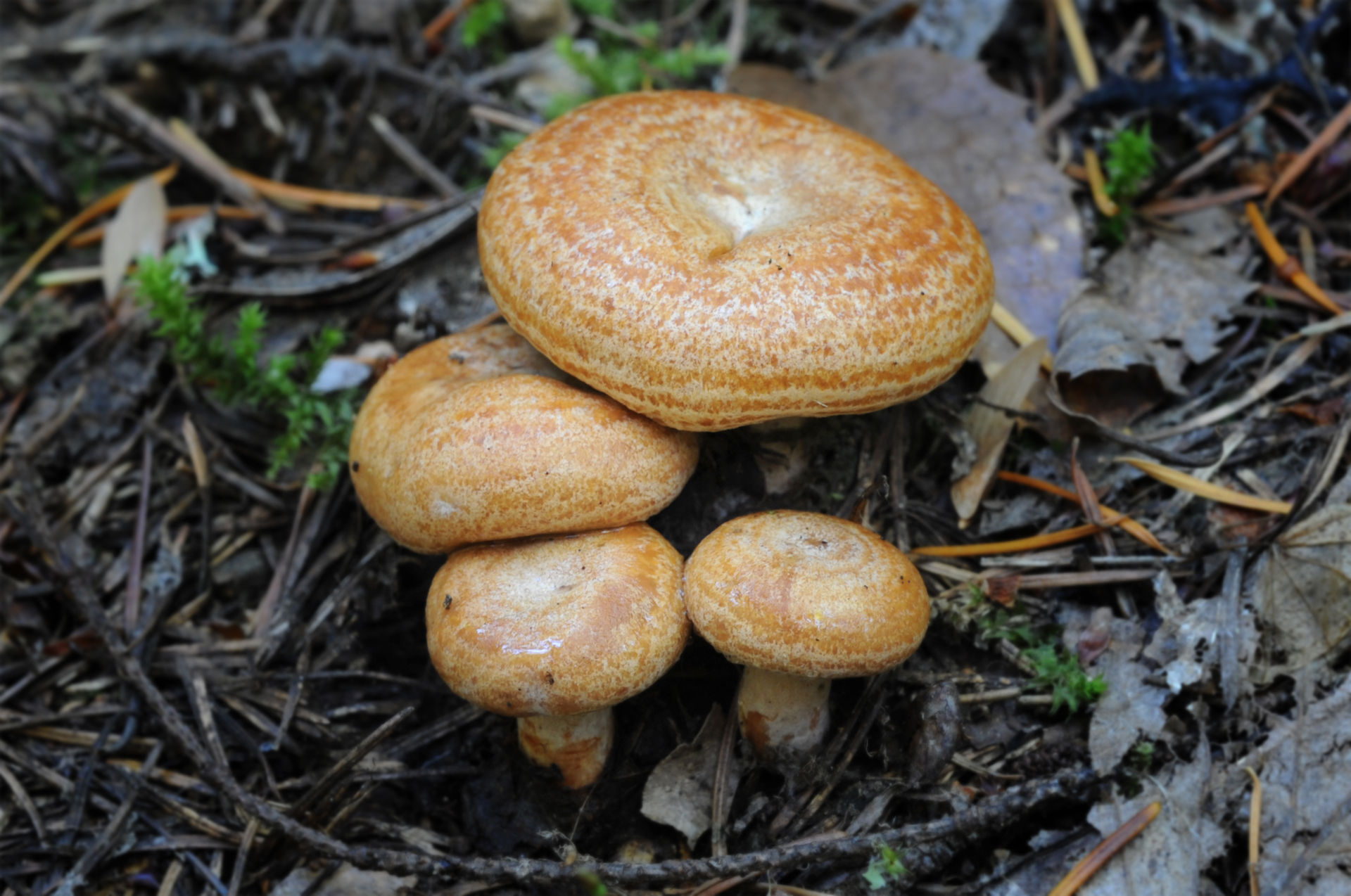
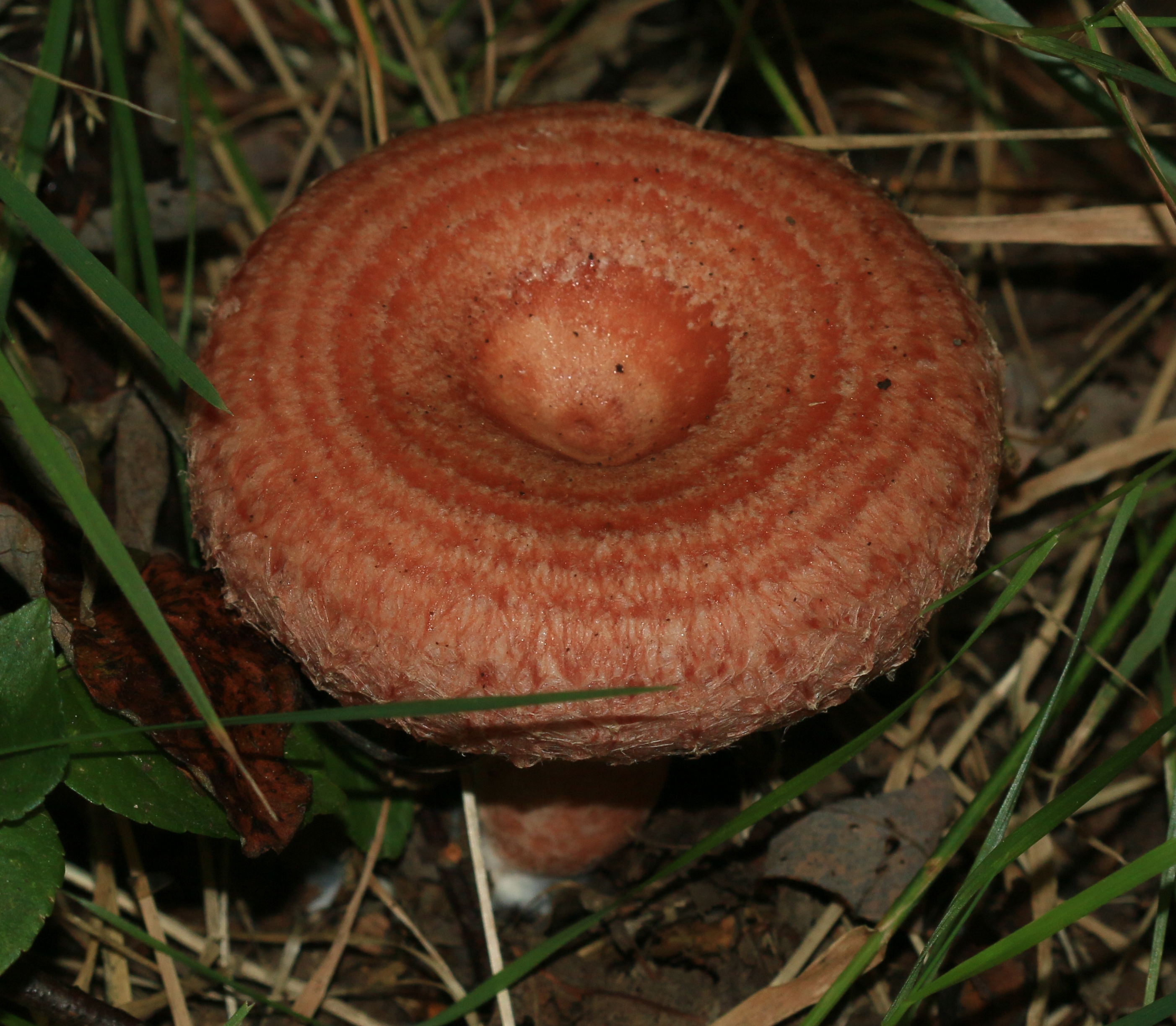
Has a pinkish-orange cap with a distinctly shaggy, woolly margin (hairy fringes on the cap edge). The latex is WHITE, not orange. This is the critical distinction: if the milk is white, it is not L. deliciosus. L. torminosus is associated with birch, not pine, and causes significant gastrointestinal upset if eaten raw (though it is consumed after extensive preparation in Finland and Russia).
Orange rather than pink, and critically, exudes bright orange (not white) latex that stains green when exposed to air. The cap lacks the distinctive woolly/shaggy margin of L. torminosus. Mycorrhizal with pine, not birch. An excellent edible that needs no special preparation — unlike the toxic Woolly Milk Cap.
Side-by-Side Identification
| Trait | Saffron Milk Cap | Woolly Milk Cap |
|---|---|---|
| Cap | 4-14 cm across. Convex when young, developing a central depression and becoming funnel-shaped with age. Orange to salmon-orange with darker concentric zones (rings). Surface is smooth, slightly sticky when wet, and often develops greenish stains where bruised or aged. Margin is initially inrolled, straightening with maturity. | 4–12 cm across, convex becoming depressed in the center with age (often funnel-shaped). Color is salmon-pink to pale orange with darker concentric zones. The margin is distinctively shaggy with dense, woolly, inrolled hairs — this is the key identification feature. Surface is slightly sticky when wet. |
| Gills | Decurrent (running down the stem), closely spaced, orange to saffron-orange. Exude carrot-orange latex when cut or broken. Gills stain greenish where damaged or old. | Crowded, slightly decurrent (running down the stem). Pale pink to cream. Exude copious white latex when damaged — the latex does not change color and tastes extremely acrid and peppery. |
| Stem | 3-7 cm tall, 1.5-3 cm thick. Orange, often with darker orange pits (scrobiculations). Hollow or stuffed in mature specimens. Stains greenish with age or handling. | 3–7 cm tall, 1–2.5 cm thick, cylindrical, often with shallow pits (scrobiculate). Pale pink, paler than the cap. Hollow when mature. Smooth to slightly downy surface. |
| Spore print | Pale ochre to pale salmon. | Pale cream to pale yellow. |
| Odor | Pleasant, mildly fruity with a faint resinous or piney quality. Not strongly distinctive. | Faintly fruity, sometimes slightly acrid. Not strongly distinctive until the latex is tasted. |
| Habitat | Strictly mycorrhizal with pines (Pinus spp.), including Scots pine, maritime pine, Aleppo pine, and Monterey pine. Found in pine forests, plantations, and mixed woodlands with a pine component. Prefers sandy, acidic to neutral soils. Often fruits in large groups along forest paths and clearings. | Exclusively mycorrhizal with birch trees (Betula species). Found in birch forests, mixed forests with birch, birch-lined paths, parks, and gardens where birch grows. Prefers moist, acidic soils. Often fruits in troops or scattered groups, sometimes in large numbers. |
| Season | Late summer through late autumn, typically September through November in the Northern Hemisphere. Fruits after autumn rains, especially when temperatures drop. In Mediterranean climates, the main season may extend into December. | Late summer through autumn, typically August through October. Peak fruiting in September across most of its range. One of the earlier Lactarius species to appear in autumn. |
Found one of these in the wild? Don't rely on memory — identify it from a photo with Orangutany and check it against both species before you touch it.