Bay Bolete vs Red-cracking Bolete
Imleria badia compared with Xerocomellus chrysenteron — how to tell them apart in the field.
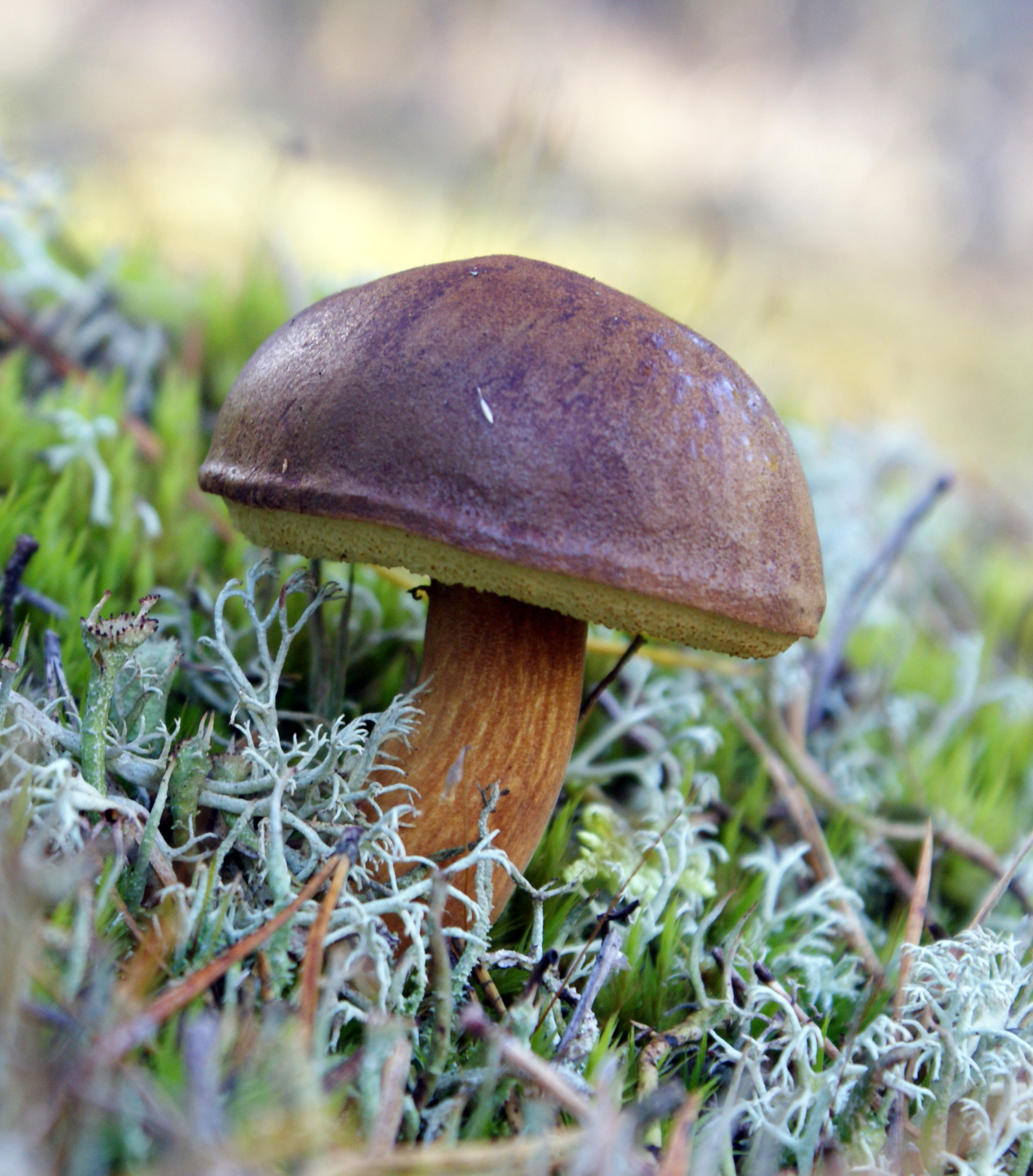
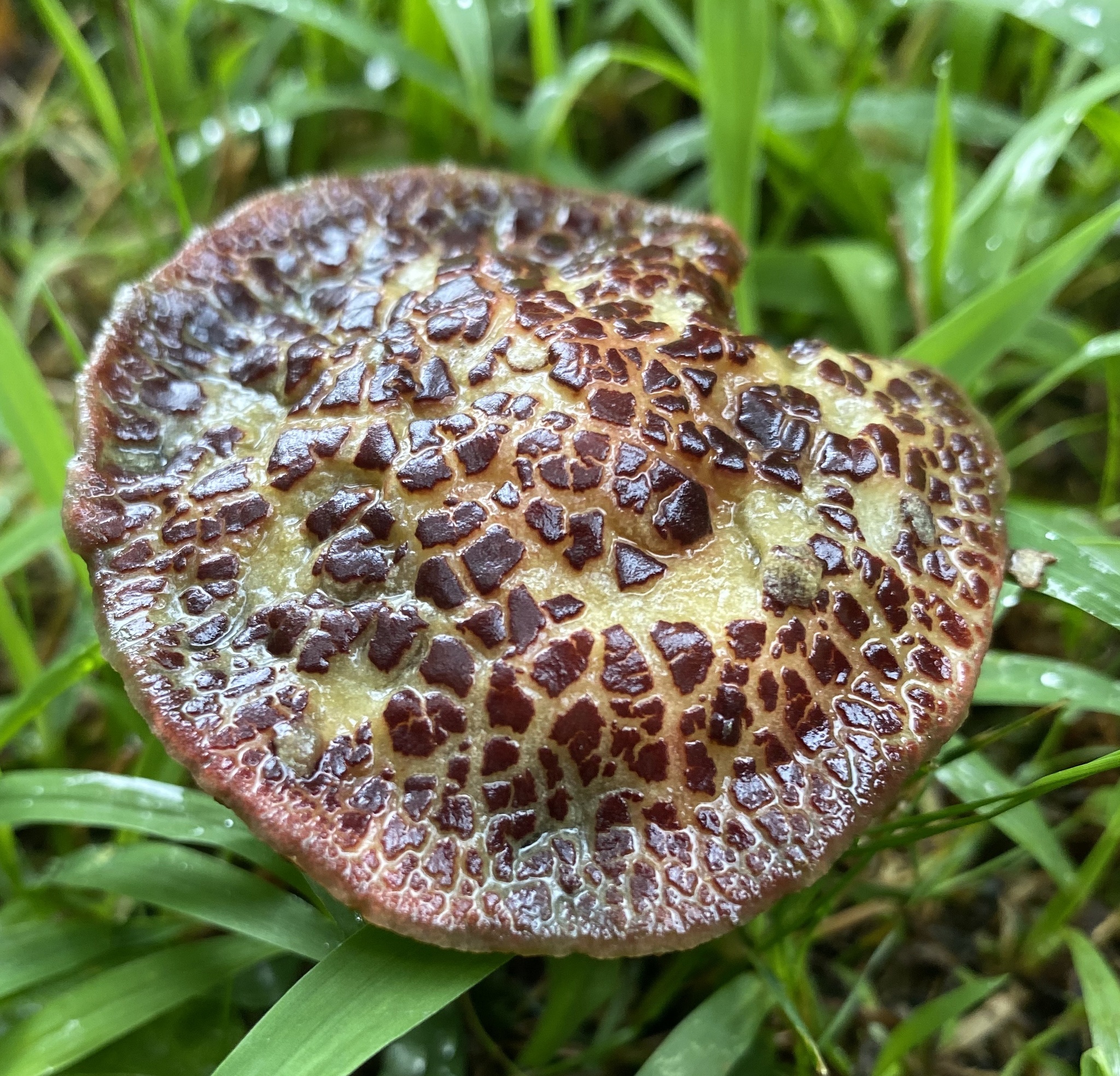
How to Tell Them Apart
A common bolete whose cap cracks with age, revealing reddish flesh beneath the surface — bay bolete caps don't crack or show red. Xerocomellus chrysenteron is smaller, has a more olive-toned cap, and the flesh is softer and more spongy. Edible but mediocre compared to bay bolete.
Side-by-Side Identification
| Trait | Bay Bolete | Red-cracking Bolete |
|---|---|---|
| Cap | 4–15 cm across, convex becoming flatter with age. Dark chestnut-brown to bay-brown, smooth, slightly sticky when wet, with a fine velvety texture when dry. The color is notably darker and more uniform than porcini. | 4-10 cm across. Convex, becoming flatter with age. Olive-brown, dark brown, or yellowish-brown. Surface is dry, matte, and characteristically develops cracks with age, especially in dry weather, revealing pinkish-red to red flesh beneath the cuticle. This cracking pattern is the primary diagnostic feature. |
| Gills | No gills — has a pore surface like all boletes. Pores are pale yellow when young, becoming olive-yellow with age. The key diagnostic: pores bruise blue-green when pressed, a reaction that happens within seconds and is unmistakable. | No gills. Pore surface (tubes) is yellow to olive-yellow, with fairly large, angular pores. Bruises slowly bluish-green when pressed, though the reaction is often sluggish and patchy, not the instant deep blue seen in some other boletes. |
| Stem | 4–12 cm tall, 1.5–4 cm wide, cylindrical to slightly club-shaped. Pale brown with darker brown streaks or fibers. Crucially, it lacks the white reticulation (net pattern) found on porcini stems — this is one of the fastest ways to tell them apart. | 4-8 cm tall, 1-2 cm thick. Yellowish at the top, with red or pinkish-red streaks or flush toward the base. Surface is smooth to finely fibrillose, without the reticulation seen in Boletus species. Often somewhat curved or irregularly shaped. |
| Spore print | Olive-brown to yellowish-brown. | Olive-brown to snuff-brown. |
| Odor | Mild and pleasant, slightly mushroomy. Nothing distinctive — no strong nutty or yeasty notes like porcini. | Mild, not distinctive. Faintly mushroomy. |
| Habitat | Strongly associated with coniferous forests, especially Scots pine and Norway spruce. Also found under beech and oak, but less commonly. Prefers acidic, sandy soils. Often grows in mossy areas, along forest paths, and in clearings. Frequently fruits in large groups — finding one usually means finding a dozen. | Mycorrhizal with a wide range of broadleaf and coniferous trees, including oaks, beeches, birches, chestnuts, and pines. Found in deciduous, coniferous, and mixed woodlands, parks, gardens, and along paths. One of the least habitat-specific boletes, appearing almost anywhere there are suitable tree partners. Prefers moist conditions. |
| Season | Summer through late autumn, typically July through November. Peak fruiting is September–October across most of Europe. One of the more reliable boletes — less dependent on precise weather conditions than porcini. | Summer through late autumn, typically July through November. Fruits prolifically after rain. One of the first boletes to appear each season and one of the last to disappear. |
Found one of these in the wild? Don't rely on memory — identify it from a photo with Orangutany and check it against both species before you touch it.