Bay Bolete vs Bitter Bolete
Imleria badia compared with Tylopilus felleus — how to tell them apart in the field.
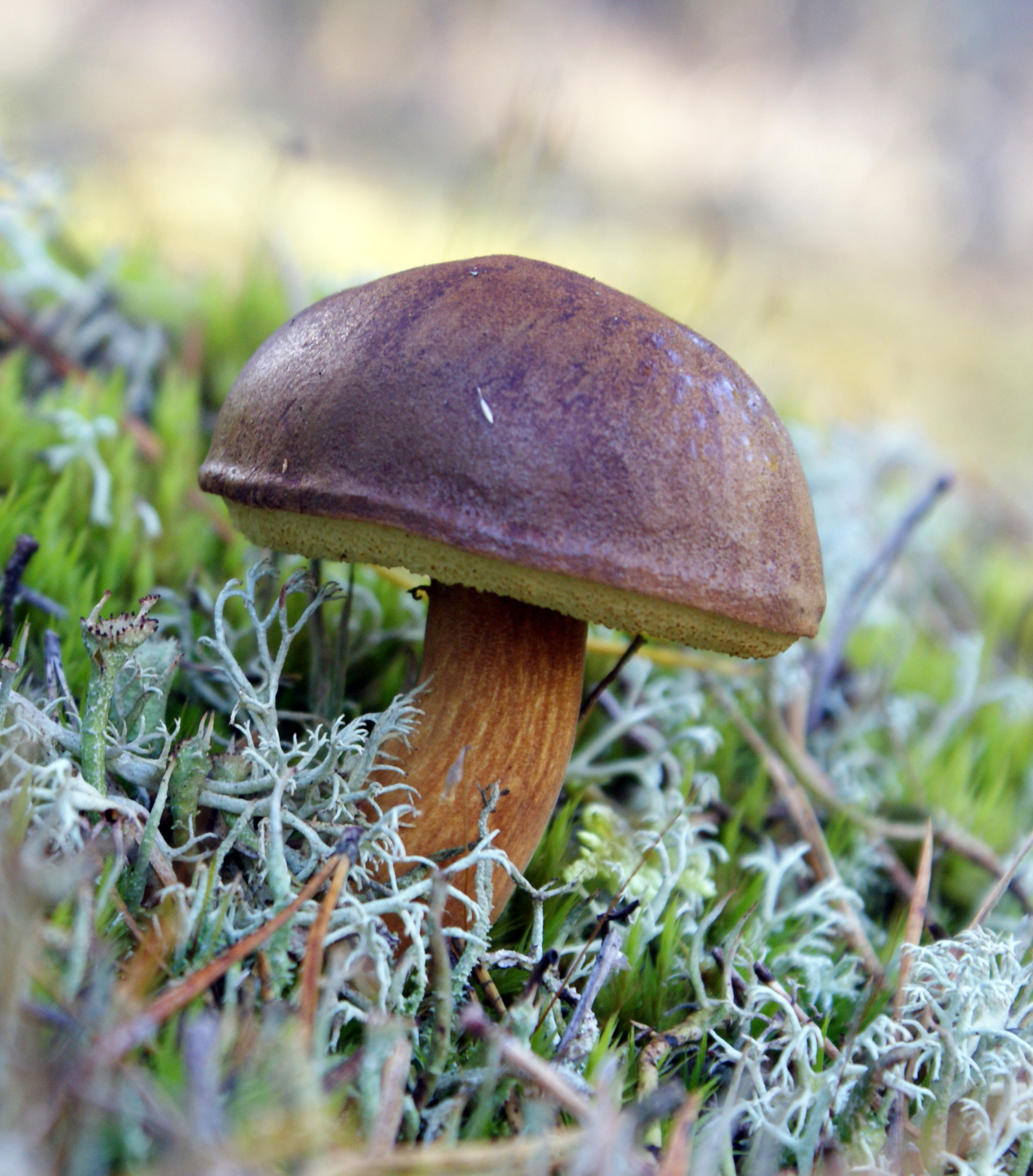
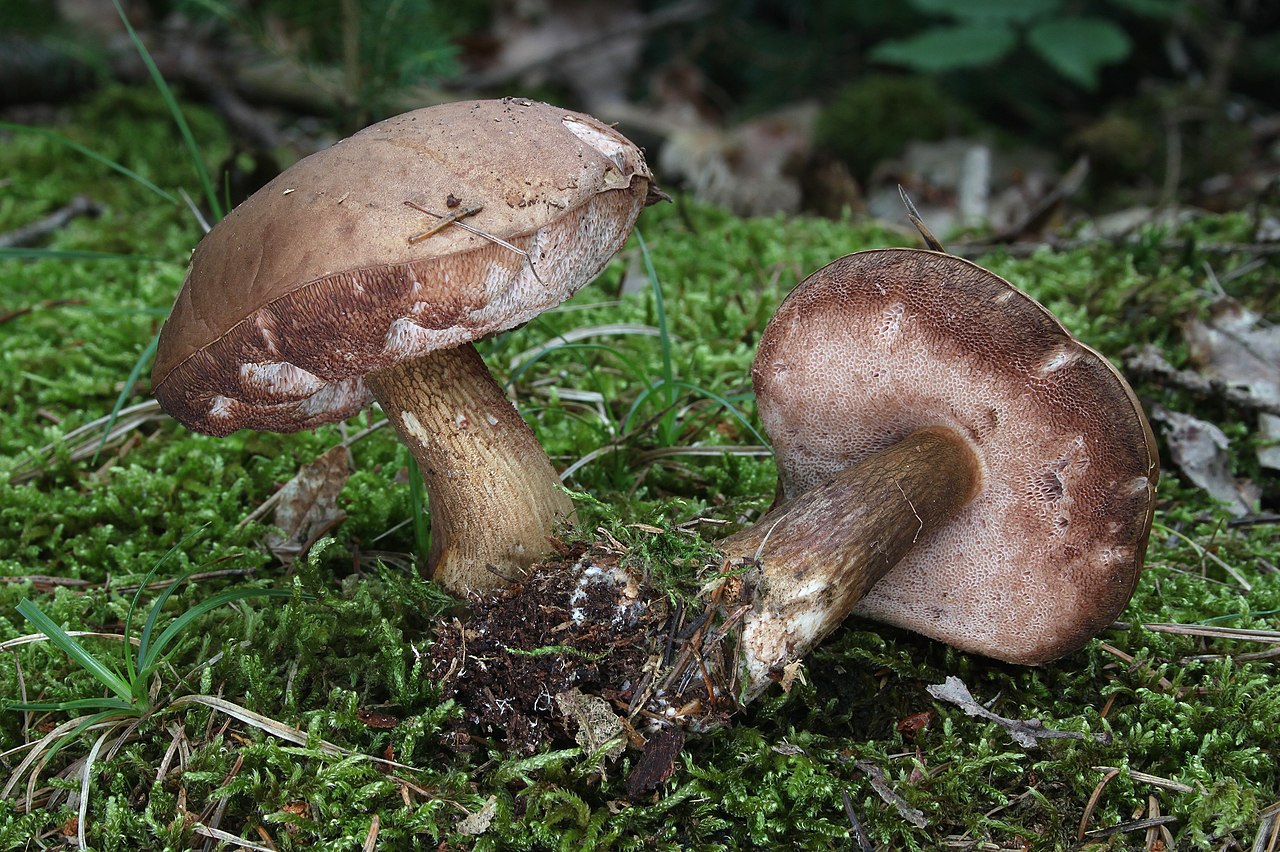
How to Tell Them Apart
The bolete that ruins dinners. Similar brown cap and general shape, but the pore surface turns pinkish with age (not olive-yellow), and the stem has a dark brownish net pattern. The definitive test: a tiny taste reveals intense, lingering bitterness. One piece can make an entire pot of soup inedible. Bay bolete has a mild, pleasant flavor.
Side-by-Side Identification
| Trait | Bay Bolete | Bitter Bolete |
|---|---|---|
| Cap | 4–15 cm across, convex becoming flatter with age. Dark chestnut-brown to bay-brown, smooth, slightly sticky when wet, with a fine velvety texture when dry. The color is notably darker and more uniform than porcini. | 5–15 cm across. Convex, becoming broadly convex with age. Pale tan to pinkish-brown or grayish-brown. Surface is smooth and dry, occasionally slightly tacky in wet weather. Very similar in color to young porcini. |
| Gills | No gills — has a pore surface like all boletes. Pores are pale yellow when young, becoming olive-yellow with age. The key diagnostic: pores bruise blue-green when pressed, a reaction that happens within seconds and is unmistakable. | No gills — this is a bolete with pores. Pore surface starts white in young specimens, then turns distinctly pink with age. This is the key field mark — porcini pores go yellow-green, never pink. Pores bruise brownish. |
| Stem | 4–12 cm tall, 1.5–4 cm wide, cylindrical to slightly club-shaped. Pale brown with darker brown streaks or fibers. Crucially, it lacks the white reticulation (net pattern) found on porcini stems — this is one of the fastest ways to tell them apart. | 6–12 cm tall, thick and bulbous, often swollen in the middle. Cream to pale brown. Covered with a prominent dark brown net pattern (reticulation) — similar to porcini BUT the net is dark brown on a lighter background, whereas porcini reticulation is pale white on a whitish stem, especially near the cap. |
| Spore print | Olive-brown to yellowish-brown. | Pinkish-brown to rosy brown — notably different from the olive-brown print of true porcini. |
| Odor | Mild and pleasant, slightly mushroomy. Nothing distinctive — no strong nutty or yeasty notes like porcini. | Mild and pleasant when fresh — not helpful for identification. |
| Habitat | Strongly associated with coniferous forests, especially Scots pine and Norway spruce. Also found under beech and oak, but less commonly. Prefers acidic, sandy soils. Often grows in mossy areas, along forest paths, and in clearings. Frequently fruits in large groups — finding one usually means finding a dozen. | Mycorrhizal with both conifers (hemlock, pine, spruce) and hardwoods (oak, beech). Found in the same forests and often growing within meters of true porcini. Prefers acidic, well-drained soils. Often found near stumps or along forest paths. |
| Season | Summer through late autumn, typically July through November. Peak fruiting is September–October across most of Europe. One of the more reliable boletes — less dependent on precise weather conditions than porcini. | Summer through autumn — June to October in most of the Northern Hemisphere. Peak in August and September. |
Found one of these in the wild? Don't rely on memory — identify it from a photo with Orangutany and check it against both species before you touch it.