Sulphur Tuft vs Sheathed Woodtuft
Hypholoma fasciculare compared with Kuehneromyces mutabilis — how to tell them apart in the field.
This is a dangerous confusion.
At least one of these species is toxic. Never eat a wild mushroom based on a photo comparison alone — verify with local experts.
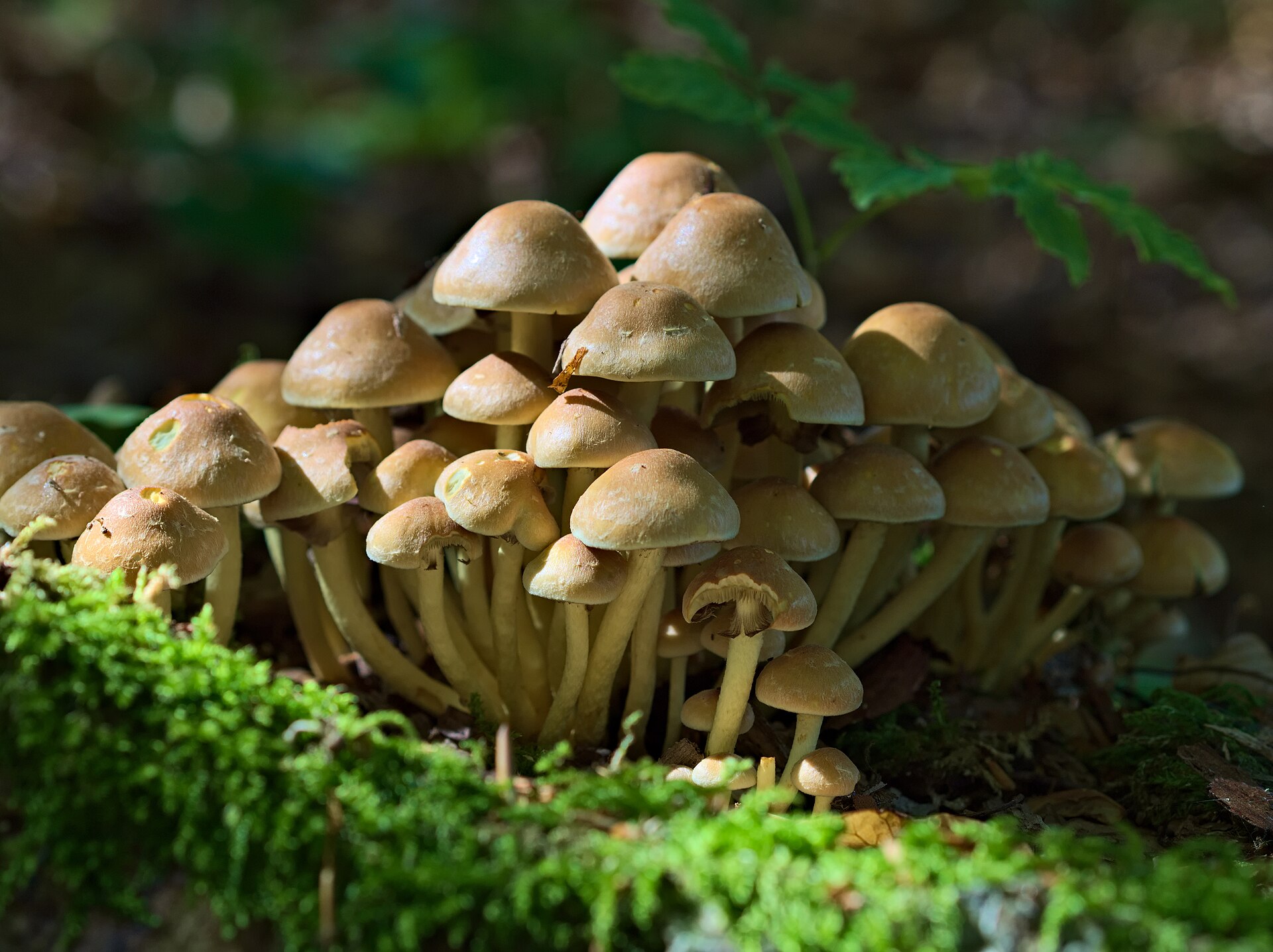
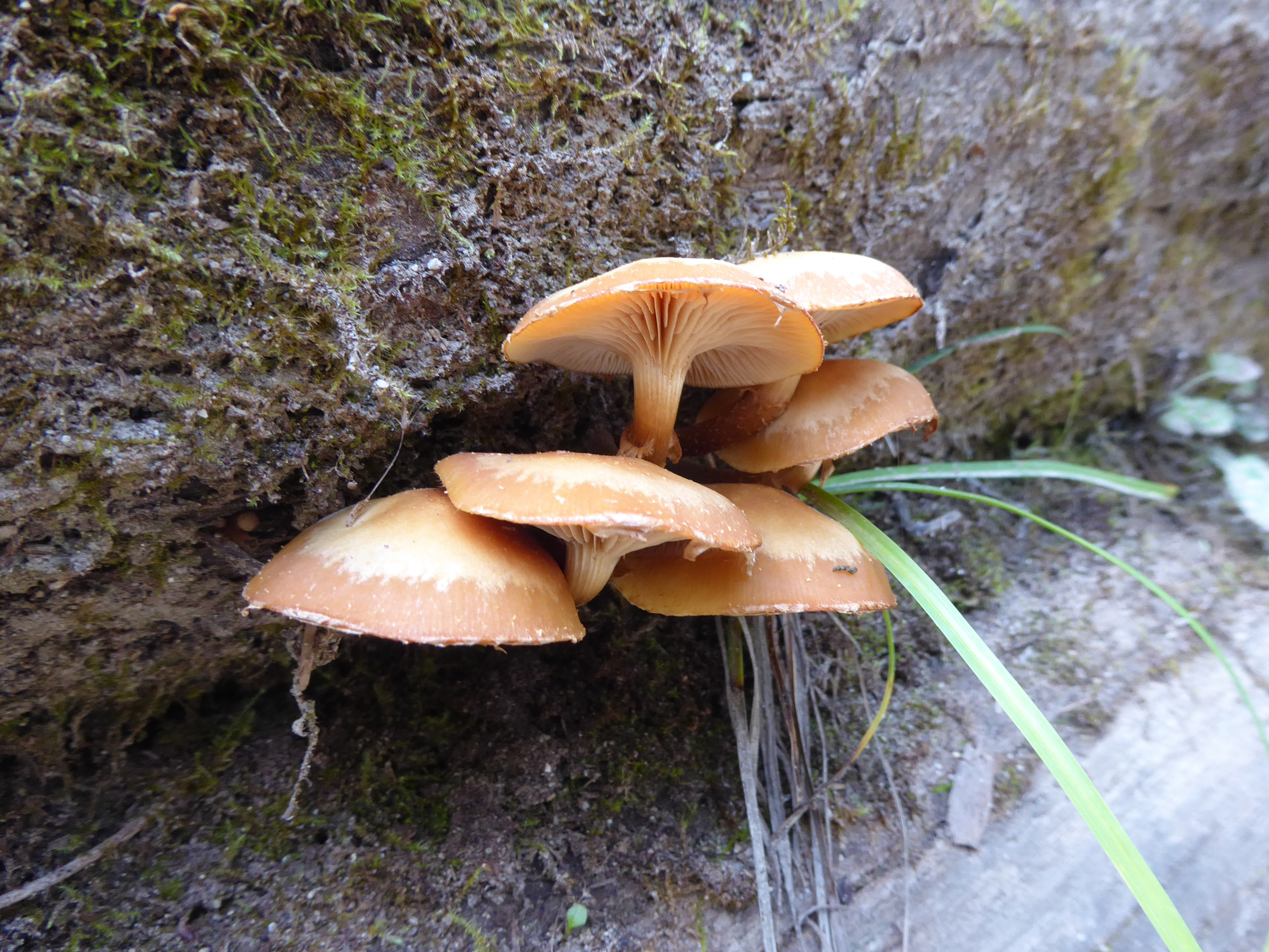
How to Tell Them Apart
An edible species that also grows in clusters on dead wood. Sheathed Woodtuft has a distinctive ring on the stem, a two-toned cap (dark when wet, pale when dry), and brown (not purple-brown) spore print. Gills never have the greenish tinge. The ring is the key feature.
Bright sulfur-yellow to greenish-yellow cap and flesh (never brown/cinnamon). Gills greenish-yellow becoming dark purple-brown. Purple-brown spore print (not cinnamon-brown). Lacks a distinct ring. Extremely bitter taste. Causes gastrointestinal poisoning.
Side-by-Side Identification
| Trait | Sulphur Tuft | Sheathed Woodtuft |
|---|---|---|
| Cap | 2-7 cm across. Convex, becoming broadly convex to flat. Sulfur-yellow at the margin, deepening to orange or tawny-brown at the center. Surface smooth, sometimes with faint veil remnants at the margin when young. | 3-8 cm diameter. Convex becoming flat with a low umbo. Strongly hygrophanous — cinnamon-brown when wet, drying to pale buff from the center outward, creating a two-toned dark-rimmed appearance. Surface smooth, slightly greasy when moist. |
| Gills | Adnate (broadly attached to the stem). Start sulfur-yellow, then turn greenish-yellow, and finally darken to purple-brown as spores mature. The green tinge in mid-development is distinctive. | Adnate to slightly decurrent. Medium-spaced, 2-4 mm broad. Pallid when young, maturing to cinnamon-brown. |
| Stem | 5-10 cm tall, slender, curved, sulfur-yellow above and brownish below. Fibrous, often with faint ring zone from the veil. Hollow or stuffed. Grows in dense clusters with stems fused at the base. | 5-10 cm tall, 5-10 mm thick. Tough, fibrous, with a prominent membranous ring. Above ring: pale cream, smooth. Below ring: covered in distinctive dark brown recurved scales (the 'sheath' — key diagnostic feature). This scaly lower stem separates it from the smooth-stemmed deadly Galerina marginata. |
| Spore print | Purple-brown to dark violet-brown. | Reddish-ochre to dark cinnamon-brown. |
| Odor | Mushroomy but not distinctive. The intensely bitter taste is a more useful identification feature than the smell. | Pleasant, mild mushroom smell. Taste mild and nutty. |
| Habitat | Saprotrophic on dead wood, especially stumps, fallen logs, and buried roots of both broadleaf and coniferous trees. One of the most common wood-decay fungi in temperate forests. Found in all types of woodland, parks, and gardens wherever dead wood is present. | Saprobic on dead wood of broad-leaved trees, especially beech (Fagus), birch (Betula), and alder (Alnus). Grows on stumps, fallen logs, and buried roots. Rarely on coniferous wood. Always in dense clusters. Causes white rot in dead wood. |
| Season | Year-round, though most abundant from September through November. Can fruit in any month during mild weather. | Late spring through autumn (April to November), with peak fruiting in summer and early autumn. Can fruit year-round where conditions are mild. |
Found one of these in the wild? Don't rely on memory — identify it from a photo with Orangutany and check it against both species before you touch it.