False Morel vs Common Morel
Gyromitra esculenta compared with Morchella esculenta — how to tell them apart in the field.
This is a dangerous confusion.
At least one of these species is toxic. Never eat a wild mushroom based on a photo comparison alone — verify with local experts.
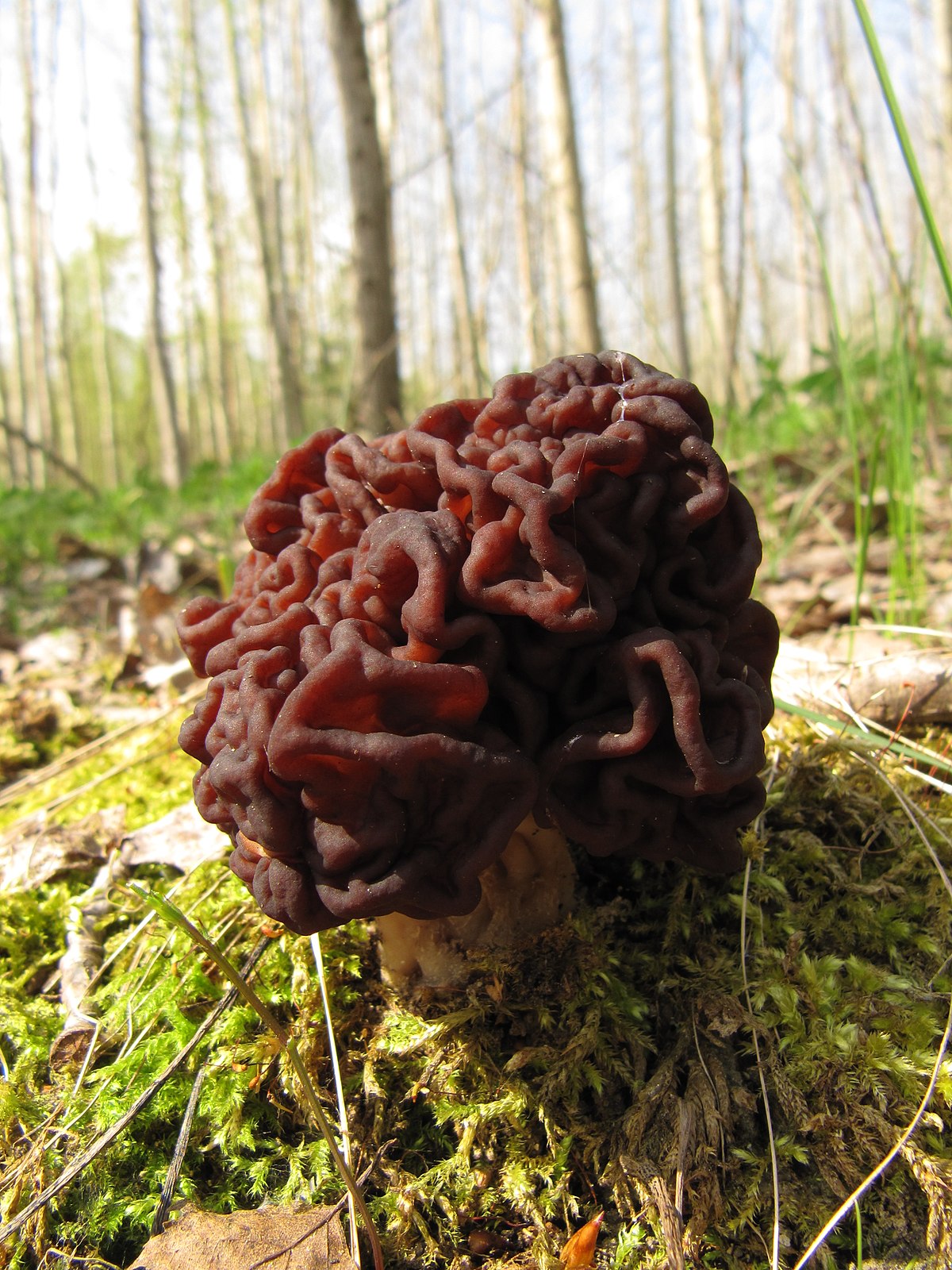
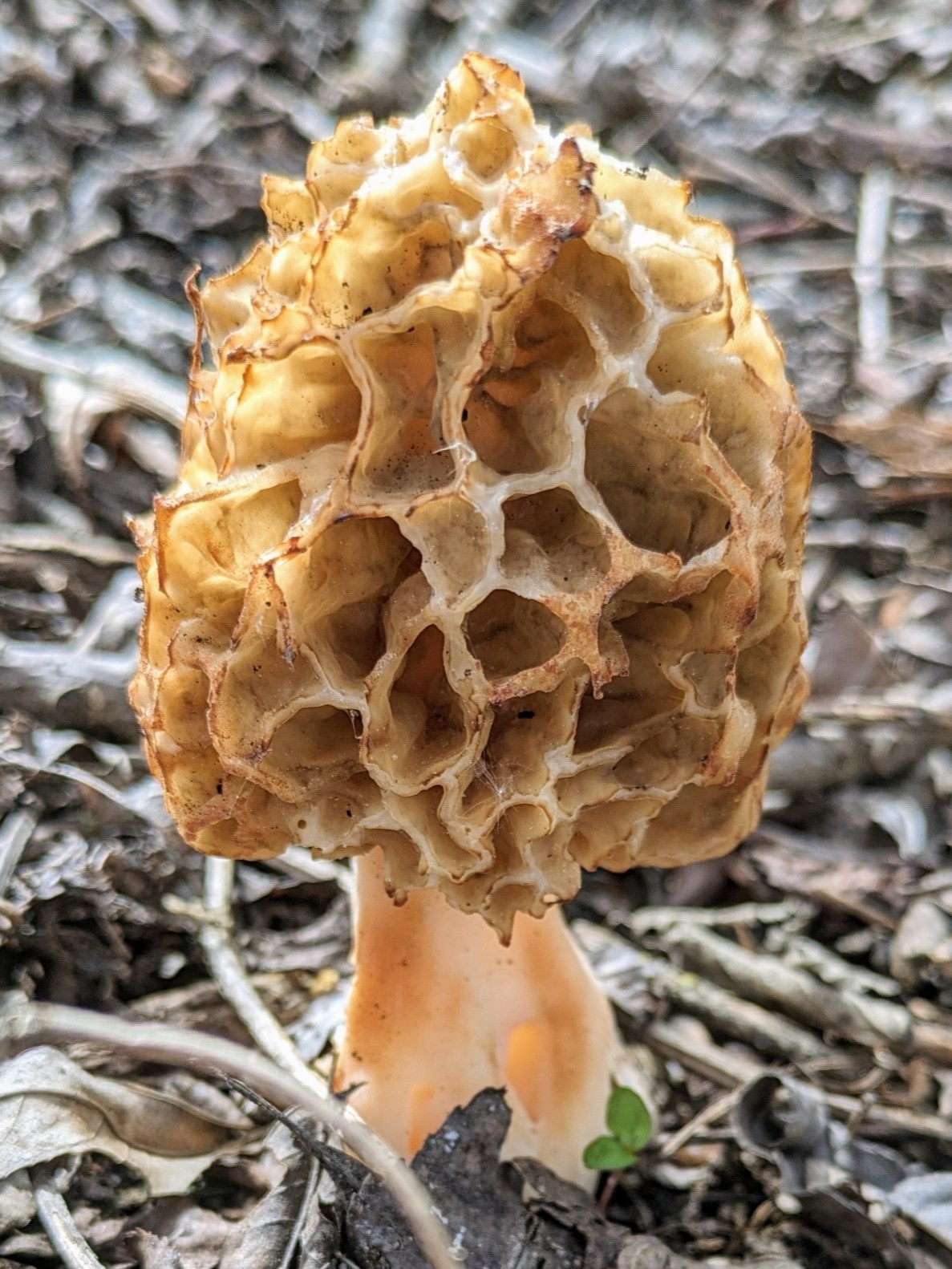
How to Tell Them Apart
Potentially deadly. The cap is brain-like and lobed — wrinkled and folded rather than pitted with a honeycomb pattern. Reddish-brown to dark brown. The interior is chambered, not cleanly hollow. Contains gyromitrin, which metabolizes into monomethylhydrazine (rocket fuel). Despite the species name 'esculenta' (edible), this mushroom kills people.
Side-by-Side Identification
| Trait | False Morel | Common Morel |
|---|---|---|
| Cap | 4-10 cm across, irregularly lobed and brain-like with deep folds and wrinkles. Ranges from yellowish-brown to dark reddish-brown. The surface is convoluted like a walnut or cauliflower — nothing like the neat pits of a true morel. The interior is chambered (not hollow like a morel when sliced in half). | 3-8 cm tall, 3-6 cm wide. Honeycomb-like surface covered in irregular pits and ridges. Ranges from pale cream to yellowish-brown to dark tan. The cap is completely hollow inside — slice one in half lengthwise to confirm. The pits are rounded and the ridges are lighter in color. |
| Gills | No gills — this is an ascomycete. The spore-bearing surface is the entire wrinkled outer cap. If you slice it open, the interior has irregular chambers and cottony tissue, unlike the completely hollow interior of true morels. | No gills at all — morels have a pitted, sponge-like cap surface instead. The exterior is covered in ridges and pits (the pits are where the spores are produced). This is one of the easiest ways to tell a true morel from most other mushrooms. |
| Stem | 2-6 cm tall, stout and whitish to pale cream. Often compressed or furrowed. The stem is chambered inside with cottony stuffing — not cleanly hollow like a morel's stem. It can look almost too small for the oversized brain cap sitting on top of it. | 3-7 cm tall, white to pale cream, hollow all the way through. The stem attaches directly to the bottom edge of the cap — the cap and stem form one continuous hollow chamber. Slightly granular or mealy texture on the surface. |
| Spore print | Whitish to pale yellow. | Cream to yellowish — though most foragers identify morels by sight rather than spore print. |
| Odor | Pleasant, mild, somewhat fruity or mushroomy. Nothing alarming — which is part of the problem. | Pleasant, earthy, slightly nutty. Fresh morels smell like the forest floor on a warm spring day. |
| Habitat | Grows on sandy soils in and around coniferous forests, especially pine and spruce. Often found on disturbed ground — old logging roads, fire sites, stream banks, and forest edges. Forms a saprotrophic relationship with decaying wood and forest litter rather than a mycorrhizal one. | Extremely variable. Found in old orchards, river bottoms, tulip poplar stands, dying elm trees, ash forests, and recently burned areas. Loves disturbed ground — old logging roads, flood plains, and the edges of paths. Mycorrhizal with various hardwoods and conifers, but also appears as a saprobe on dead wood. |
| Season | A true spring mushroom. Appears from March through May depending on latitude and snowmelt. In Scandinavia and northern North America, peak season is April-May. One of the first mushrooms to fruit after snowmelt. | March through May in most of North America, depending on latitude and elevation. Peak is April in the Midwest and mid-Atlantic. Follows a northward wave as temperatures warm — southern states get them first. |
Found one of these in the wild? Don't rely on memory — identify it from a photo with Orangutany and check it against both species before you touch it.