False Morel vs Black Morel
Gyromitra esculenta compared with Morchella elata — how to tell them apart in the field.
This is a dangerous confusion.
At least one of these species is toxic. Never eat a wild mushroom based on a photo comparison alone — verify with local experts.
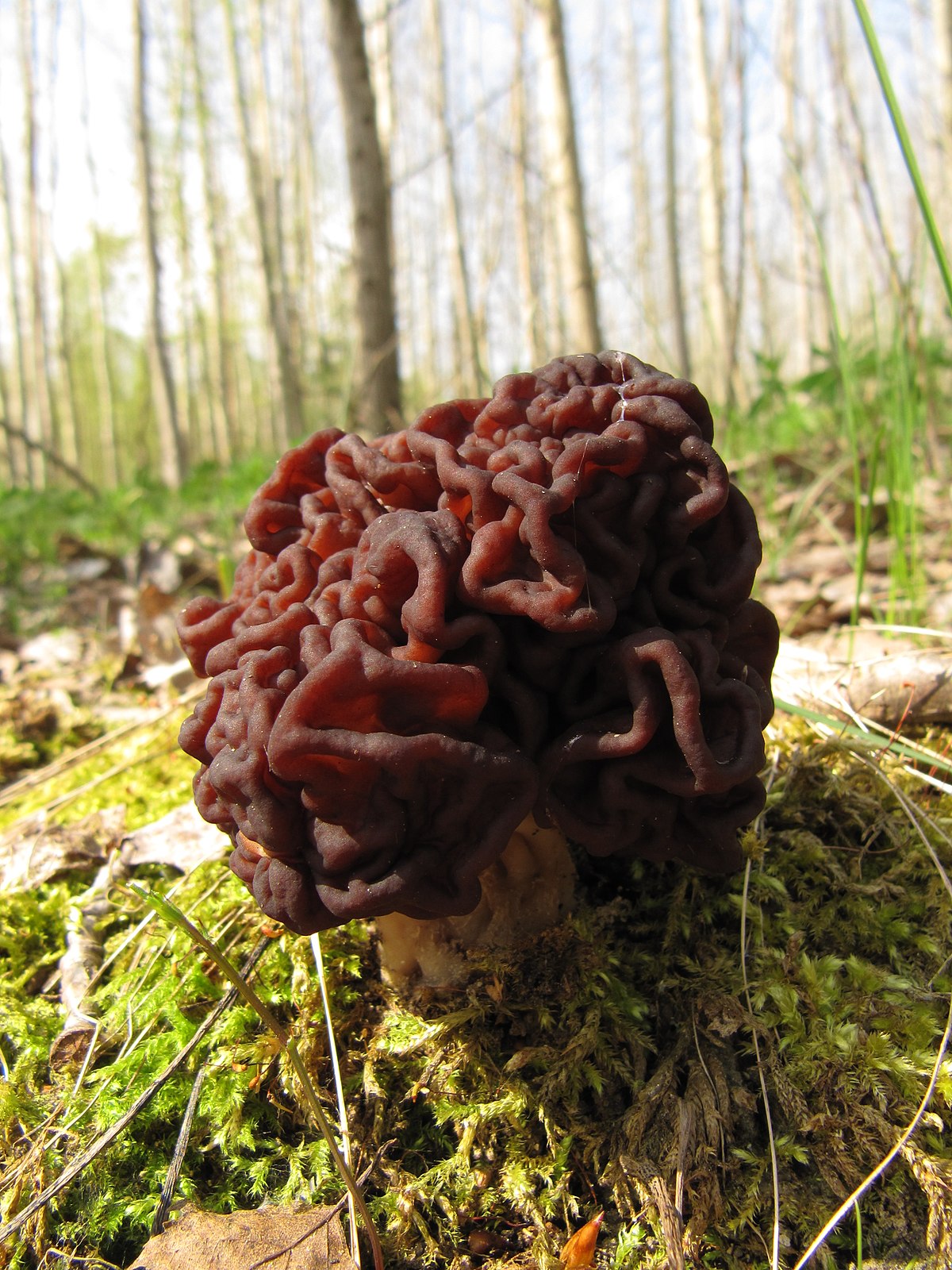
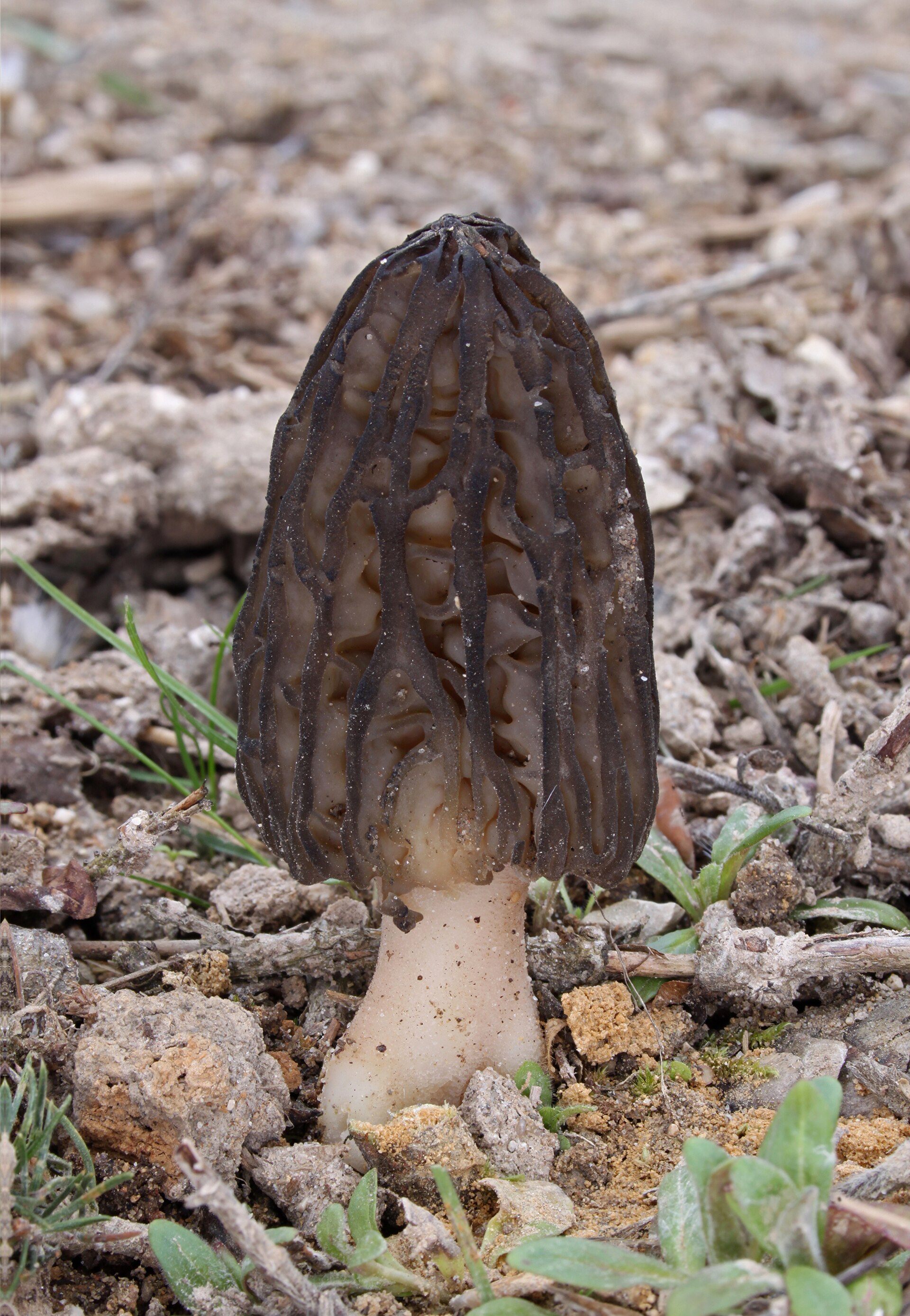
How to Tell Them Apart
Brain-like, wrinkled surface rather than a honeycomb pattern of pits and ridges. The cap looks crumpled and irregular, not neatly pitted. Interior is chambered and cotton-like rather than cleanly hollow. Contains gyromitrin, a potentially deadly toxin. The distinction is clear once you know what to look for.
Side-by-Side Identification
| Trait | False Morel | Black Morel |
|---|---|---|
| Cap | 4-10 cm across, irregularly lobed and brain-like with deep folds and wrinkles. Ranges from yellowish-brown to dark reddish-brown. The surface is convoluted like a walnut or cauliflower — nothing like the neat pits of a true morel. The interior is chambered (not hollow like a morel when sliced in half). | 3-10 cm tall, conical to elongated-conical. Surface covered in a honeycomb pattern of pits and ridges. Ridges are dark brown to black, pits are lighter brown to grayish. The cap is attached directly to the stem at the base (not hanging free like a Verpa). Completely hollow inside. |
| Gills | No gills — this is an ascomycete. The spore-bearing surface is the entire wrinkled outer cap. If you slice it open, the interior has irregular chambers and cottony tissue, unlike the completely hollow interior of true morels. | None. Morels are ascomycetes, not gilled mushrooms. Spores are produced on the inner surfaces of the pits. |
| Stem | 2-6 cm tall, stout and whitish to pale cream. Often compressed or furrowed. The stem is chambered inside with cottony stuffing — not cleanly hollow like a morel's stem. It can look almost too small for the oversized brain cap sitting on top of it. | 3-8 cm tall, pale whitish to cream, sometimes with a granular or slightly roughened surface. Completely hollow from base to tip. The cap attaches at the very bottom of the head, with no skirt-like overhang. |
| Spore print | Whitish to pale yellow. | Cream to pale yellow-orange. |
| Odor | Pleasant, mild, somewhat fruity or mushroomy. Nothing alarming — which is part of the problem. | Earthy, pleasant, with a slightly smoky quality that intensifies when dried. |
| Habitat | Grows on sandy soils in and around coniferous forests, especially pine and spruce. Often found on disturbed ground — old logging roads, fire sites, stream banks, and forest edges. Forms a saprotrophic relationship with decaying wood and forest litter rather than a mycorrhizal one. | Coniferous forests, especially after wildfire (burn morels). Also found in undisturbed forests under spruce, fir, pine, and Douglas fir. Favors disturbed ground, stream banks, logging roads, and areas with recent soil disturbance. Burn-site morels can fruit in extraordinary quantities the spring following a fire. |
| Season | A true spring mushroom. Appears from March through May depending on latitude and snowmelt. In Scandinavia and northern North America, peak season is April-May. One of the first mushrooms to fruit after snowmelt. | March through June depending on latitude and elevation. Among the earliest spring mushrooms. Burn morel season typically peaks in May and June at higher elevations in western North America. |
Found one of these in the wild? Don't rely on memory — identify it from a photo with Orangutany and check it against both species before you touch it.