Hen of the Woods vs Cauliflower Mushroom
Grifola frondosa compared with Sparassis crispa — how to tell them apart in the field.
How to Tell Them Apart
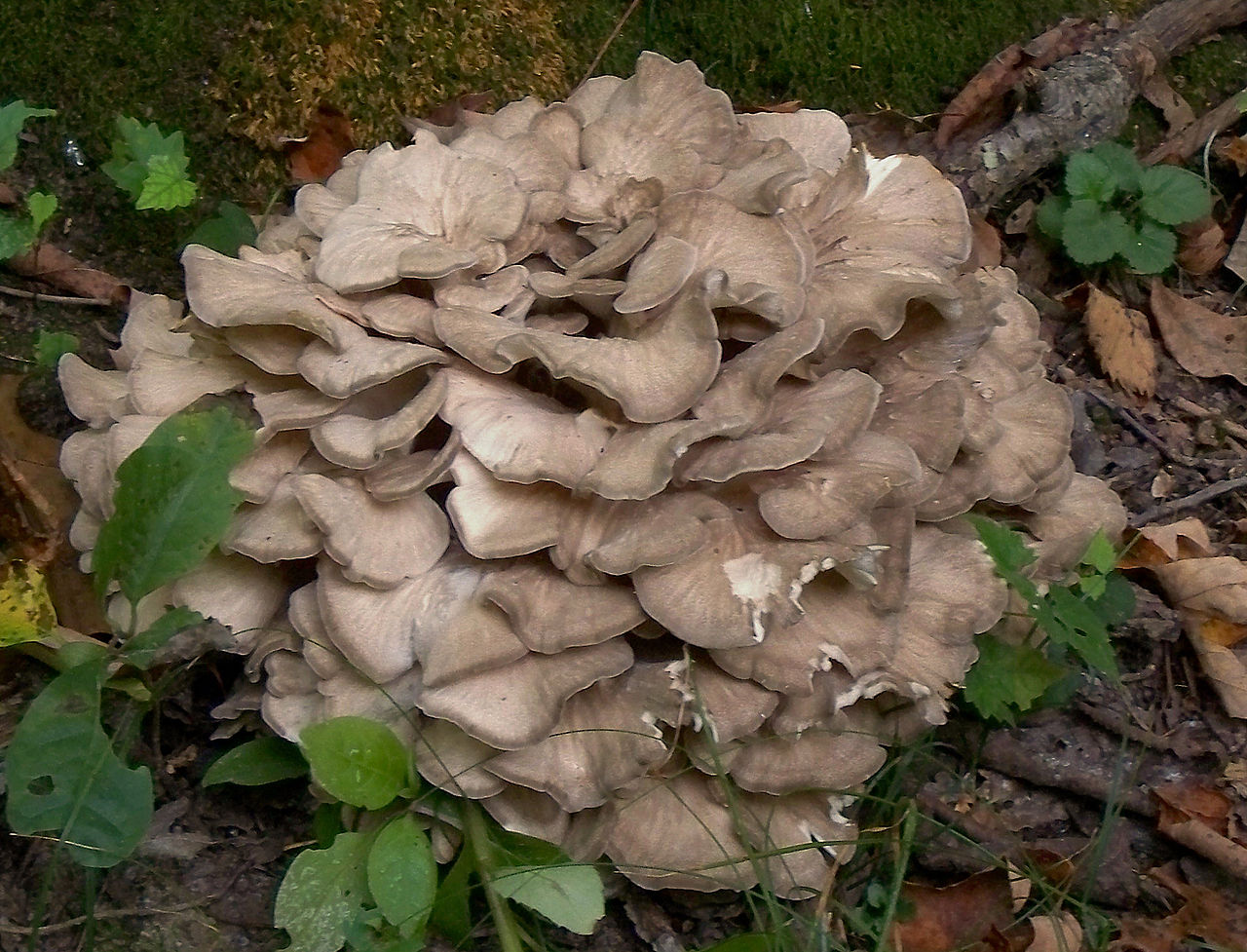
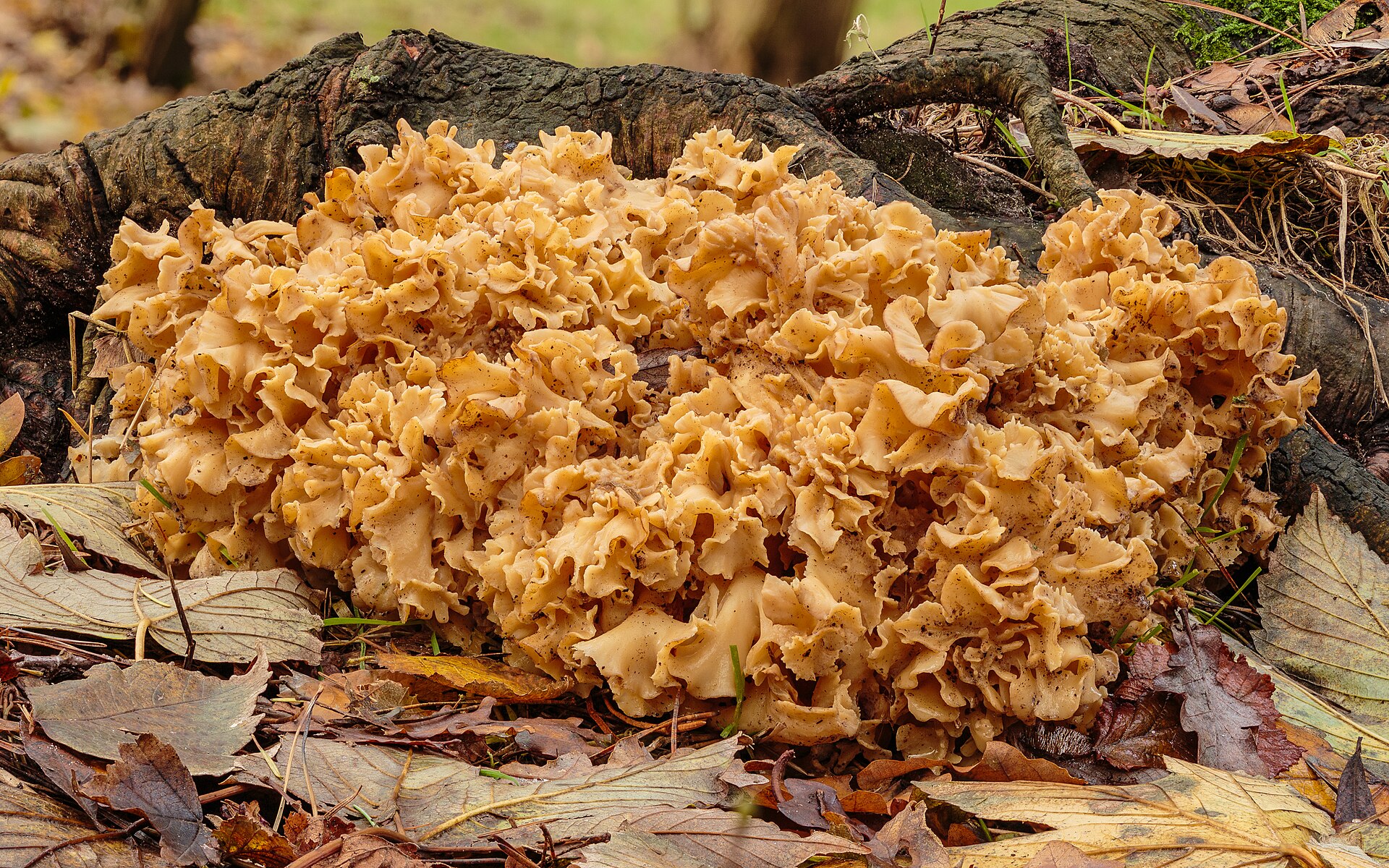
Also a large, clustered fungus growing at the base of trees, but Hen of the Woods has distinct, fan-shaped, overlapping caps (each with pores underneath) rather than the wavy, ribbon-like lobes of Sparassis. Hen of the Woods is grayish-brown; Sparassis is cream to pale yellow. Hen of the Woods grows on hardwoods (especially oaks); S. crispa grows on conifers. Both are excellent edibles.
Side-by-Side Identification
| Trait | Hen of the Woods | Cauliflower Mushroom |
|---|---|---|
| Cap | A dense rosette of overlapping, fan-shaped fronds (caps), each 2-8 cm across. Gray-brown on top, sometimes with darker zones toward the center. The edges are wavy and slightly curled. The whole cluster can be 20-60 cm wide — some monsters get even bigger. | No conventional cap. Fruiting body is a large, globose rosette of flattened, wavy, ribbon-like lobes or branches, 15-50 cm across (sometimes larger). Cream to pale yellowish when young, darkening to ochre-tan with age. Individual lobes are 1-3 cm wide, thin, and flexible, with wavy or crisped edges. The overall shape resembles a cauliflower, a brain, or a mass of egg noodles. |
| Gills | No gills. The underside has tiny white pores (1-3 per mm) that run slightly down the branching stems. This is a polypore, so if you see gills, you've got the wrong mushroom. | No gills. Spores are produced on the flat surfaces of the lobes. The fertile surface is smooth. |
| Stem | Multiple branching white stems merge into a single thick base that attaches to the tree or its roots. The base can be surprisingly tough and woody — most foragers trim it off and focus on the tender fronds. | A thick, rooting base (stipe) attaches the rosette to the tree roots or the base of the trunk. The base is white, fleshy, and often buried in soil or hidden beneath the outer lobes. Can be 5-10 cm thick. |
| Spore print | — | White to pale cream. |
| Odor | — | Pleasant, mildly nutty, sometimes described as faintly like almonds or fresh pasta. |
| Habitat | Grows at the base of living or dead hardwood trees, with a strong preference for oaks. Occasionally found on maples, elms, and other hardwoods. Typically appears on the ground near the trunk or over surface roots. Prefers mature forests but shows up in parks and suburban areas too — anywhere there's an old oak. | Parasitic and saprobic at the base of living and recently dead conifers, especially pines (Pinus sylvestris, P. nigra, P. ponderosa). Also occasionally found at the base of spruce, fir, and larch. Causes brown cubical butt rot of the heartwood. Found in coniferous and mixed forests. |
| Season | Late August through November in the Northern Hemisphere. Peak is September-October. The same tree often produces flushes in the same spot year after year. | Late summer through late autumn, typically August through November. Peak fruiting in September and October. A productive tree may produce a fruiting body annually for many consecutive years. |
Found one of these in the wild? Don't rely on memory — identify it from a photo with Orangutany and check it against both species before you touch it.