Hen of the Woods vs Chicken of the Woods
Grifola frondosa compared with Laetiporus sulphureus — how to tell them apart in the field.
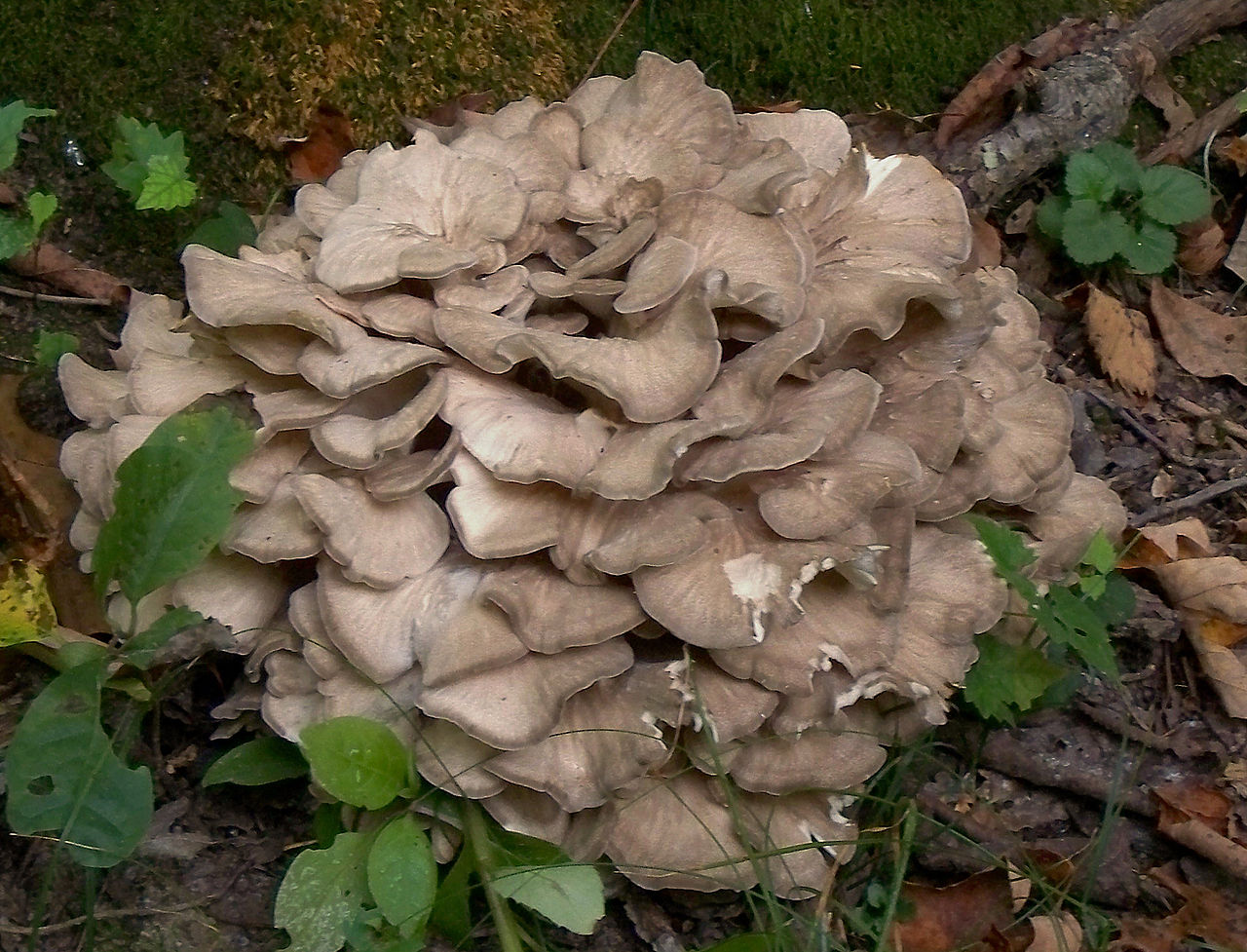
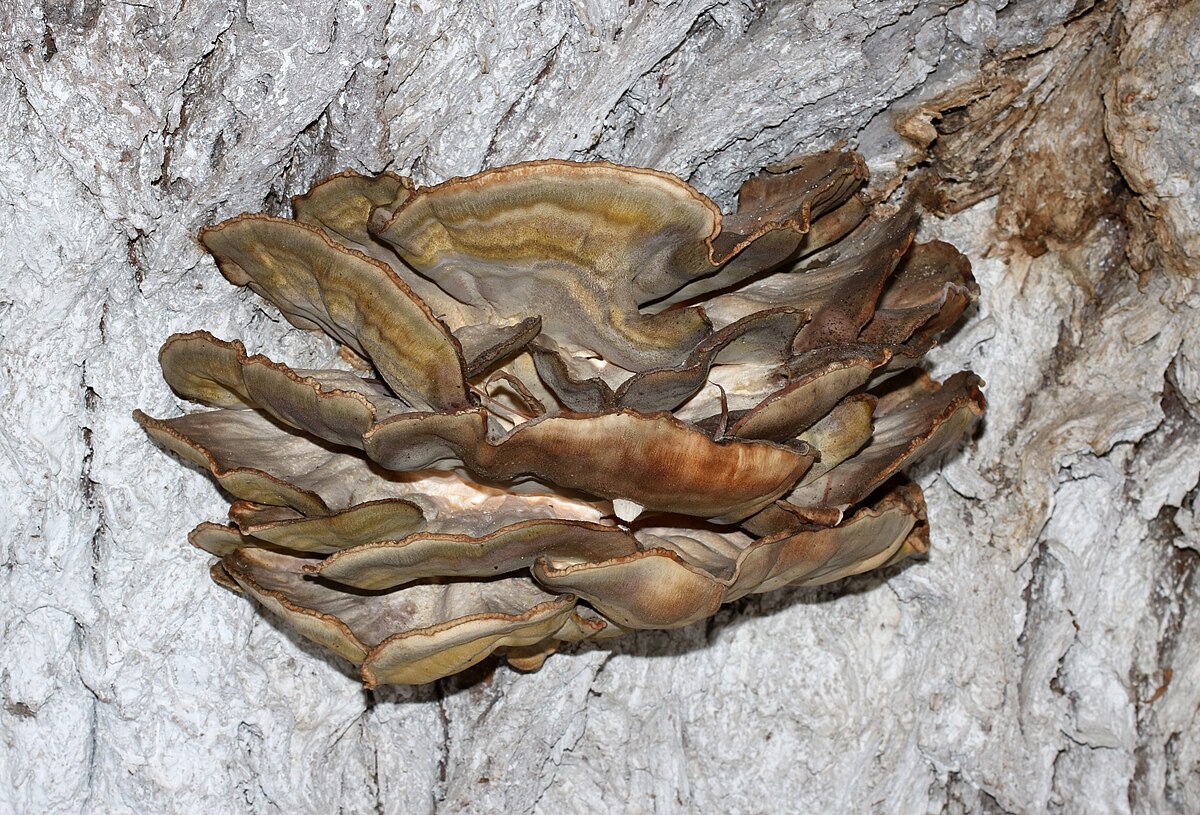
How to Tell Them Apart
Bright orange and yellow shelves — impossible to miss the color difference. Chicken of the Woods grows higher up on trunks and logs, not at the base. The flesh is thick and rubbery, not frilly. If it's neon orange, it's not maitake.
Side-by-Side Identification
| Trait | Hen of the Woods | Chicken of the Woods |
|---|---|---|
| Cap | A dense rosette of overlapping, fan-shaped fronds (caps), each 2-8 cm across. Gray-brown on top, sometimes with darker zones toward the center. The edges are wavy and slightly curled. The whole cluster can be 20-60 cm wide — some monsters get even bigger. | No traditional cap — grows as overlapping shelf-like brackets, 5–60 cm across. Bright orange to salmon on top with a suede-like texture when young. Edges are rounded and wavy, often sulfur yellow. Fades to pale whitish-orange with age and becomes brittle. |
| Gills | No gills. The underside has tiny white pores (1-3 per mm) that run slightly down the branching stems. This is a polypore, so if you see gills, you've got the wrong mushroom. | No gills. The underside has tiny pores — small round holes that release spores. Pore surface is bright sulfur yellow when fresh, fading to white as it ages. |
| Stem | Multiple branching white stems merge into a single thick base that attaches to the tree or its roots. The base can be surprisingly tough and woody — most foragers trim it off and focus on the tender fronds. | None. Grows directly from tree trunks, stumps, or buried roots as a sessile bracket fungus. Sometimes a very short stubby attachment point, but never a true stem. |
| Spore print | — | White — though collecting a spore print from a bracket fungus is tricky and rarely necessary for ID. |
| Habitat | Grows at the base of living or dead hardwood trees, with a strong preference for oaks. Occasionally found on maples, elms, and other hardwoods. Typically appears on the ground near the trunk or over surface roots. Prefers mature forests but shows up in parks and suburban areas too — anywhere there's an old oak. | Grows on living and dead hardwood trees — especially oak, but also cherry, beech, willow, and occasionally conifers or eucalyptus. Found on standing trunks, stumps, and fallen logs. It's a parasite and wood decomposer, causing brown rot in the heartwood. |
| Season | Late August through November in the Northern Hemisphere. Peak is September-October. The same tree often produces flushes in the same spot year after year. | Late spring through autumn. Peak season is May–October in temperate regions. Often appears after rain. |
Found one of these in the wild? Don't rely on memory — identify it from a photo with Orangutany and check it against both species before you touch it.