Lemon Waxcap vs Scarlet Waxcap
Gliophorus chromolimoneus compared with Hygrocybe coccinea — how to tell them apart in the field.
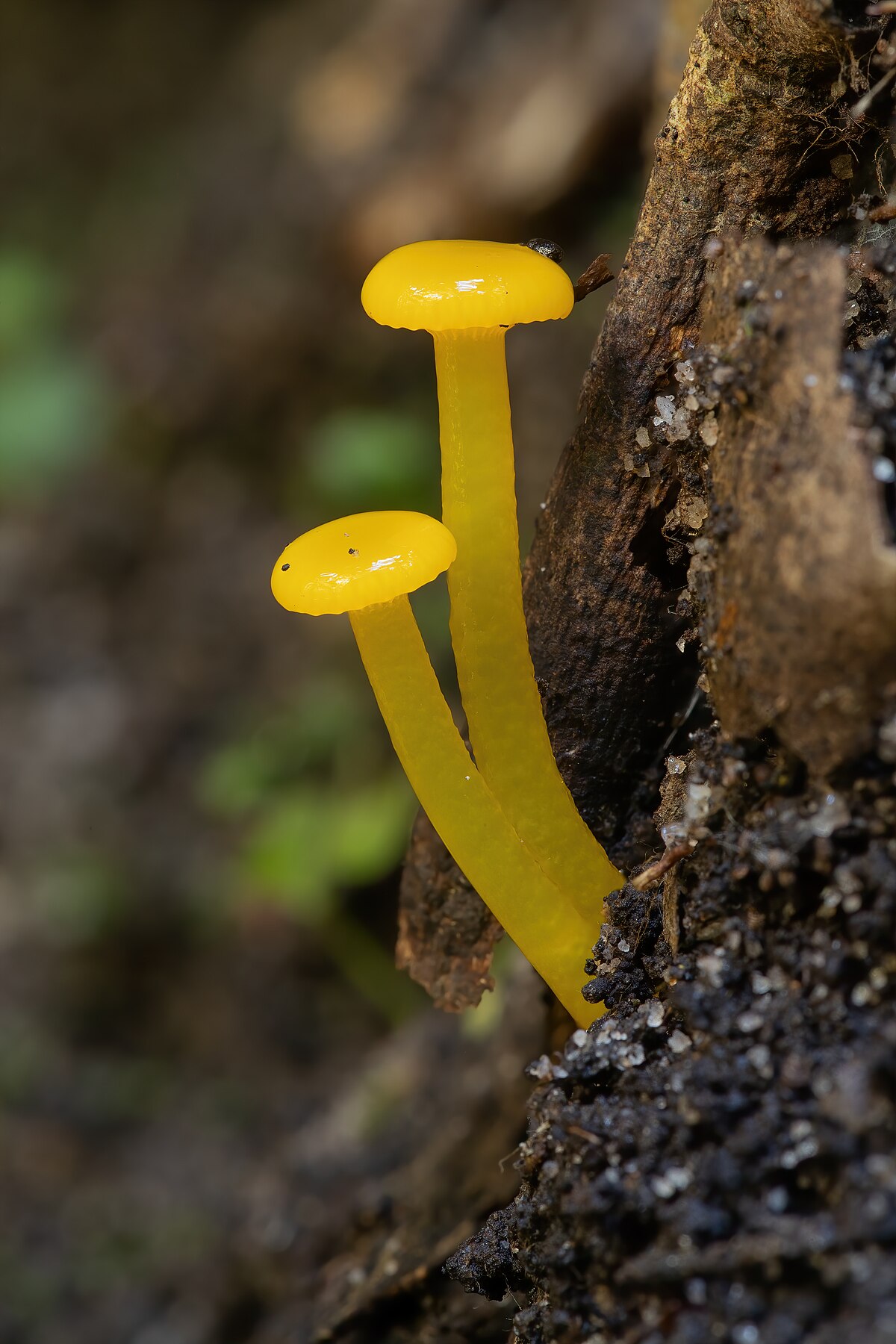
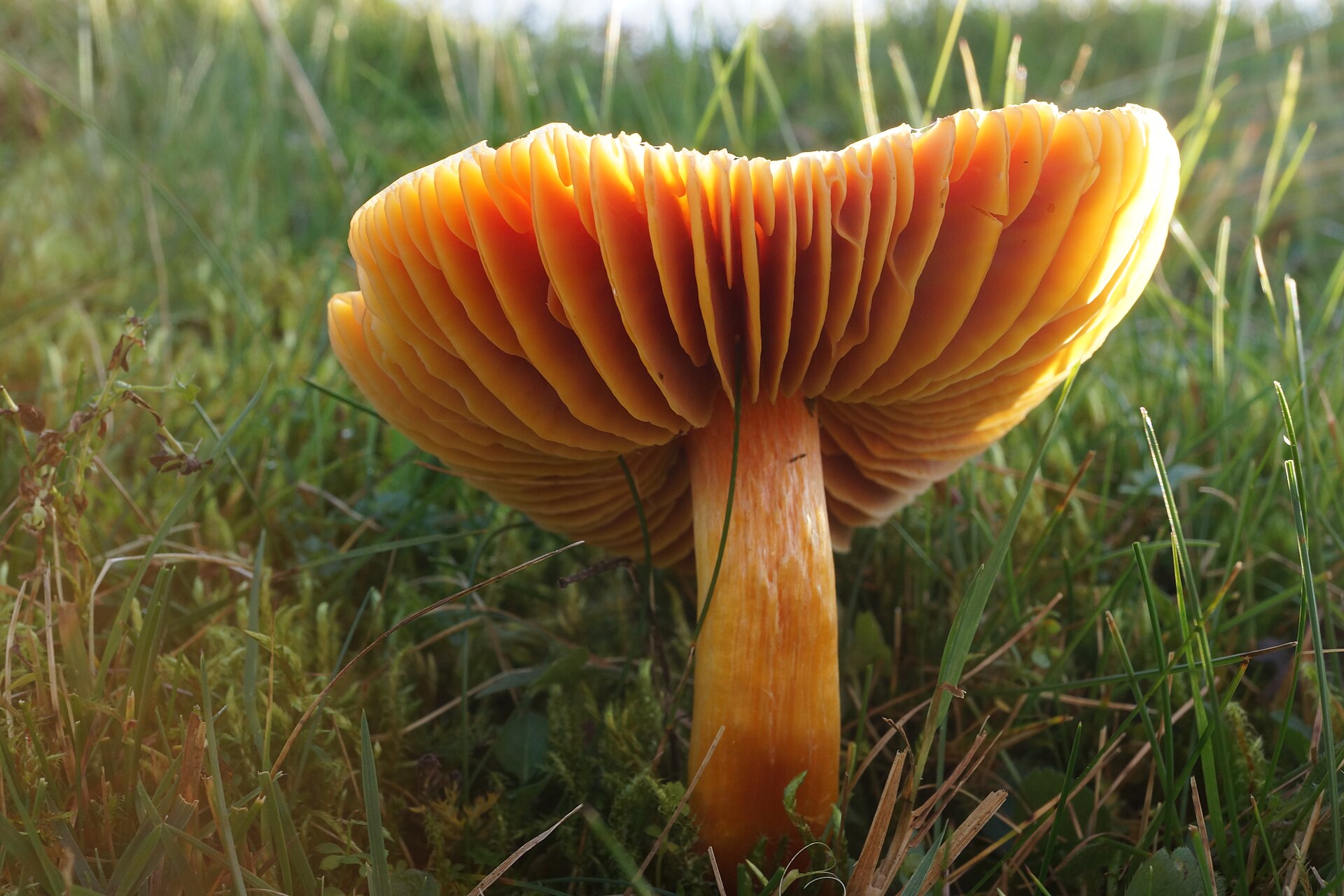
How to Tell Them Apart
The Scarlet Waxcap is bright red to scarlet rather than lemon-yellow, making color the most obvious difference. Both share the waxy gill texture and similar stature of the Hygrophoraceae family. Hygrocybe coccinea is also much less slimy than Gliophorus chromolimoneus. Found in similar grassland habitats but with a wider global distribution.
Side-by-Side Identification
| Trait | Lemon Waxcap | Scarlet Waxcap |
|---|---|---|
| Cap | 1–4 cm across. Convex when young, expanding to broadly convex or flat, sometimes with a shallow central depression. Surface extremely slimy (glutinous) when fresh, smooth underneath the slime layer. Color bright lemon-yellow to chrome-yellow, sometimes with a slightly darker center. Margin striate, translucent when moist. | 2-5 cm across. Convex, becoming broadly convex to flat, sometimes with a slight central depression. Vivid scarlet red, fading slightly toward the margin or with age. Surface smooth, waxy, slightly greasy to the touch, especially when wet. |
| Gills | Attached (adnexed to adnate), moderately spaced. Pale yellow to whitish-yellow, with a waxy texture characteristic of the Hygrophoraceae. Edges smooth. | Broadly attached to slightly decurrent. Moderately spaced. Yellow to orange-yellow with reddish edges, waxy in texture. The waxy feel of the gills is a defining characteristic of all waxcaps. |
| Stem | 2–6 cm tall, 3–6 mm thick. Cylindrical, often slightly compressed. Same bright yellow as the cap. Extremely slimy — the glutinous coating extends the full length. Hollow in mature specimens. No ring. | 3-6 cm tall, 5-10 mm thick. Red to orange-red, often paler (yellowish) toward the base. Smooth, dry, hollow, slightly compressed. No ring, no volva. |
| Spore print | White. | White. |
| Odor | Not distinctive. | Not distinctive. Mild, slightly mushroomy. |
| Habitat | Found in native temperate rainforest, wet sclerophyll forest, and moist grassland margins. Associated with Nothofagus (southern beech), Eucalyptus, and tree fern understories. Grows in soil and deep leaf litter, often in dense clusters. Prefers consistently moist, shaded environments with high humidity. | Unimproved, unfertilized grasslands, including old meadows, pastures, churchyards, lawns, and parklands. Strongly associated with ancient grasslands that have never been plowed or treated with artificial fertilizers. Also found on mossy banks, road verges, and heathlands. Ecology is not fully understood; likely biotrophic, associated with mosses and grass roots. |
| Season | Autumn and winter in the Southern Hemisphere, typically March through August. Peak fruiting in May and June. Requires sustained rainfall and cool temperatures to produce fruiting bodies. | Autumn, typically September through December. Peak season is October to November in most of its European range. Fruits after the first cool, wet weather of autumn. |
Found one of these in the wild? Don't rely on memory — identify it from a photo with Orangutany and check it against both species before you touch it.