Deadly Webcap vs Van Duzer's Cortinarius
Cortinarius rubellus compared with Cortinarius vanduzerensis — how to tell them apart in the field.
This is a dangerous confusion.
At least one of these species is potentially deadly. Never eat a wild mushroom based on a photo comparison alone — verify with local experts.
How to Tell Them Apart
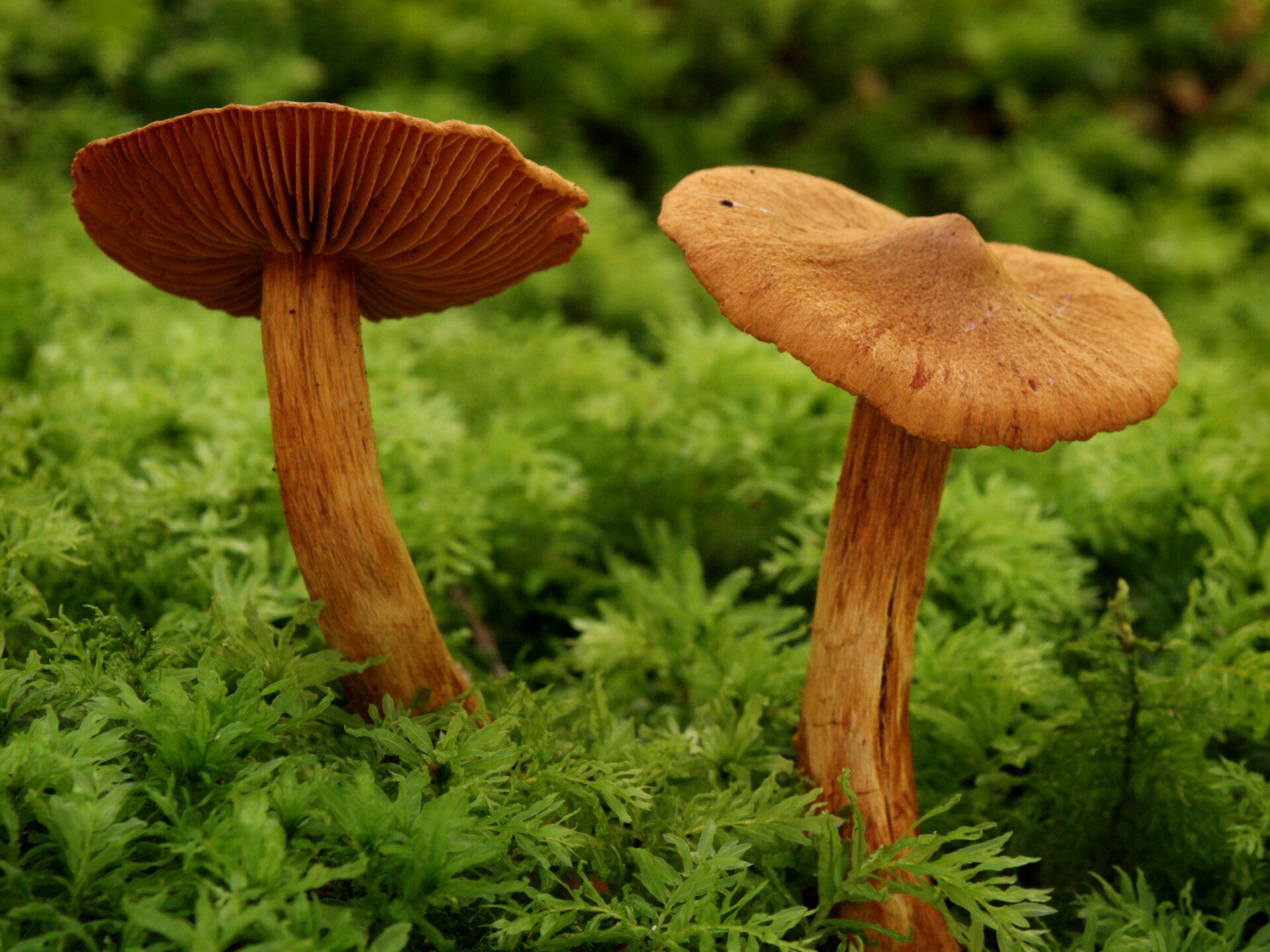
DEADLY. Cortinarius rubellus is a slender, dry, orange-brown to tawny European species that lacks the slimy cap and violet stem of C. vanduzerensis. Contains orellanine, causing irreversible kidney failure. Found primarily in Europe under conifers — extremely rare in the Pacific Northwest. Much smaller and drier than C. vanduzerensis.
Side-by-Side Identification
| Trait | Deadly Webcap | Van Duzer's Cortinarius |
|---|---|---|
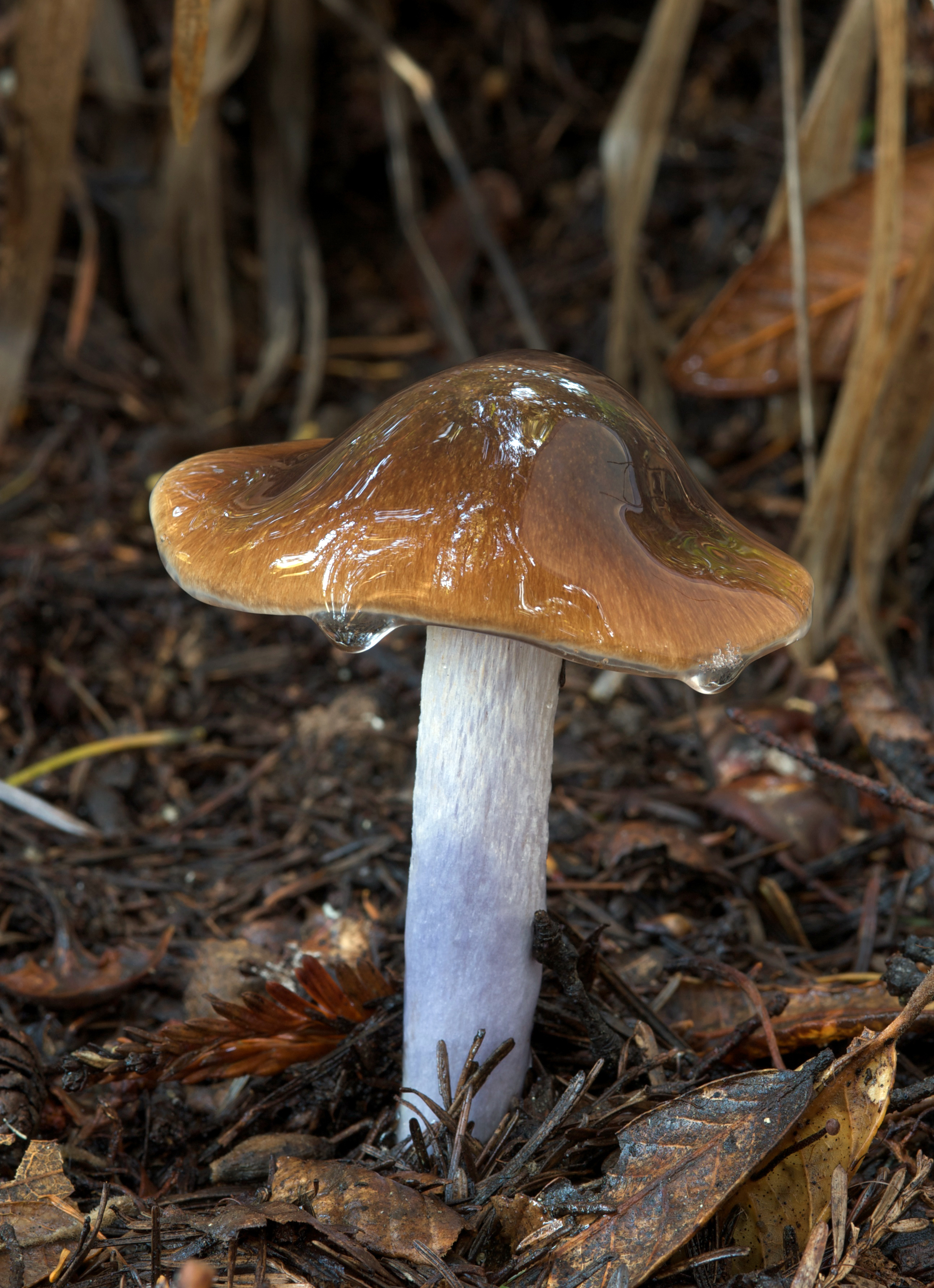
| Cap | 3-8 cm across. Conical to convex, often with a distinct pointed umbo (central bump). Tawny orange to rusty brown, with fine radial fibers on the surface. Slightly hygrophanous, becoming paler as it dries. | 5–12 cm across. Convex when young, expanding to broadly convex or nearly flat with age. Surface extremely viscid to glutinous when moist, glossy when dry. Color rich chestnut-brown to dark tawny-brown, sometimes with an olive tinge. Margin incurved when young with cortina remnants. |
| Gills | Broadly attached to the stem. Initially yellow-orange, becoming rusty brown with age as spores mature. Fairly widely spaced. | Attached (adnate to slightly emarginate). Moderately close. Young gills pale violet-brown or lavender-tinged, maturing to cinnamon-brown and finally dark rusty-brown as spores ripen. Edges slightly uneven. |
| Stem | 5-11 cm tall, same color as the cap or slightly paler. Fibrous and often slightly thickened at the base. Young specimens show remnants of the rusty cortina (cobweb veil) on the upper stem. | 6–12 cm tall, 1.5–3 cm thick. Solid, club-shaped to equal. Surface dry, fibrillose. Upper portion strikingly violet to lilac, fading to pale lavender below. Cortina zone on upper stem collects rusty-brown spore deposits. Base sometimes slightly bulbous. |
| Spore print | Rusty brown. | Rusty brown. |
| Odor | Slightly radish-like or faintly earthy. Not strongly distinctive. | Mild, slightly earthy or fungal. Not distinctive. |
| Habitat | Mycorrhizal with conifers, especially spruce and pine. Found in damp, mossy coniferous forests, often at higher elevations or in northern latitudes. Grows in acidic, nutrient-poor soils. | Mycorrhizal with conifers, especially Sitka spruce (Picea sitchensis), western hemlock (Tsuga heterophylla), and Douglas fir (Pseudotsuga menziesii). Found in old-growth and mature second-growth conifer forests in moist, coastal environments. Prefers deep duff, mossy ground, and the edges of rotting logs. Strictly a Pacific Northwest species. |
| Season | August through November. Most common in September and October in northern Europe. | Late September through December. Peak fruiting in October and November during the heavy fall rains. May appear as early as late August in especially wet years. |
Found one of these in the wild? Don't rely on memory — identify it from a photo with Orangutany and check it against both species before you touch it.