Fool's Webcap vs Van Duzer's Cortinarius
Cortinarius orellanus compared with Cortinarius vanduzerensis — how to tell them apart in the field.
This is a dangerous confusion.
At least one of these species is potentially deadly. Never eat a wild mushroom based on a photo comparison alone — verify with local experts.
How to Tell Them Apart
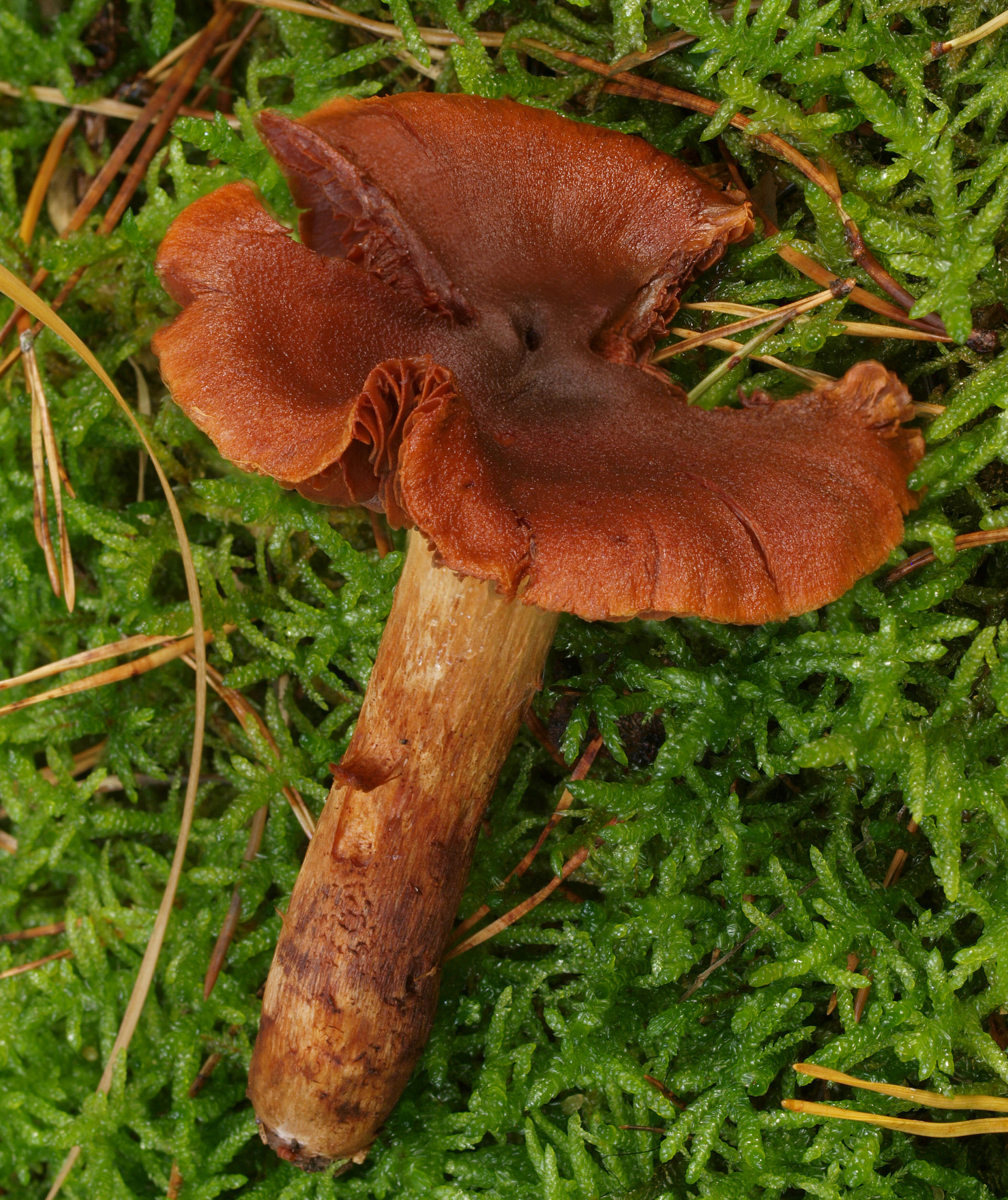
DEADLY. Another orellanine-containing species. Dry, fibrillose orange-brown cap with no slime layer. Yellow to orange gills, no violet on the stem. Strictly European, associated with broadleaf trees (especially oak and beech). Unlikely to be encountered in the Pacific Northwest.
Side-by-Side Identification
| Trait | Fool's Webcap | Van Duzer's Cortinarius |
|---|---|---|
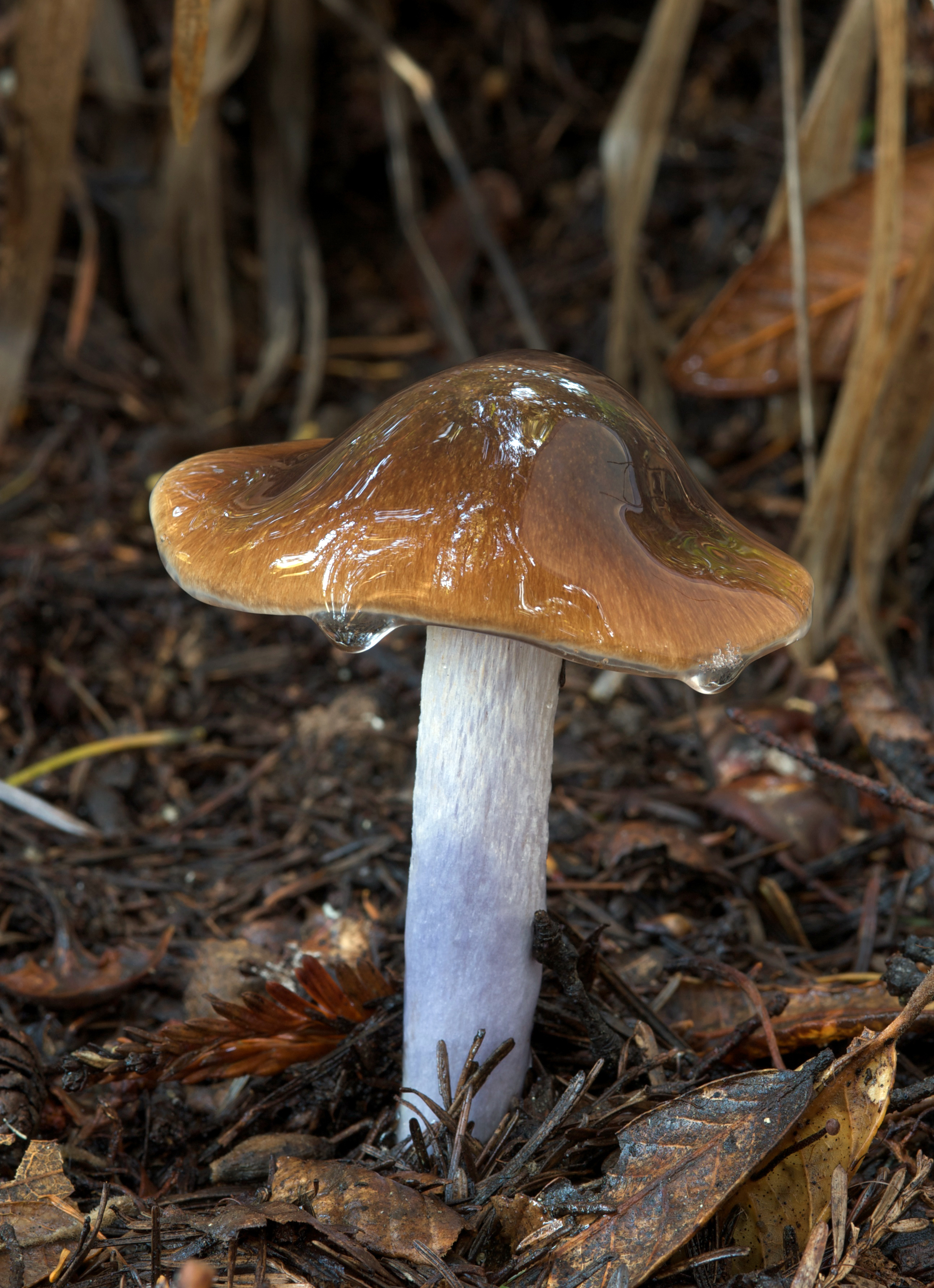
| Cap | 3-8 cm across. Convex, becoming broadly convex to nearly flat with age. Reddish-brown to orange-brown, with a dry, matte, finely fibrous to minutely scaly surface. No umbo or only a slight one. | 5–12 cm across. Convex when young, expanding to broadly convex or nearly flat with age. Surface extremely viscid to glutinous when moist, glossy when dry. Color rich chestnut-brown to dark tawny-brown, sometimes with an olive tinge. Margin incurved when young with cortina remnants. |
| Gills | Broadly attached to the stem. Orange-brown to rusty brown, widely spaced, thick. Cortina remnants may be visible on young specimens. | Attached (adnate to slightly emarginate). Moderately close. Young gills pale violet-brown or lavender-tinged, maturing to cinnamon-brown and finally dark rusty-brown as spores ripen. Edges slightly uneven. |
| Stem | 4-9 cm tall, yellowish to orange-brown, solid and fibrous. Slightly tapered toward the base. No ring, but faint cortina fibers may cling to the upper portion. | 6–12 cm tall, 1.5–3 cm thick. Solid, club-shaped to equal. Surface dry, fibrillose. Upper portion strikingly violet to lilac, fading to pale lavender below. Cortina zone on upper stem collects rusty-brown spore deposits. Base sometimes slightly bulbous. |
| Spore print | Rusty brown to cinnamon brown. | Rusty brown. |
| Odor | Faintly radish-like or earthy. Some describe it as slightly sweet. | Mild, slightly earthy or fungal. Not distinctive. |
| Habitat | Mycorrhizal with broadleaf trees, especially oak and beech. Found in deciduous and mixed woodlands on acidic to neutral soils. Prefers warm, relatively dry habitats compared to the Deadly Webcap. | Mycorrhizal with conifers, especially Sitka spruce (Picea sitchensis), western hemlock (Tsuga heterophylla), and Douglas fir (Pseudotsuga menziesii). Found in old-growth and mature second-growth conifer forests in moist, coastal environments. Prefers deep duff, mossy ground, and the edges of rotting logs. Strictly a Pacific Northwest species. |
| Season | August through November. Peaks in September and October across central and southern Europe. | Late September through December. Peak fruiting in October and November during the heavy fall rains. May appear as early as late August in especially wet years. |
Found one of these in the wild? Don't rely on memory — identify it from a photo with Orangutany and check it against both species before you touch it.