Fool's Webcap vs Deadly Webcap
Cortinarius orellanus compared with Cortinarius rubellus — how to tell them apart in the field.
This is a dangerous confusion.
At least one of these species is toxic. Never eat a wild mushroom based on a photo comparison alone — verify with local experts.
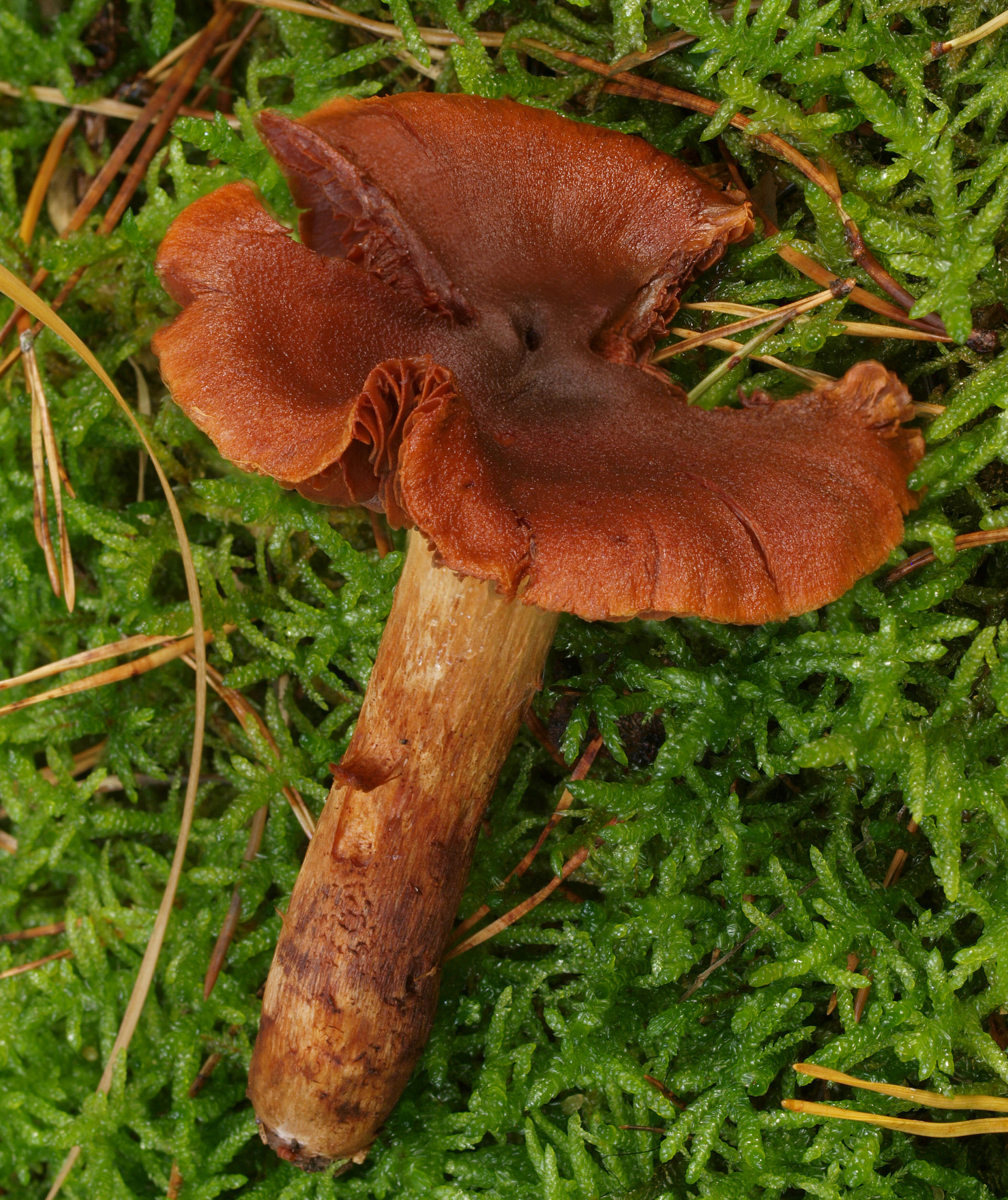
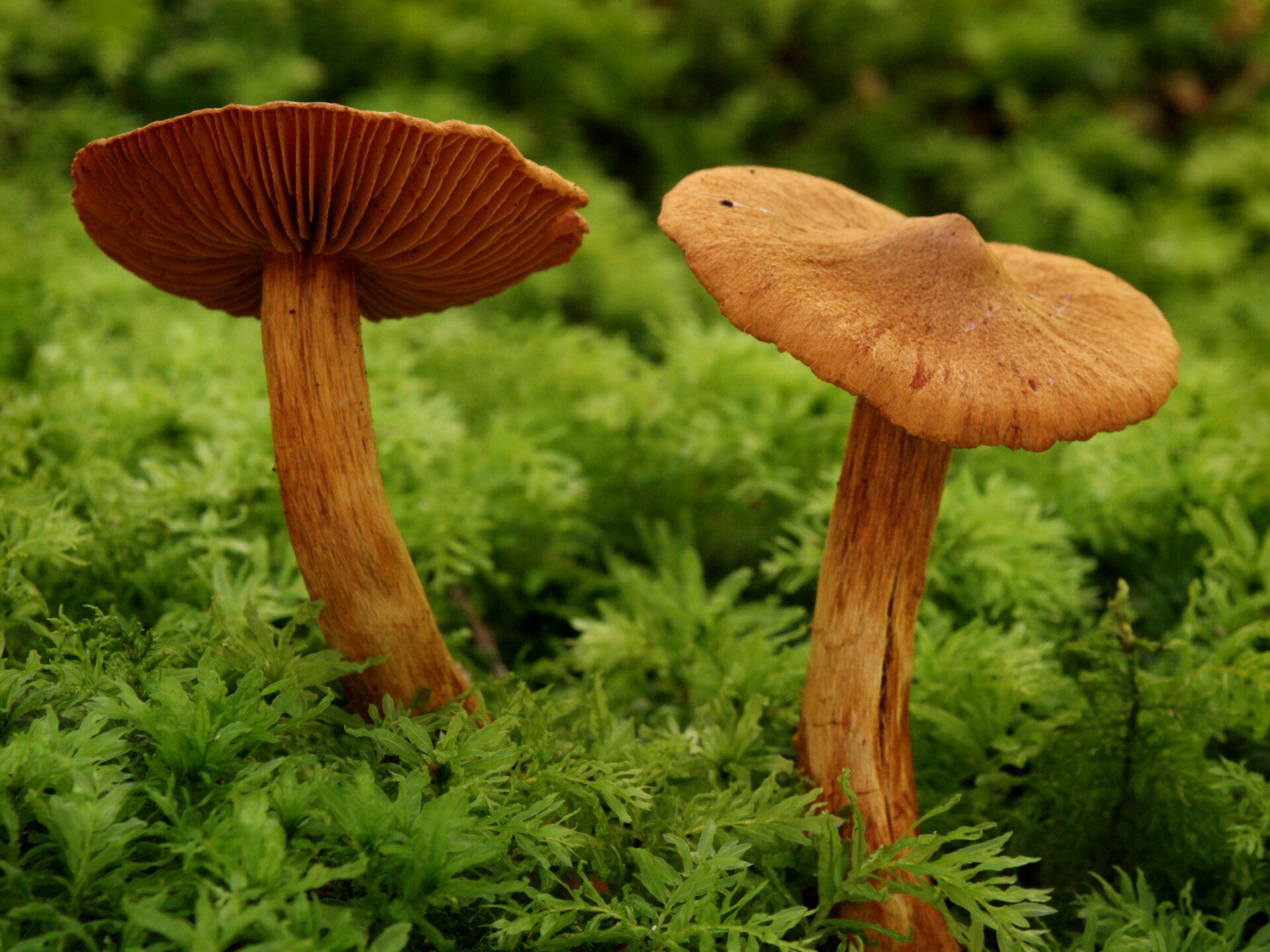
How to Tell Them Apart
Equally deadly cousin. Cortinarius rubellus has a more pointed, conical cap and grows with conifers (spruce, pine) rather than broadleaf trees. Both contain orellanine, so distinguishing between them is academically interesting but practically irrelevant: avoid both.
An equally deadly relative. Cortinarius orellanus has a flatter, more reddish-brown cap with a matte, dry surface and grows with broadleaf trees (especially oak and beech) rather than conifers. Contains the same orellanine toxin.
Side-by-Side Identification
| Trait | Fool's Webcap | Deadly Webcap |
|---|---|---|
| Cap | 3-8 cm across. Convex, becoming broadly convex to nearly flat with age. Reddish-brown to orange-brown, with a dry, matte, finely fibrous to minutely scaly surface. No umbo or only a slight one. | 3-8 cm across. Conical to convex, often with a distinct pointed umbo (central bump). Tawny orange to rusty brown, with fine radial fibers on the surface. Slightly hygrophanous, becoming paler as it dries. |
| Gills | Broadly attached to the stem. Orange-brown to rusty brown, widely spaced, thick. Cortina remnants may be visible on young specimens. | Broadly attached to the stem. Initially yellow-orange, becoming rusty brown with age as spores mature. Fairly widely spaced. |
| Stem | 4-9 cm tall, yellowish to orange-brown, solid and fibrous. Slightly tapered toward the base. No ring, but faint cortina fibers may cling to the upper portion. | 5-11 cm tall, same color as the cap or slightly paler. Fibrous and often slightly thickened at the base. Young specimens show remnants of the rusty cortina (cobweb veil) on the upper stem. |
| Spore print | Rusty brown to cinnamon brown. | Rusty brown. |
| Odor | Faintly radish-like or earthy. Some describe it as slightly sweet. | Slightly radish-like or faintly earthy. Not strongly distinctive. |
| Habitat | Mycorrhizal with broadleaf trees, especially oak and beech. Found in deciduous and mixed woodlands on acidic to neutral soils. Prefers warm, relatively dry habitats compared to the Deadly Webcap. | Mycorrhizal with conifers, especially spruce and pine. Found in damp, mossy coniferous forests, often at higher elevations or in northern latitudes. Grows in acidic, nutrient-poor soils. |
| Season | August through November. Peaks in September and October across central and southern Europe. | August through November. Most common in September and October in northern Europe. |
Found one of these in the wild? Don't rely on memory — identify it from a photo with Orangutany and check it against both species before you touch it.