Scarlet Caterpillar Club vs Caterpillar Fungus
Cordyceps militaris compared with Ophiocordyceps sinensis — how to tell them apart in the field.
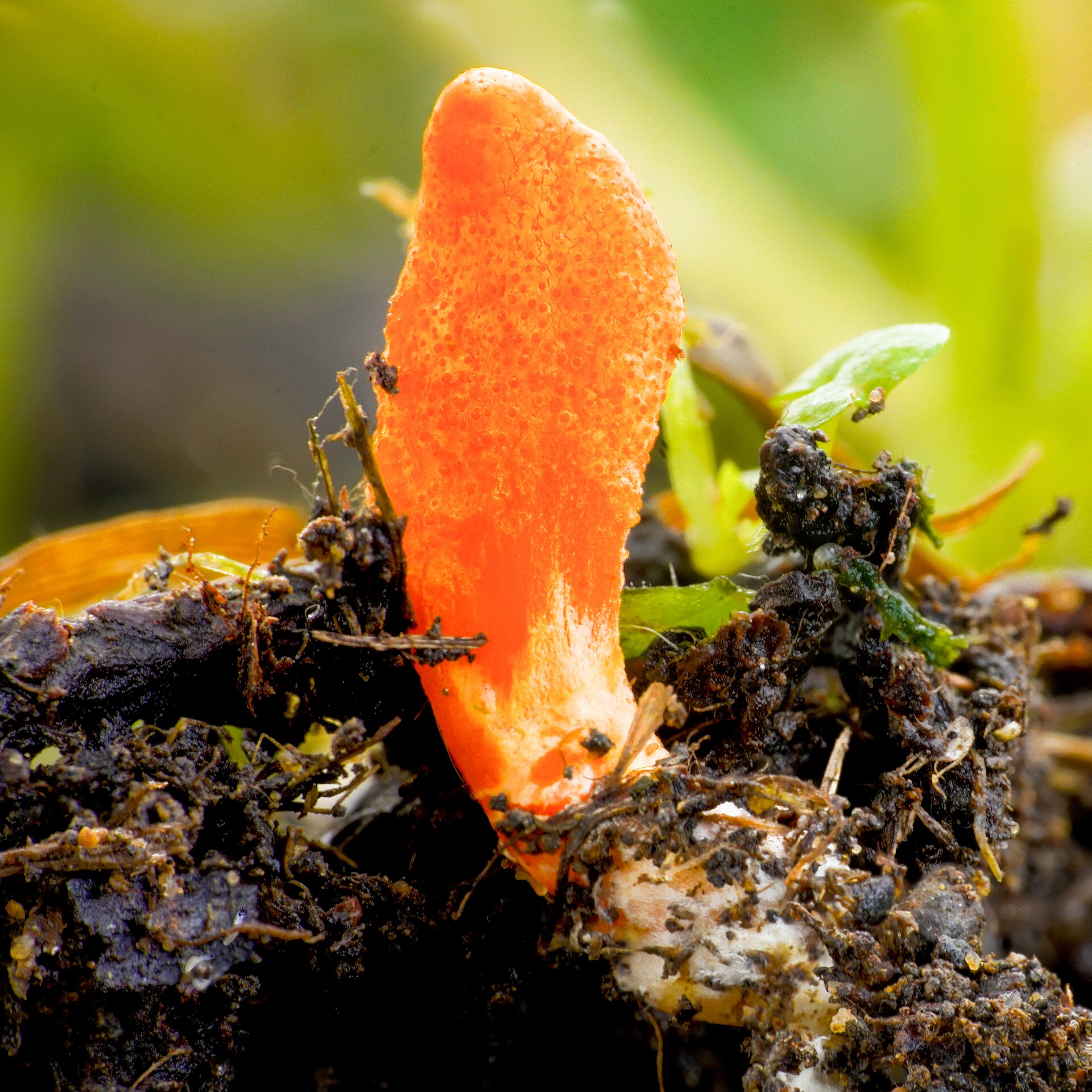
Scarlet Caterpillar Club
Cordyceps militaris
Edible
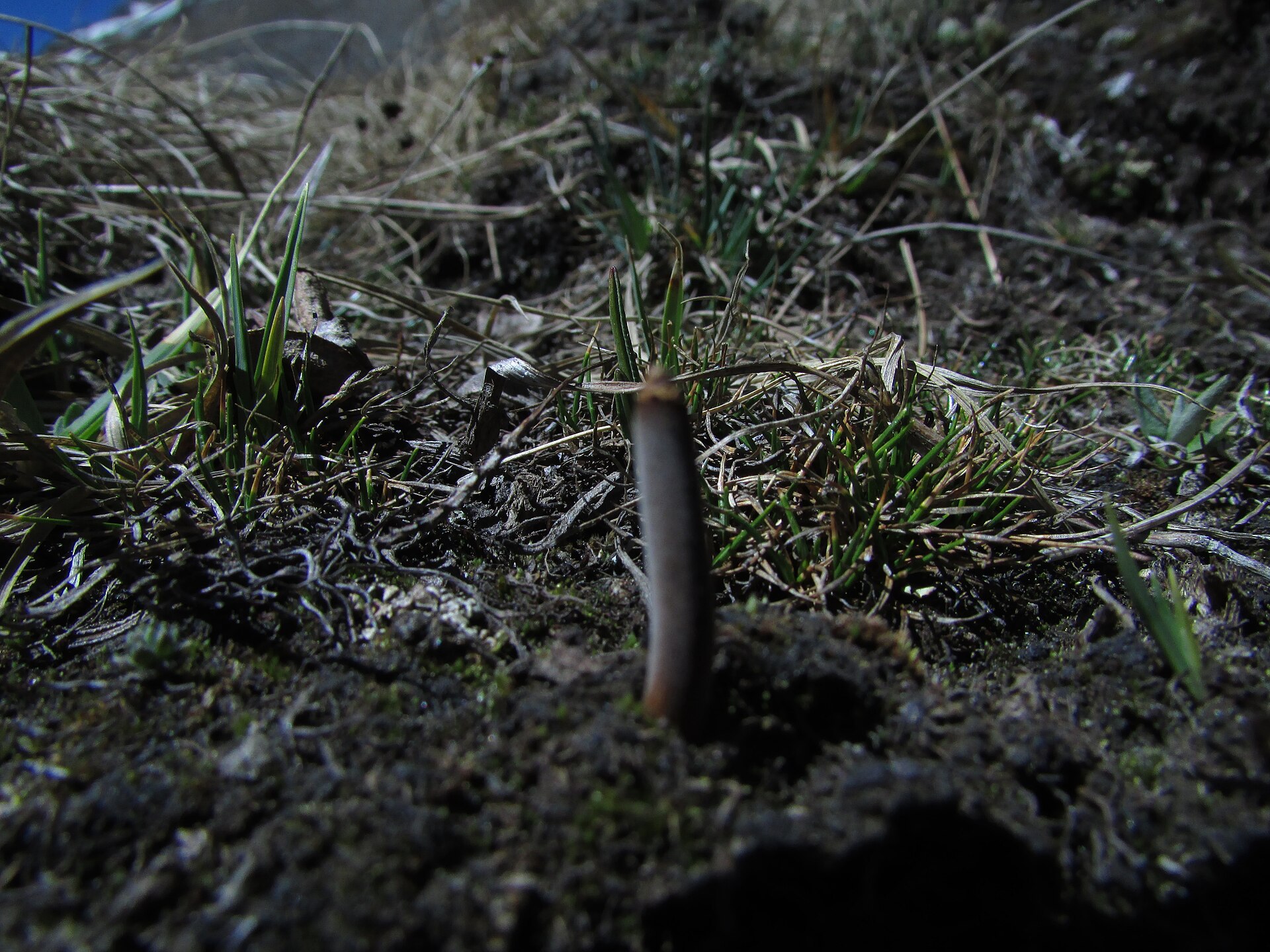
Caterpillar Fungus
Ophiocordyceps sinensis
Edible with Caution
How to Tell Them Apart
Much more common and widespread, found at low elevations across the Northern Hemisphere. Bright orange rather than dark brown. Smaller overall. Grows on moth pupae rather than large caterpillars. Can be commercially cultivated.
Side-by-Side Identification
| Trait | Scarlet Caterpillar Club | Caterpillar Fungus |
|---|---|---|
| Cap | No distinct cap. The fruiting body is a club-shaped to cylindrical stroma, 2-8 cm tall, 3-8 mm wide. Surface is covered in tiny, densely packed bumps (perithecia) that give it a finely granular texture. Color is vivid orange to scarlet-orange, sometimes fading to pale orange with age. | No cap. The fruiting body (stroma) is a slender, dark brown to blackish, club-shaped structure, 4-10 cm long, 3-5 mm wide, emerging from the head of the mummified caterpillar. Surface is finely granular (perithecia embedded in the surface). |
| Gills | No gills. Spores are produced inside perithecia (flask-shaped structures) embedded in the surface of the club. The bumpy texture of the surface reflects these embedded structures. | No gills. Spores are produced in perithecia embedded in the surface of the stroma, similar to Cordyceps militaris. |
| Stem | The lower portion of the stroma is smoother and paler (yellowish-orange to whitish), transitioning to the fertile, bumpy upper portion. The base connects to the mummified insect host in the soil. | The stroma is continuous from the caterpillar head to the tip. No distinct stem separate from the fertile portion. The mummified caterpillar body (3-5 cm long) serves as the base. |
| Spore print | Not practically obtainable in the field. Spores are released from the perithecia as long, thread-like ascospores that fragment into individual cells. | Not practically obtainable. Spores are thread-like ascospores released from perithecia. |
| Odor | Mild, not distinctive. | Mild, slightly fishy or musty when dried. Fresh specimens have a faint earthy smell. |
| Habitat | Parasitic on the buried pupae and larvae of moths (Lepidoptera) and other insects in forest soil. Found in deciduous and coniferous woodlands, often in mossy areas with deep leaf litter. The fruiting bodies emerge from the soil above the buried host. Cultivated commercially on grain substrates (rice, wheat) without an insect host. | Alpine meadows and grasslands of the Tibetan Plateau and Himalayas, at elevations between 3,000 and 5,000 meters. The host caterpillars (Thitarodes ghost moth larvae) live in the soil of these high-altitude grasslands, feeding on plant roots. The fungus is strictly associated with these specific host insects in this specific habitat. Cannot be cultivated through its full lifecycle. |
| Season | Late summer through autumn, typically August through November. Fruiting bodies are most commonly found in September and October. | The stroma emerges in spring, typically April through June, as snow melts on the alpine meadows. The harvest season is brief, usually 4-6 weeks. Timing varies by elevation and latitude. |
Found one of these in the wild? Don't rely on memory — identify it from a photo with Orangutany and check it against both species before you touch it.