Ivory Funnel vs Fairy Ring Mushroom
Clitocybe dealbata compared with Marasmius oreades — how to tell them apart in the field.
This is a dangerous confusion.
At least one of these species is toxic. Never eat a wild mushroom based on a photo comparison alone — verify with local experts.
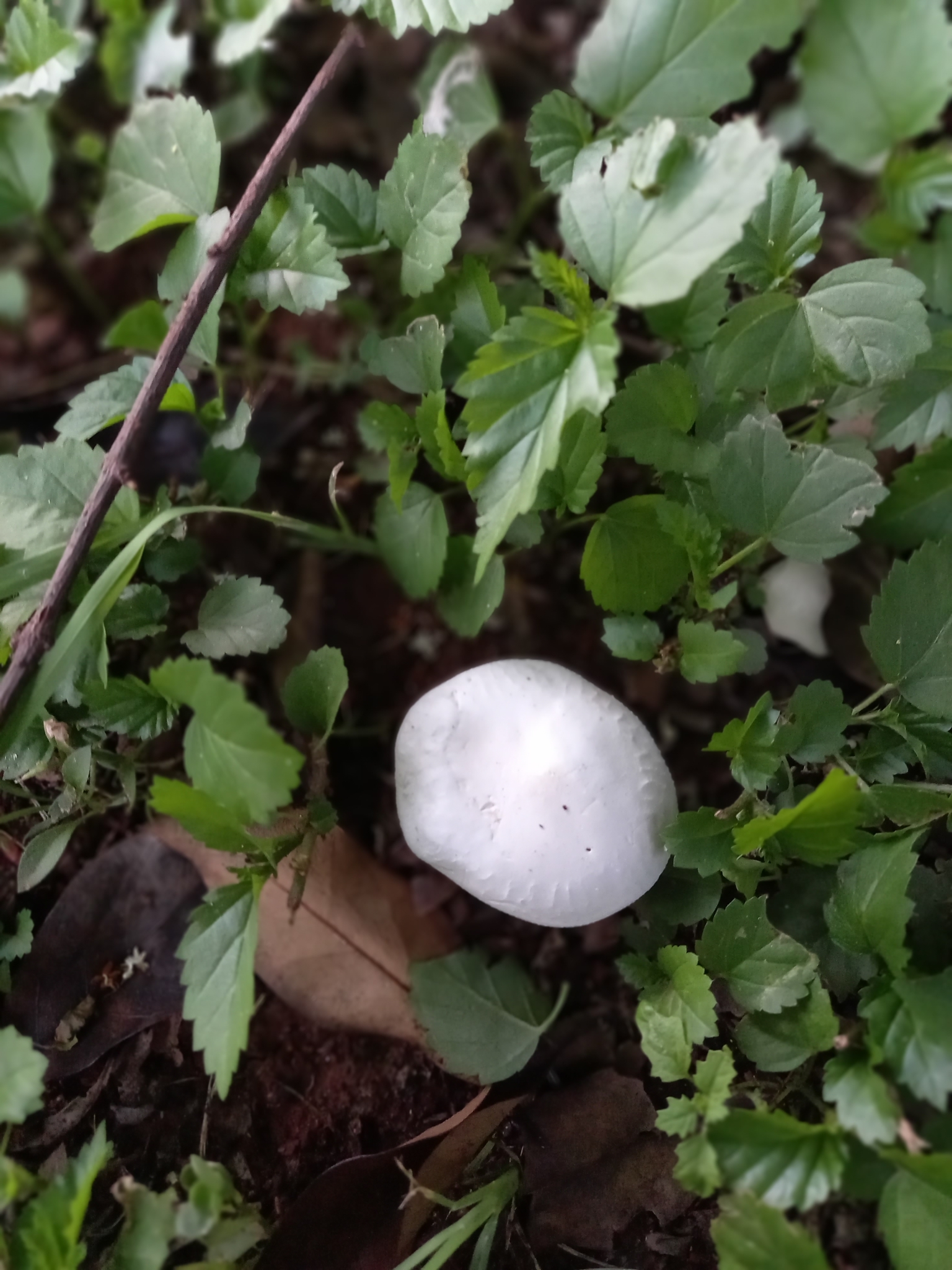
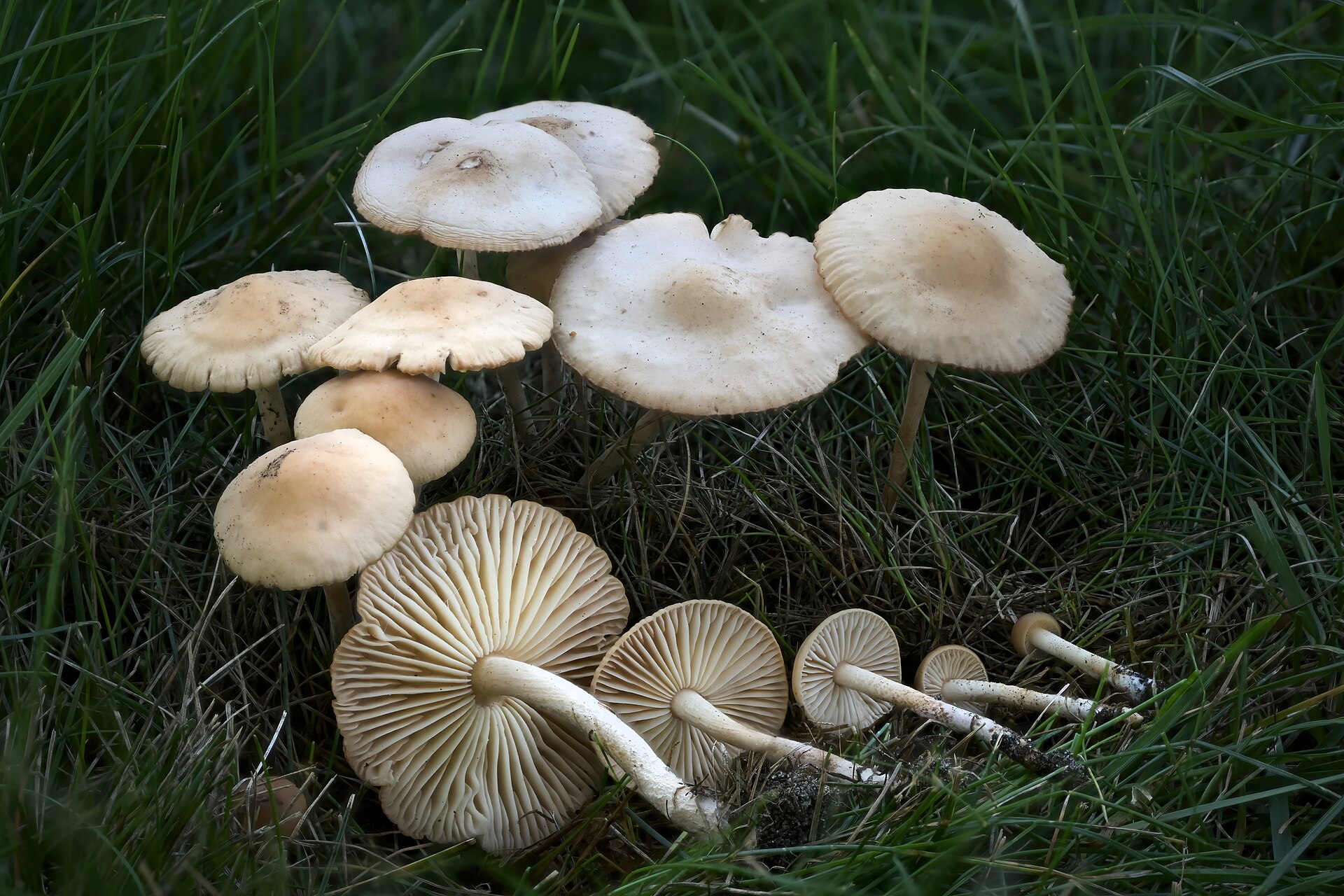
How to Tell Them Apart
The most dangerous confusion. Marasmius oreades has a buff to tan cap (not white), a very tough and wiry stem that bends without breaking, and widely spaced gills. The Ivory Funnel has a white cap, a fragile stem, and crowded gills. They can grow side by side in the same fairy ring.
Side-by-Side Identification
| Trait | Ivory Funnel | Fairy Ring Mushroom |
|---|---|---|
| Cap | 2-4 cm across. Convex at first, becoming flat to slightly depressed or funnel-shaped. Ivory white to pale cream, sometimes with faint concentric zones. Surface smooth, slightly powdery or frosted when dry. | 2-5 cm across. Convex when young, becoming broadly convex to nearly flat with a slight central bump (umbo). Tan to pale buff when dry, darker brown when wet (hygrophanous). Surface is smooth, dry, with a slightly leathery texture. Margin may be slightly wavy or irregular. |
| Gills | Adnate to slightly decurrent (running down the stem). White to pale cream, crowded together. Narrow. | Free to slightly attached, widely spaced (a key feature). Cream to pale tan. Thick and waxy-looking compared to most small mushrooms. The wide spacing is one of the most reliable identification features. |
| Stem | 2-4 cm tall, slender, white, solid at first becoming hollow with age. No ring. Smooth and fibrous. | 4-8 cm tall, 2-4 mm thick. Tough, wiry, flexible, pale tan to whitish. Will bend without snapping, unlike most small mushrooms whose stems break cleanly. This toughness is another key identification feature. |
| Spore print | White to very pale cream. | White to pale cream. |
| Odor | Faintly mealy or like fresh flour. Sometimes almost odorless. | Pleasant, sweet, sometimes described as almond-like or like fresh-cut hay. |
| Habitat | Saprotrophic, growing in short grass. Found in lawns, parks, playing fields, golf courses, roadsides, and pastures. Often forms fairy rings or arc-shaped groups. Prefers well-maintained or regularly mown grass. | Grasslands, lawns, meadows, pastures, parks, golf courses, and sports fields. A saprotrophic species that feeds on dead grass roots and organic matter in soil. Forms characteristic fairy rings that expand outward at roughly 10-15 cm per year. Prefers well-drained, unfertilized or lightly fertilized turf. |
| Season | July through November. Most common in September and October after autumn rains. | Late spring through autumn, typically May through November. Can fruit in multiple flushes after rain throughout the growing season. Most productive in warm, wet periods of summer and early autumn. |
Found one of these in the wild? Don't rely on memory — identify it from a photo with Orangutany and check it against both species before you touch it.