Red Cage Stinkhorn vs Dune Stinkhorn
Clathrus ruber compared with Phallus hadriani — how to tell them apart in the field.
How to Tell Them Apart
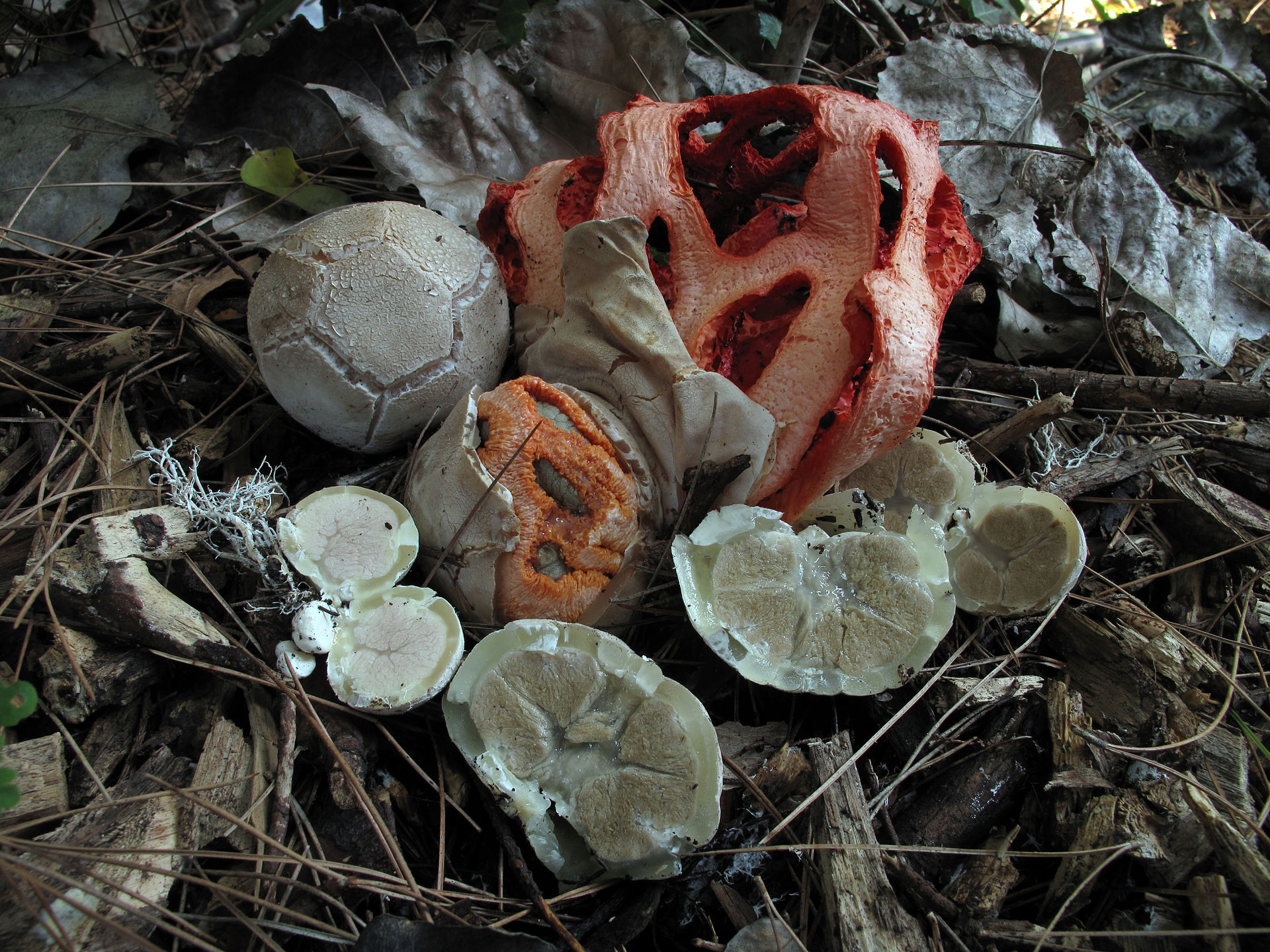
Also a stinkhorn with foul-smelling gleba, but forms a distinctive red lattice or cage structure rather than a phallic stalk. Impossible to confuse visually once seen, though the smell is similar.
Side-by-Side Identification
| Trait | Red Cage Stinkhorn | Dune Stinkhorn |
|---|---|---|
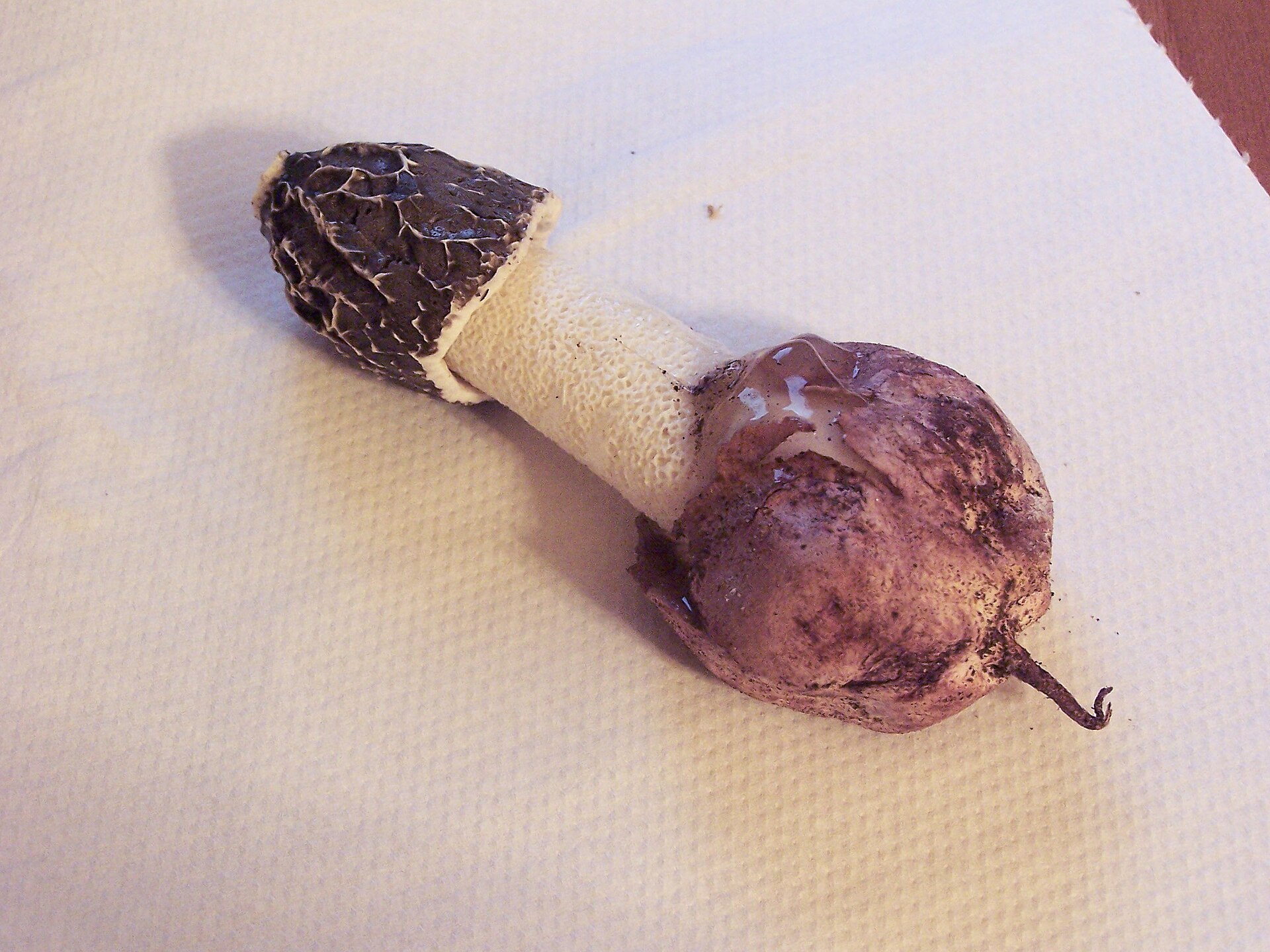
| Cap | No traditional cap. The fruiting body is a hollow lattice sphere, 5-15 cm across, made of interconnected arms forming a cage-like or net-like structure. Vivid red to orange-red when fresh, fading to pinkish with age. Inner surfaces coated with dark olive-brown gleba (spore mass). | Not a traditional cap. The head (receptacle) is thimble-shaped, 2-4 cm tall, with a pitted or honeycomb-like surface beneath the gleba. Covered in dark olive-green to blackish spore slime (gleba) when fresh. Once insects remove the gleba, the white pitted surface is revealed. |
| Gills | None. This is a stinkhorn, not a gilled mushroom. Spores are produced in the dark, slimy gleba coating the inner lattice surfaces. | None. Stinkhorns do not have gills. Spores are produced in the gleba, a slimy spore mass that coats the head. |
| Stem | No true stem. The lattice structure emerges from a white, egg-like volva at the base. The egg is 3-5 cm across, smooth, and connected to white mycelial cords (rhizomorphs) in the soil. | 8-18 cm tall, 2-4 cm thick. White, spongy, hollow, and fragile. Composed of a network of chambers (like a sponge). Emerges rapidly from the egg over several hours. Base is enclosed in a pinkish-purple to lilac volva, the remnant of the original egg. |
| Spore print | Not applicable in the traditional sense. Spore mass (gleba) is olive-brown to dark brown. | Not applicable in the traditional sense. Spores are olive-green to olive-brown within the gleba and are dispersed by insects rather than by wind. |
| Odor | Intensely foul. Smells like rotting meat, decomposing flesh, or a dumpster in August. The smell can carry for several meters and is designed to attract carrion flies. | Extremely strong, fetid, resembling rotting meat or carrion. The smell can be detected from several meters away and is the primary spore dispersal mechanism. The odor is concentrated in the gleba and fades once insects consume it. |
| Habitat | Gardens, parks, landscaped areas, and woodlands, especially in mulched beds and areas with abundant wood chips or leaf litter. Prefers warm, humid conditions. Saprotrophic, feeding on decaying organic matter. Occasionally found in natural forests in Mediterranean climates. | Saprotrophic. Found in sandy soils, coastal dunes, sandy gardens, wood chip mulch beds, and disturbed ground with buried organic matter. Prefers well-drained, sandy or loose substrates. Common in coastal areas, newly mulched landscapes, and garden borders. Also found in greenhouses and compost. |
| Season | Late spring through autumn in temperate regions. Year-round in tropical and subtropical climates. Most commonly encountered in summer and early fall. | Late spring through autumn, with peak fruiting in summer months (June through September). Fruits after warm rains when soil temperatures are above 15C (60F). Can appear sporadically into November in mild climates. |
Found one of these in the wild? Don't rely on memory — identify it from a photo with Orangutany and check it against both species before you touch it.