Shaggy Parasol vs Deadly Dapperling
Chlorophyllum rhacodes compared with Lepiota brunneoincarnata — how to tell them apart in the field.
This is a dangerous confusion.
At least one of these species is potentially deadly. Never eat a wild mushroom based on a photo comparison alone — verify with local experts.
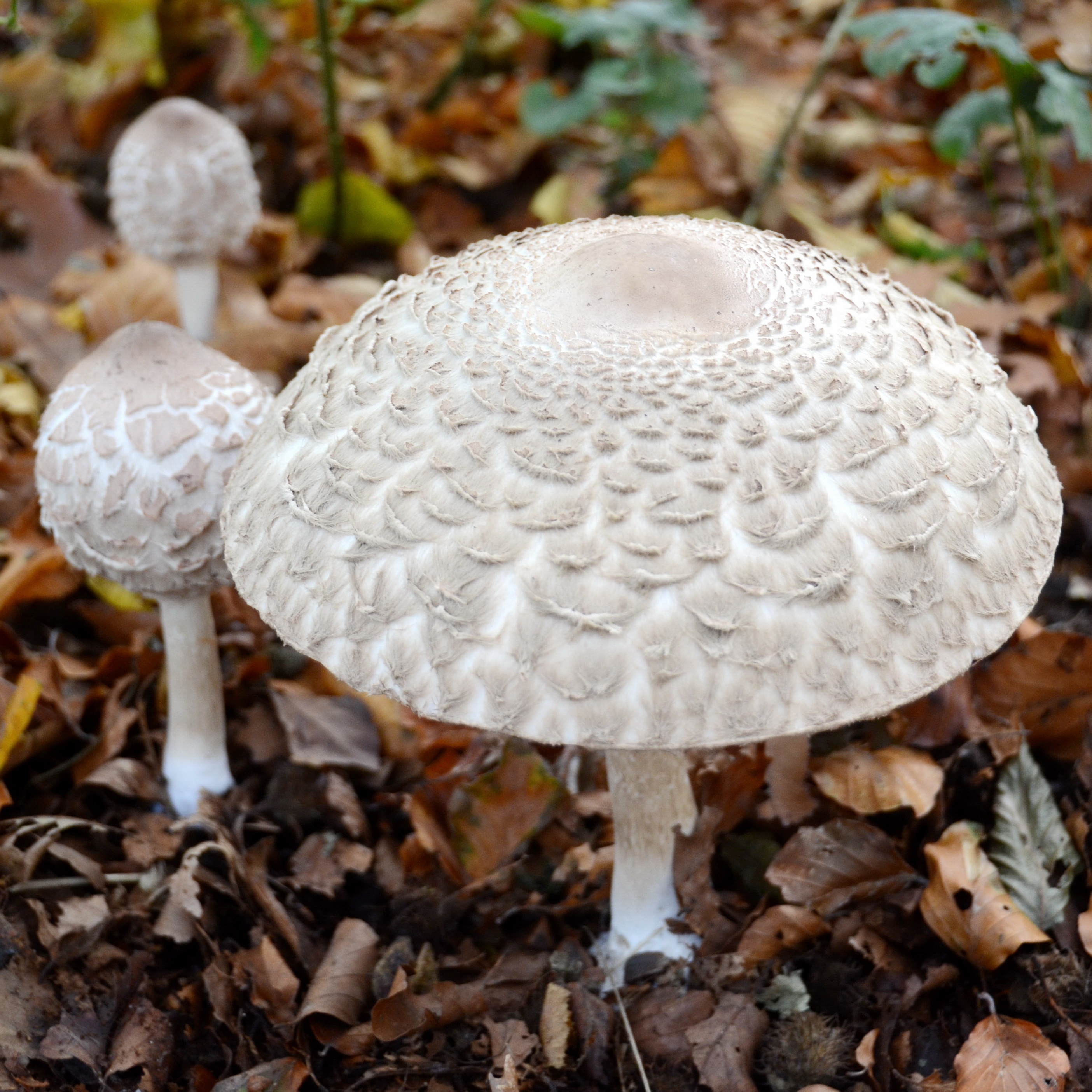
Shaggy Parasol
Chlorophyllum rhacodes
Edible with Caution
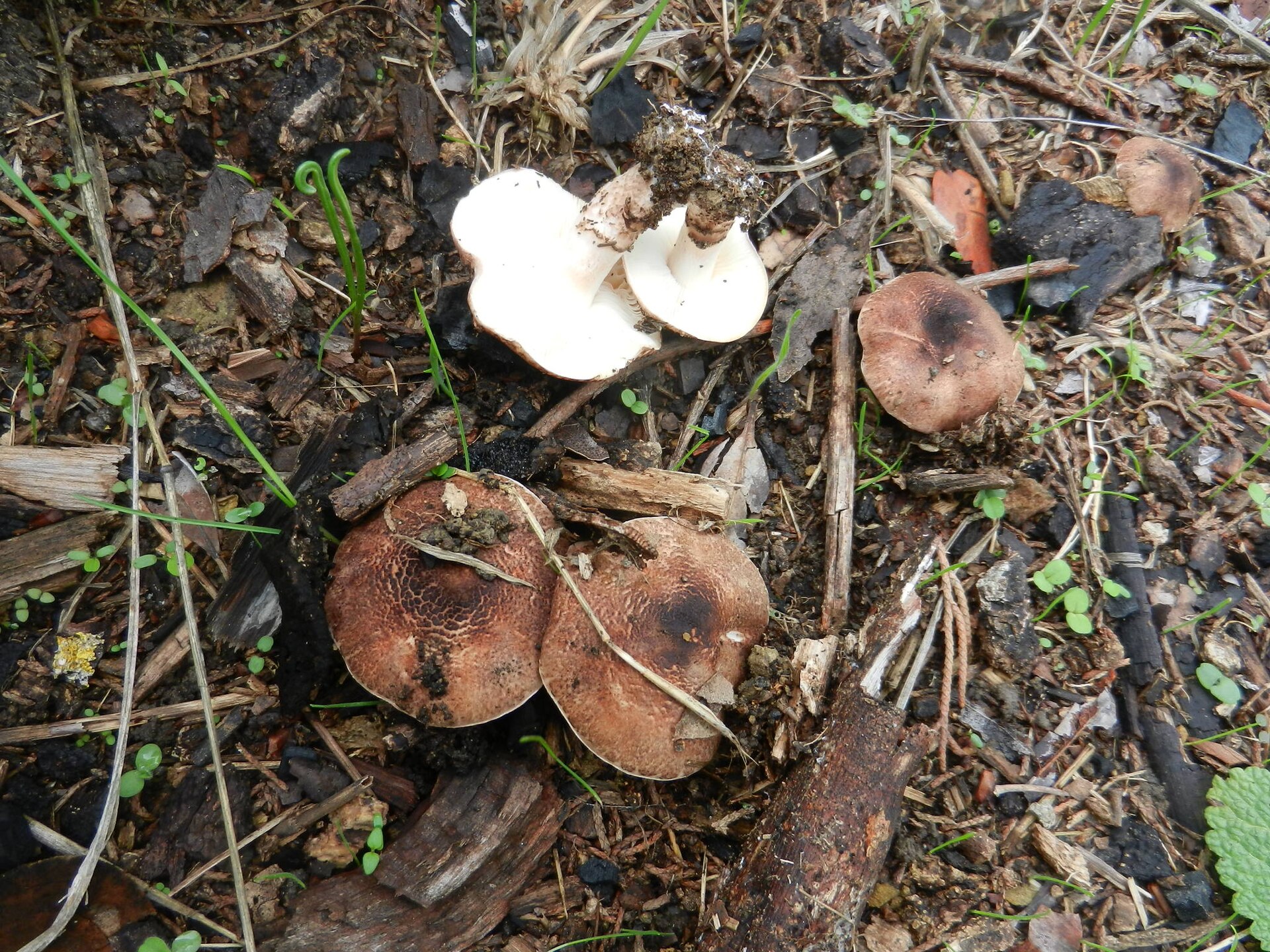
Deadly Dapperling
Lepiota brunneoincarnata
Deadly
How to Tell Them Apart
Much larger (cap 10-20 cm), with coarser shaggy scales and flesh that turns orange-red when cut. The size difference is the most obvious: Deadly Dapperlings are small mushrooms. Any parasol-type mushroom under 10 cm cap diameter should be approached with extreme caution.
Side-by-Side Identification
| Trait | Shaggy Parasol | Deadly Dapperling |
|---|---|---|
| Cap | 10-20 cm across, sometimes up to 30 cm. Starts as a smooth, pale brown egg shape, then expands into a broad parasol. The surface cracks into large, coarse, upturned brown scales on a pale cream background — giving it that signature shaggy look. Flesh bruises vivid saffron-orange when cut or damaged. | 2-7 cm across. Convex to flat. Whitish ground color covered in concentric rings of pinkish-brown to lilac-brown scales or patches, giving a dappled appearance. Center often darker, with more intact cuticle. Margin sometimes with veil remnants. |
| Gills | White to cream, free (not attached to the stem), densely packed. They bruise orange-brown when touched. In older specimens they may develop a slight pinkish tint. | Free from the stem, white to cream, crowded. Remain pale throughout the mushroom's life. |
| Stem | 10-15 cm tall, up to 2 cm thick. Smooth, white to pale brown, with a bulbous base. Has a thick, movable double ring (annulus) that slides up and down the stem. Flesh inside the stem turns orange-red when sliced — a key identification feature. | 3-6 cm tall, relatively stout for its size. White above the ring, covered in pinkish-brown to lilac-brown fibrils below. Ring is fragile, sometimes just a zone of fibers. Base does not have a volva. |
| Spore print | White to cream. This is critical — a green spore print means you have the toxic Chlorophyllum molybdites instead. | White to cream. |
| Odor | Pleasant, mildly mushroomy. Nothing alarming. | Slightly fruity or rubbery. Not strongly distinctive. |
| Habitat | Loves rich, disturbed soil — gardens, parks, woodland edges, compost heaps, along hedgerows, and in mulched flower beds. Often found in shady spots near conifers or deciduous trees. Saprotrophic — it breaks down dead organic matter rather than forming tree partnerships. | Saprotrophic, growing in nutrient-rich, disturbed soils. Found in parks, gardens, flowerbeds, along pathways, near compost, in urban green spaces, and on waste ground. Prefers warm climates with calcareous or nitrogen-rich soils. |
| Season | Late summer through late autumn. Peak fruiting is August through November in the Northern Hemisphere. Can appear earlier in warmer climates. | September through November in the Northern Hemisphere. Occasionally fruits in late spring in Mediterranean climates. |
Found one of these in the wild? Don't rely on memory — identify it from a photo with Orangutany and check it against both species before you touch it.