Green-spored Parasol vs Parasol Mushroom
Chlorophyllum molybdites compared with Macrolepiota procera — how to tell them apart in the field.
This is a dangerous confusion.
At least one of these species is toxic. Never eat a wild mushroom based on a photo comparison alone — verify with local experts.
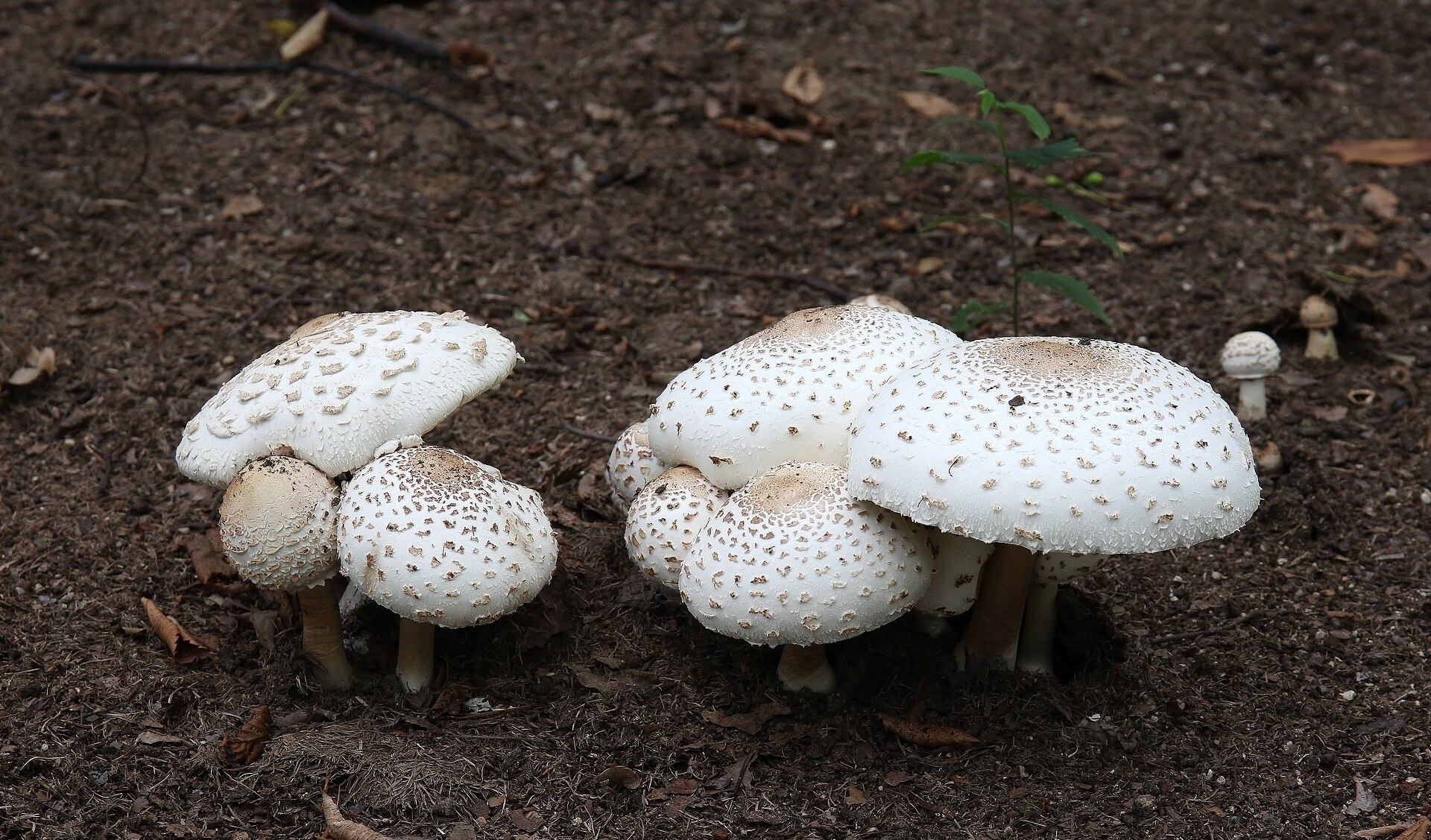
Green-spored Parasol / The Vomiter
Chlorophyllum molybdites
Toxic
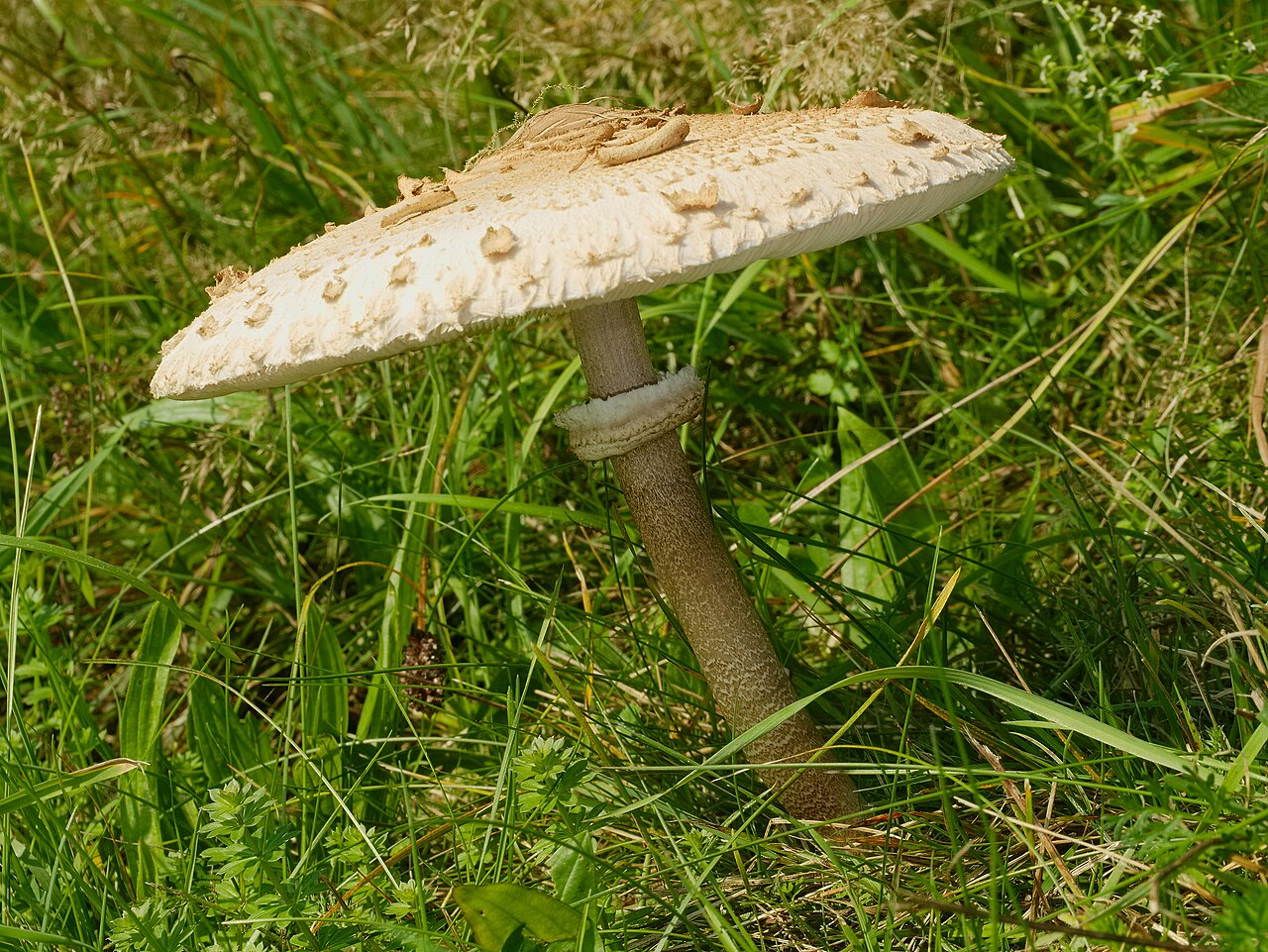
Parasol Mushroom
Macrolepiota procera
Edible
How to Tell Them Apart
Excellent edible. Very similar in size and appearance, but has a WHITE spore print (never green). The stem of M. procera typically has a snakeskin-like pattern of brown scales below the ring, which C. molybdites lacks. Always take a spore print to distinguish them.
Side-by-Side Identification
| Trait | Green-spored Parasol | Parasol Mushroom |
|---|---|---|
| Cap | 5-30 cm across. Initially egg-shaped, expanding to convex, then flat or slightly upturned with age. White background covered with coarse brown to tan scales arranged concentrically. Center often retains a solid brown patch. Surface is dry. | 10–30 cm across (sometimes even larger). Starts as a closed, egg-shaped drum mallet on the stem. Opens flat with age, becoming parasol-shaped with a distinct raised bump (umbo) in the center. Surface is pale cream to tan, covered with large brown scales that get sparser toward the edges. The scales are shaggy and distinctive — like someone stuck bits of brown paper to it. |
| Gills | Free (not attached to stem). White when young, becoming greenish to grayish-green as spores mature. This green discoloration of the gills is visible even without a spore print and is the key field mark. | White to cream, densely packed, free from the stem. They don't change color when bruised — this is important for distinguishing from toxic look-alikes. A white spore print confirms the ID. |
| Stem | 8-25 cm tall, 1-2.5 cm thick. White, smooth, often bruising brownish when handled. Has a thick, double-edged ring (annulus) that slides freely up and down the stem. Base is bulbous but lacks a volva. | 15–30 cm tall, slender (1–2 cm thick), with a prominent snakeskin-like pattern of brown zigzag bands. The base has a noticeable bulb. A large, thick, movable double ring sits partway up — you can slide it up and down the stem like a bracelet. This sliding ring is a key identification feature. |
| Spore print | Green to grayish-green. This is the single most important identification feature. No other common large lawn mushroom has green spores. Always take a spore print on white paper. | White to very pale cream. |
| Odor | Pleasant, mushroomy when fresh. Not distinctive enough to use for identification. | Pleasant, mildly nutty. Nothing alarming. |
| Habitat | Saprotrophic. Fruits in lawns, parks, golf courses, athletic fields, pastures, and any well-watered grassy area. Prefers rich, fertilized soil and warm temperatures. Often fruits in fairy rings or large clusters after summer rains. | Grasslands, meadow edges, forest clearings, parks, gardens, road verges, and pastures. Saprotrophic — breaks down dead organic matter in soil rather than partnering with tree roots. Prefers rich, well-drained soil. Often appears in fairy rings or loose groups. Returns to the same spots year after year. |
| Season | Late spring through early autumn, peaking in July and August. Requires warm soil temperatures above 18C (65F) and consistent moisture. In tropical regions, can fruit year-round. | Late summer through autumn. Peak season is August through October in Europe. In warmer climates, can appear as early as July or as late as November. |
Found one of these in the wild? Don't rely on memory — identify it from a photo with Orangutany and check it against both species before you touch it.