Dryad's Saddle vs Chicken of the Woods
Cerioporus squamosus compared with Laetiporus sulphureus — how to tell them apart in the field.
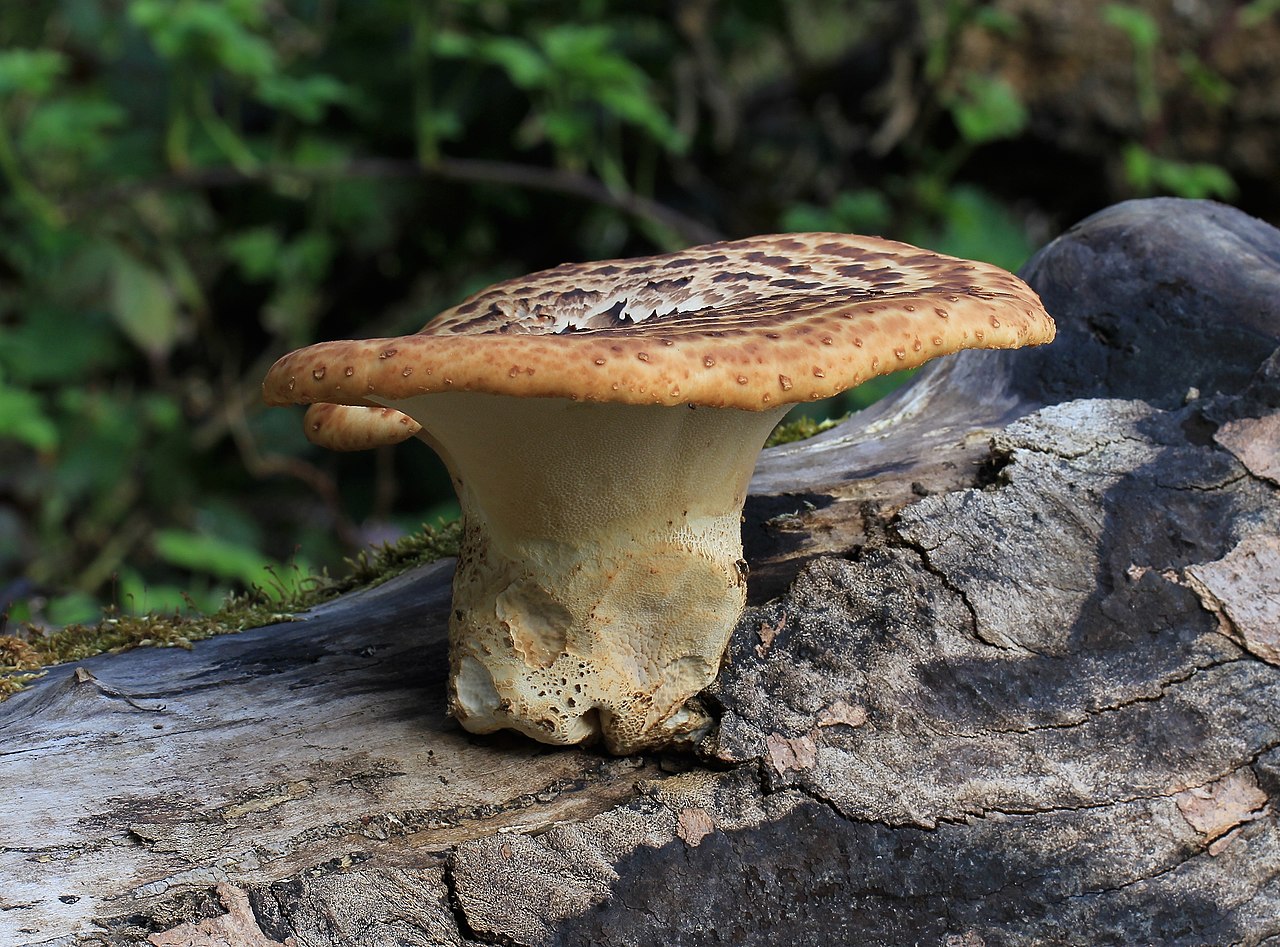
Dryad's Saddle
Cerioporus squamosus
Edible
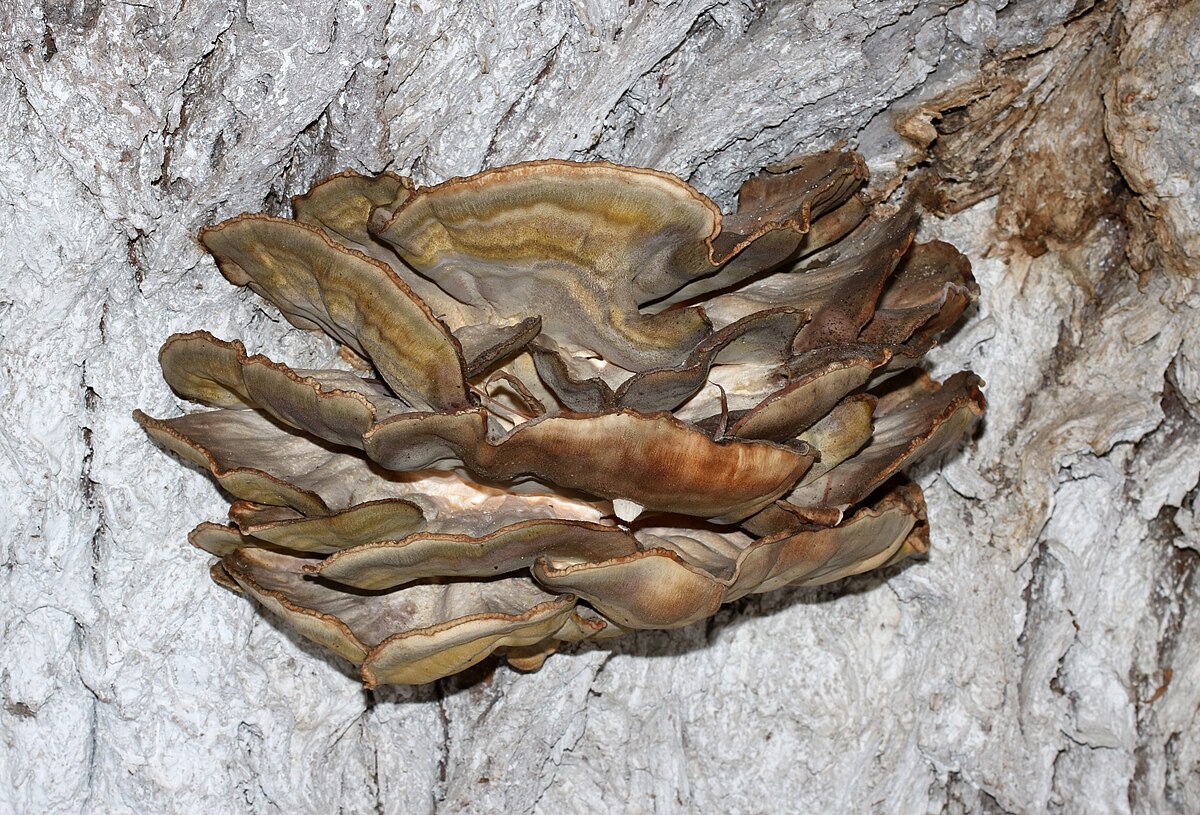
Chicken of the Woods
Laetiporus sulphureus
Edible with Caution
How to Tell Them Apart
Bright orange-yellow shelves with no scales — impossible to confuse once you know both. Laetiporus has tiny pores and a much more vivid color. No watermelon smell.
Side-by-Side Identification
| Trait | Dryad's Saddle | Chicken of the Woods |
|---|---|---|
| Cap | 10–60 cm across. Semicircular to kidney-shaped, often overlapping in shelving clusters. Cream to tan background covered with concentric dark brown scales arranged in a feather-like pattern. Surface is dry and slightly velvety when young. | No traditional cap — grows as overlapping shelf-like brackets, 5–60 cm across. Bright orange to salmon on top with a suede-like texture when young. Edges are rounded and wavy, often sulfur yellow. Fades to pale whitish-orange with age and becomes brittle. |
| Gills | No gills — this is a polypore. The underside has angular, cream-colored pores that are quite large (1–3 mm wide) and run partway down the stem. | No gills. The underside has tiny pores — small round holes that release spores. Pore surface is bright sulfur yellow when fresh, fading to white as it ages. |
| Stem | Short and thick (3–10 cm), off-center or lateral. Cream above, darkening to black at the base. Often very tough even in young specimens. | None. Grows directly from tree trunks, stumps, or buried roots as a sessile bracket fungus. Sometimes a very short stubby attachment point, but never a true stem. |
| Spore print | White. | White — though collecting a spore print from a bracket fungus is tricky and rarely necessary for ID. |
| Odor | Distinctive watermelon-rind or cucumber smell when fresh. Fades with age. | — |
| Habitat | Grows on dead, dying, or wounded hardwoods — elm and maple are favorites, but also beech, oak, walnut, and box elder. Causes a white rot. Usually found on stumps, fallen logs, or wound sites on living trees. Often returns to the same tree year after year. | Grows on living and dead hardwood trees — especially oak, but also cherry, beech, willow, and occasionally conifers or eucalyptus. Found on standing trunks, stumps, and fallen logs. It's a parasite and wood decomposer, causing brown rot in the heartwood. |
| Season | Early spring through early summer — March to June in most of North America and Europe. Occasionally a second flush in autumn. | Late spring through autumn. Peak season is May–October in temperate regions. Often appears after rain. |
Found one of these in the wild? Don't rely on memory — identify it from a photo with Orangutany and check it against both species before you touch it.