Dryad's Saddle vs Hen of the Woods
Cerioporus squamosus compared with Grifola frondosa — how to tell them apart in the field.
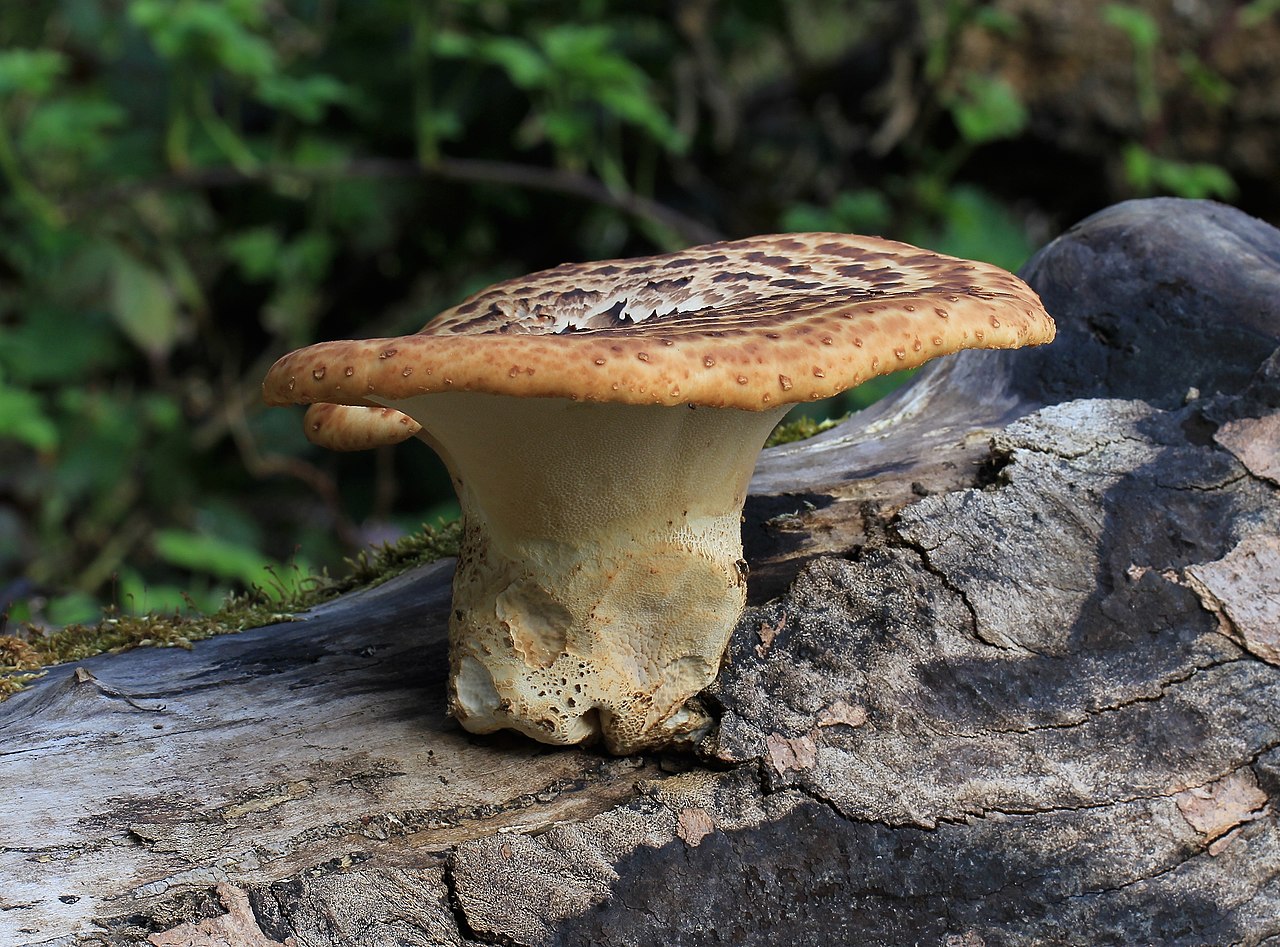
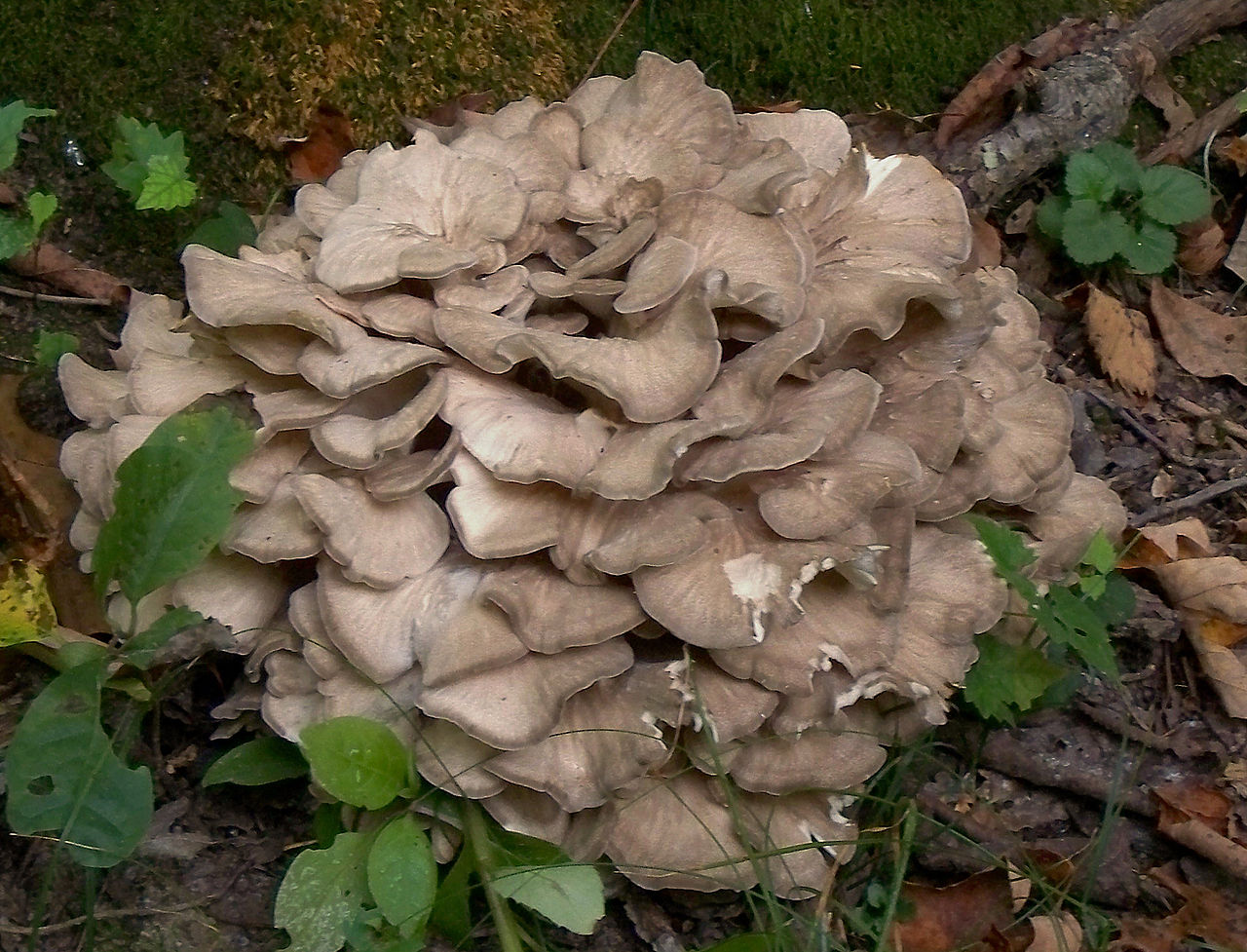
How to Tell Them Apart
Grows as a large rosette of many small, overlapping gray-brown caps at the base of oaks. No feather-like scales. Much smaller individual lobes. Different texture and smell.
Side-by-Side Identification
| Trait | Dryad's Saddle | Hen of the Woods |
|---|---|---|
| Cap | 10–60 cm across. Semicircular to kidney-shaped, often overlapping in shelving clusters. Cream to tan background covered with concentric dark brown scales arranged in a feather-like pattern. Surface is dry and slightly velvety when young. | A dense rosette of overlapping, fan-shaped fronds (caps), each 2-8 cm across. Gray-brown on top, sometimes with darker zones toward the center. The edges are wavy and slightly curled. The whole cluster can be 20-60 cm wide — some monsters get even bigger. |
| Gills | No gills — this is a polypore. The underside has angular, cream-colored pores that are quite large (1–3 mm wide) and run partway down the stem. | No gills. The underside has tiny white pores (1-3 per mm) that run slightly down the branching stems. This is a polypore, so if you see gills, you've got the wrong mushroom. |
| Stem | Short and thick (3–10 cm), off-center or lateral. Cream above, darkening to black at the base. Often very tough even in young specimens. | Multiple branching white stems merge into a single thick base that attaches to the tree or its roots. The base can be surprisingly tough and woody — most foragers trim it off and focus on the tender fronds. |
| Spore print | White. | — |
| Odor | Distinctive watermelon-rind or cucumber smell when fresh. Fades with age. | — |
| Habitat | Grows on dead, dying, or wounded hardwoods — elm and maple are favorites, but also beech, oak, walnut, and box elder. Causes a white rot. Usually found on stumps, fallen logs, or wound sites on living trees. Often returns to the same tree year after year. | Grows at the base of living or dead hardwood trees, with a strong preference for oaks. Occasionally found on maples, elms, and other hardwoods. Typically appears on the ground near the trunk or over surface roots. Prefers mature forests but shows up in parks and suburban areas too — anywhere there's an old oak. |
| Season | Early spring through early summer — March to June in most of North America and Europe. Occasionally a second flush in autumn. | Late August through November in the Northern Hemisphere. Peak is September-October. The same tree often produces flushes in the same spot year after year. |
Found one of these in the wild? Don't rely on memory — identify it from a photo with Orangutany and check it against both species before you touch it.