Golden Chanterelle vs Pacific Golden Chanterelle
Cantharellus cibarius compared with Cantharellus formosus — how to tell them apart in the field.

How to Tell Them Apart
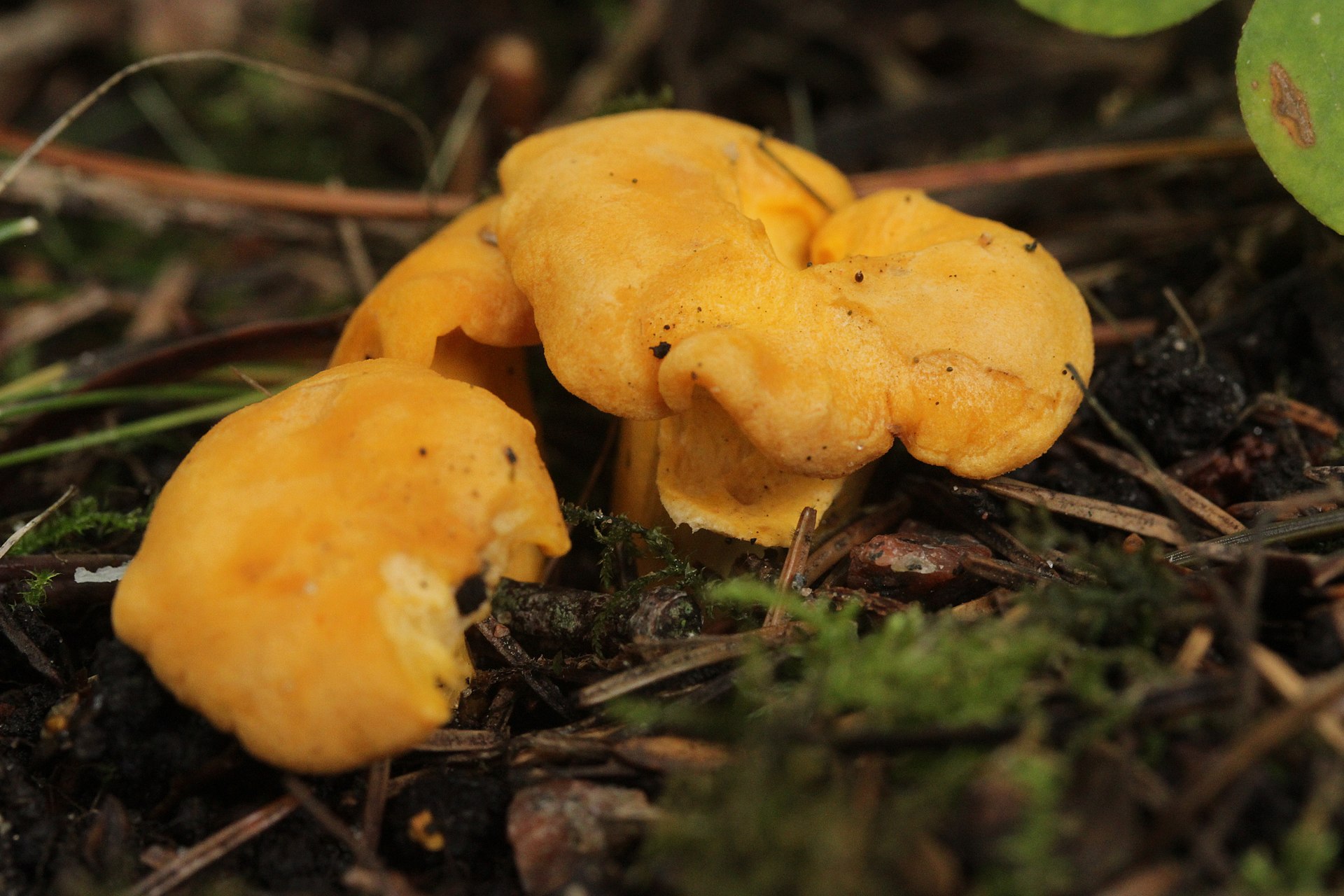
The European counterpart — extremely similar and historically confused with C. formosus before molecular work separated them. C. cibarius is primarily European and associates with hardwoods (beech, oak, birch) rather than Pacific conifers. In practice, if you're foraging in the Pacific Northwest, you almost certainly have C. formosus, not C. cibarius. Both are excellent edibles.
Side-by-Side Identification
| Trait | Golden Chanterelle | Pacific Golden Chanterelle |
|---|---|---|
| Cap | 2–12 cm across. Starts convex, then flattens and develops a wavy, irregular funnel shape with age. Color ranges from pale egg-yolk yellow to deep golden orange. The surface is smooth and dry, sometimes slightly felty. The edges become wavy and lobed as the mushroom matures — no two caps look alike. | 5–15 cm across, convex when young, becoming funnel-shaped with a wavy, irregular margin at maturity. Color is golden-orange to deep egg-yolk yellow, sometimes paling to almost cream in older specimens. Surface is smooth to slightly felty, dry. |
| Gills | Not true gills at all — this is the key. Chanterelles have forked, blunt ridges (called 'false gills') that run down the stem. They look like wrinkles or veins rather than thin paper-like blades. They're the same color as the cap or slightly paler. If you see thin, blade-like gills, you're looking at something else. | Not true gills — this is a critical identification feature. The underside has blunt, forking ridges (false gills) that run down the stem. They are the same golden-orange color as the cap and feel waxy, not blade-like. If you see thin, blade-like true gills, you don't have a chanterelle. |
| Stem | 3–8 cm tall, solid (not hollow), tapers toward the base. Same color as the cap — golden yellow. Smooth and firm. The false gills run partway down it (decurrent). Snapping it should show solid white flesh inside. | 3–8 cm tall, 1–3 cm thick, solid (not hollow), tapering downward. Same golden-orange color as the cap, sometimes paler. Smooth to slightly fibrous surface. The false gills run down onto the upper portion of the stem (decurrent). |
| Spore print | — | White to pale yellowish. |
| Odor | Distinctly fruity — most people say apricots or fresh apricots. This is one of the most reliable ID features. If it smells mushroomy or like nothing, reconsider your identification. | Distinctly fruity — often described as apricot or peach. This aroma is one of the most reliable field identification features and develops especially strongly in fresh, mature specimens. |
| Habitat | Grows on the ground in mycorrhizal partnership with hardwoods (especially oaks and beeches) and conifers (spruce, fir, pine). Loves mossy spots, old-growth forests, and areas with good drainage. Often found along trails, on slopes, and near stream banks. Never on wood — if it's growing on a log, it's not a chanterelle. | Mycorrhizal with conifers of the Pacific Northwest, especially Douglas fir (Pseudotsuga menziesii), Sitka spruce (Picea sitchensis), and western hemlock (Tsuga heterophylla). Found in old-growth and second-growth coniferous and mixed forests, often in thick moss, duff, and needle litter. Prefers moist, well-drained slopes and forest edges. Frequently fruits in the same patches year after year. |
| Season | June through November in most of the Northern Hemisphere, with peak season July–September. Earlier in southern regions, later at higher elevations. | September through November, with peak fruiting in October. Timing depends heavily on the onset of fall rains — the first sustained rains after summer drought trigger the main flush. In mild years, fruiting can extend into December. |
Found one of these in the wild? Don't rely on memory — identify it from a photo with Orangutany and check it against both species before you touch it.