Giant Puffball vs Common Earthball
Calvatia gigantea compared with Scleroderma citrinum — how to tell them apart in the field.
This is a dangerous confusion.
At least one of these species is toxic. Never eat a wild mushroom based on a photo comparison alone — verify with local experts.
How to Tell Them Apart
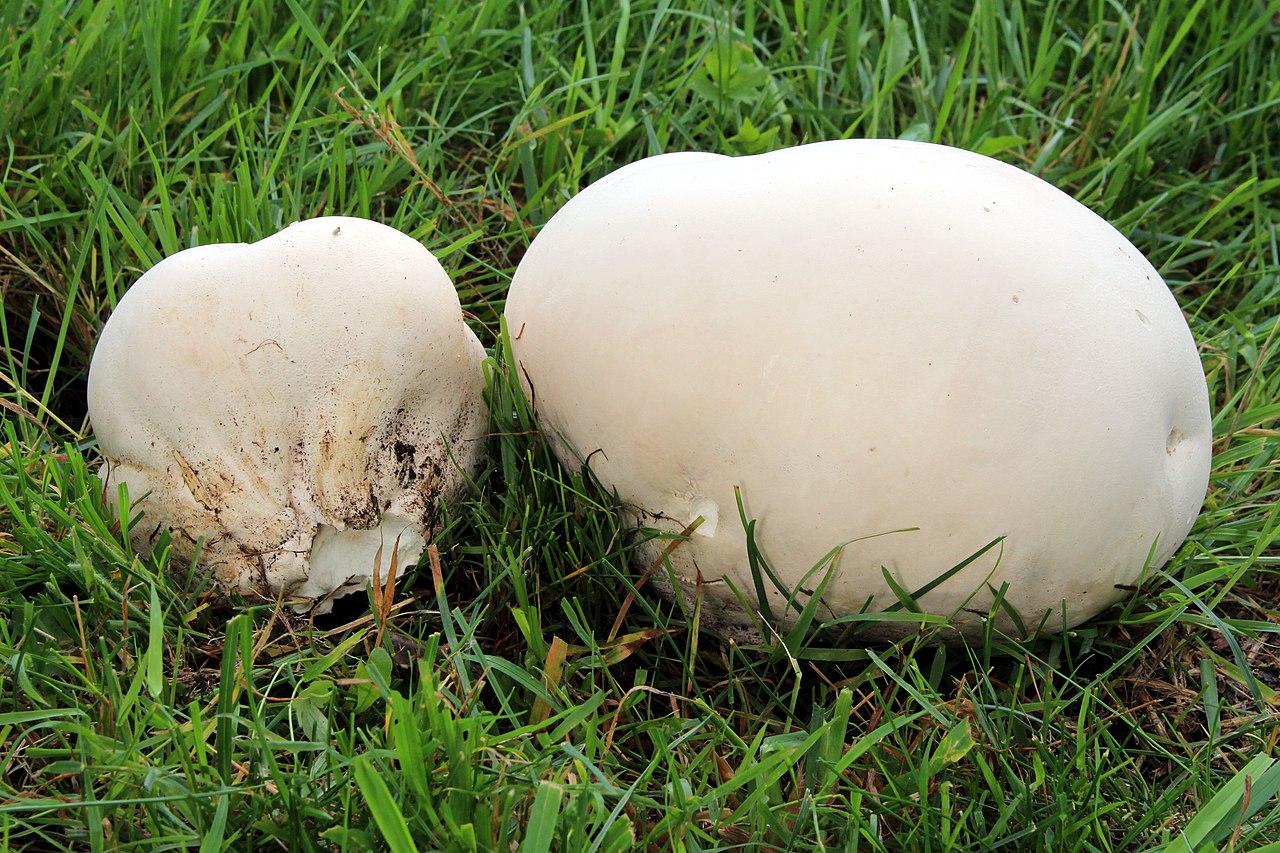
Much larger (often football-sized or bigger), with smooth white skin and pure white interior. No scales or warts on the surface. Young specimens are unmistakable, but very small Giant Puffballs could theoretically be confused with large Earthballs. The interior color is always the definitive test.
Side-by-Side Identification
| Trait | Giant Puffball | Common Earthball |
|---|---|---|
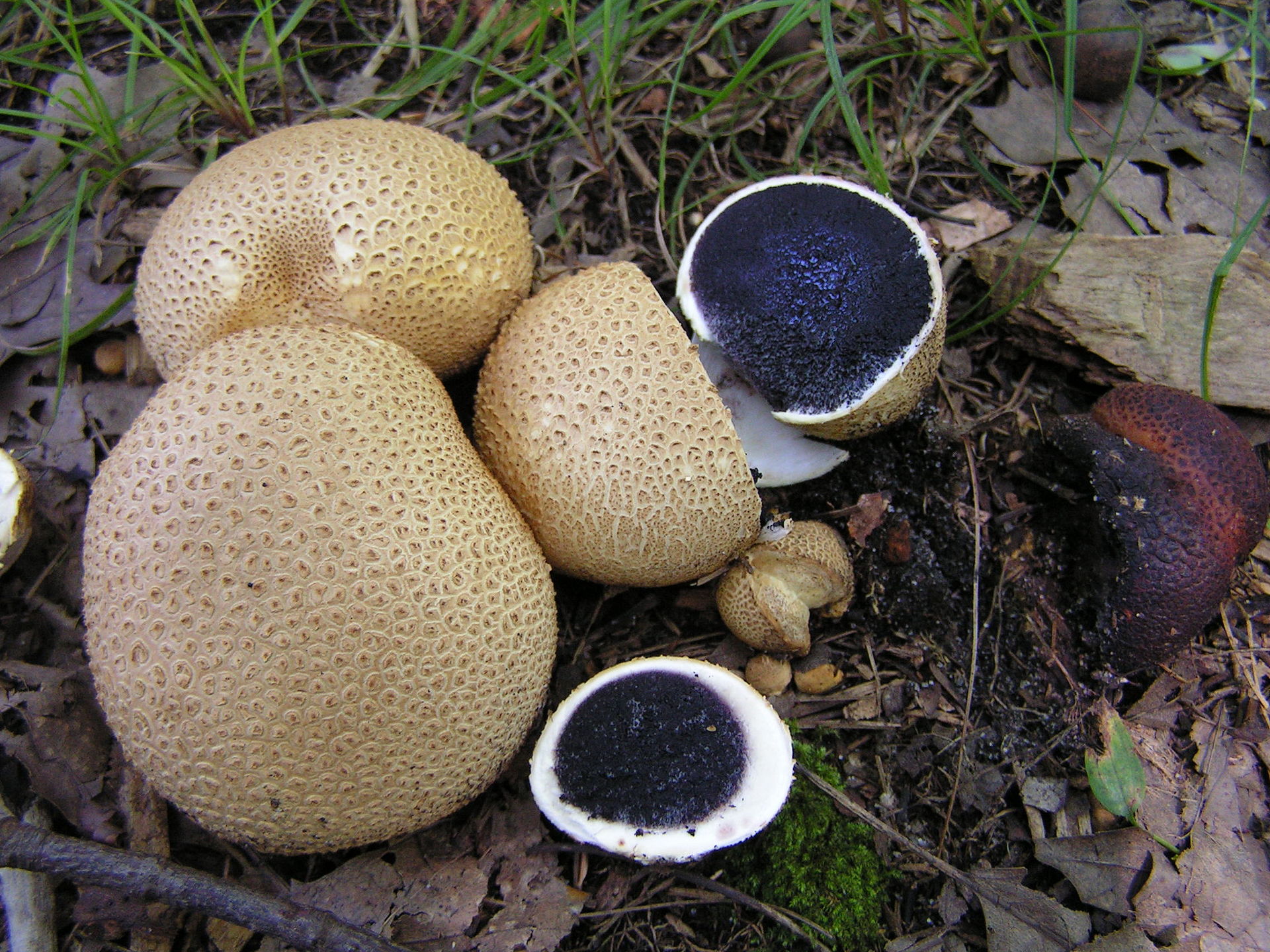
| Cap | Not really a cap — it's a round to slightly flattened sphere, 10–50 cm (sometimes larger). Smooth white skin when young that becomes leathery and tan-brown with age. No visible pores or gills on the outside. Eventually cracks open to release clouds of olive-brown spores. | 3-10 cm across, roughly spherical, with no true cap or stem structure. Surface is thick (2-3 mm), tough, and leathery, covered in coarse, irregular warts or scales. Color is dirty yellow to ochre-brown. There is no opening at the top like a true puffball; the skin simply cracks irregularly when mature. |
| Gills | — | None. Interior (gleba) is initially firm and marbled purple-black with white veins, becoming powdery dark brown-olive spore mass at maturity. |
| Stem | Essentially absent. Attaches to the ground via a small cord-like base. No ring, no volva, no stalk to speak of. | No true stem. May have a short, root-like base attaching it to the soil. |
| Spore print | Olive-brown. You won't need to take one — a mature specimen releases spore clouds visible to the naked eye. | Dark brown to olive-brown (released as spore mass when the skin cracks). |
| Odor | Mild and pleasant when young. Older specimens develop a musty, unpleasant smell as spores mature. | Unpleasant; rubbery, metallic, or chemical. Distinctly different from the mild, pleasant smell of edible puffballs. |
| Habitat | Meadows, pastures, parks, gardens, woodland edges, and disturbed ground. Loves rich, well-fertilized soil. Often found in the same location year after year. Not a tree-symbiont — it's a saprobe that feeds on decaying organic matter in the soil. | Mycorrhizal with broadleaf and coniferous trees, especially birch, oak, and pine. Found on acidic soils in woodlands, heathlands, parks, and gardens. Often on disturbed ground, along paths, and in gravel areas. Frequently in large groups. |
| Season | Late summer through autumn. Peak season is August–October in the Northern Hemisphere. Can appear as early as June in warm years. | July through November. Most abundant in September and October. |
Found one of these in the wild? Don't rely on memory — identify it from a photo with Orangutany and check it against both species before you touch it.