St. George's Mushroom vs Livid Pinkgill
Calocybe gambosa compared with Entoloma sinuatum — how to tell them apart in the field.
This is a dangerous confusion.
At least one of these species is toxic. Never eat a wild mushroom based on a photo comparison alone — verify with local experts.
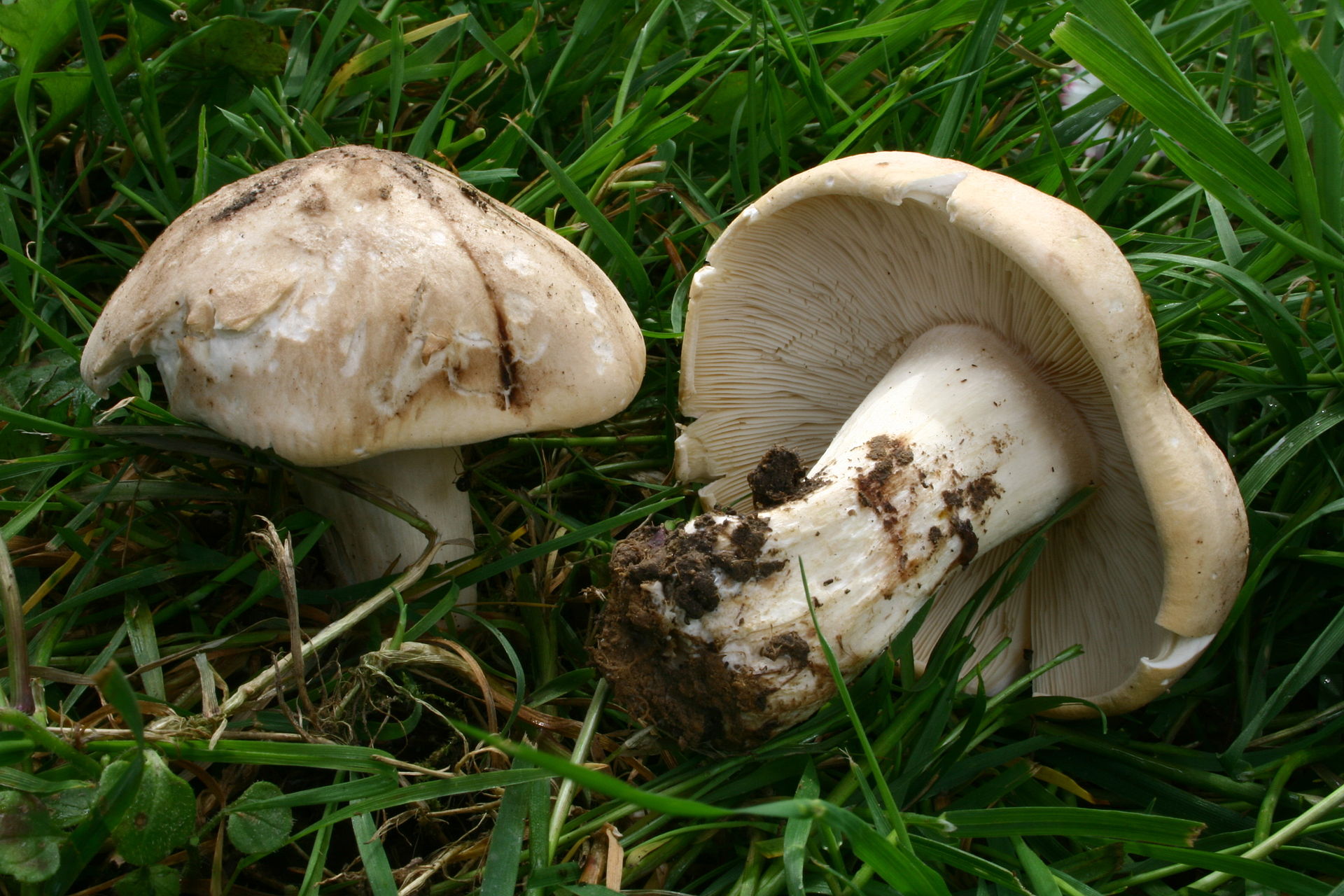
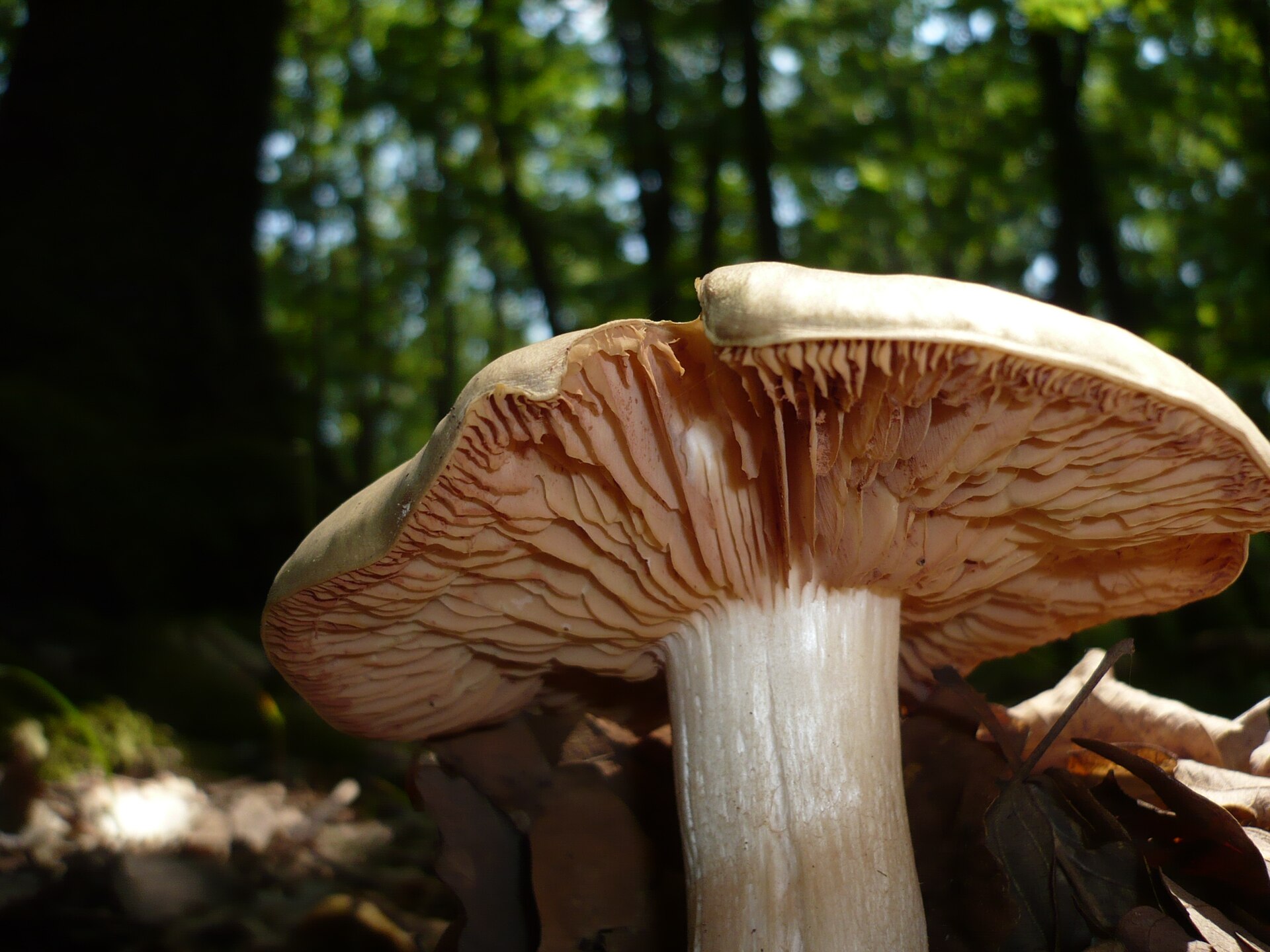
How to Tell Them Apart
Fruits in spring (April-May), not autumn. Has a white spore print and gills that remain white. Strong mealy smell. If you find something similar in autumn, it is not St. George's.
Side-by-Side Identification
| Trait | St. George's Mushroom | Livid Pinkgill |
|---|---|---|
| Cap | 5-15 cm across. Thick, fleshy, convex becoming wavy and irregular with age. White to cream, sometimes with a slight buff or yellowish tint. Surface smooth, dry, sometimes cracking at the margin in dry weather. | 6-20 cm across, making it one of the larger toxic mushrooms. Convex at first, becoming broadly convex to irregular with wavy edges. Ivory white to pale grayish or slightly yellowish. Surface smooth and slightly greasy when wet. |
| Gills | Crowded, narrow, sinuate (notched where they meet the stem). White to cream. Do not change color significantly with age. | Sinuate (notched where they meet the stem). Initially pale yellow, gradually turning salmon-pink as spores mature. This pink tinge is the critical warning sign. |
| Stem | 3-7 cm tall, 2-4 cm thick. Stout, solid, white to cream. Smooth, fibrous, sometimes slightly swollen at the base. No ring, no volva. | 6-15 cm tall, stout and solid, white to pale gray. No ring. Often slightly off-center. Firm and fibrous. |
| Spore print | White. | Salmon pink. This is the definitive identification feature. |
| Odor | Very strong, mealy, floury, like wet bread dough or fresh pasta. This smell is one of the most reliable identification features. | Mealy or cucumber-like, described as similar to fresh flour. Can be pleasant, which adds to the deception. |
| Habitat | Grasslands, chalk downs, hedgerows, woodland edges, road verges, old orchards, and parklands. Prefers calcareous (chalky, limestone) soils. Often forms fairy rings or arcs. Can appear in the same locations year after year. Saprotrophic, feeding on dead organic matter in the soil. | Found in deciduous woodlands, parklands, gardens, and hedgerows. Often grows near oak, beech, and hazel on calcareous (chalky) or clay-rich soils. Frequently appears in well-maintained park grasslands near trees. |
| Season | Spring, typically April through June. Traditionally associated with St. George's Day (April 23rd) in the UK. Peak season is late April to mid-May in most of its European range. One of the earliest edible mushrooms to fruit each year. | August through November. Peaks in September and October. |
Found one of these in the wild? Don't rely on memory — identify it from a photo with Orangutany and check it against both species before you touch it.