Pine Bolete vs Bitter Bolete
Boletus pinophilus compared with Tylopilus felleus — how to tell them apart in the field.
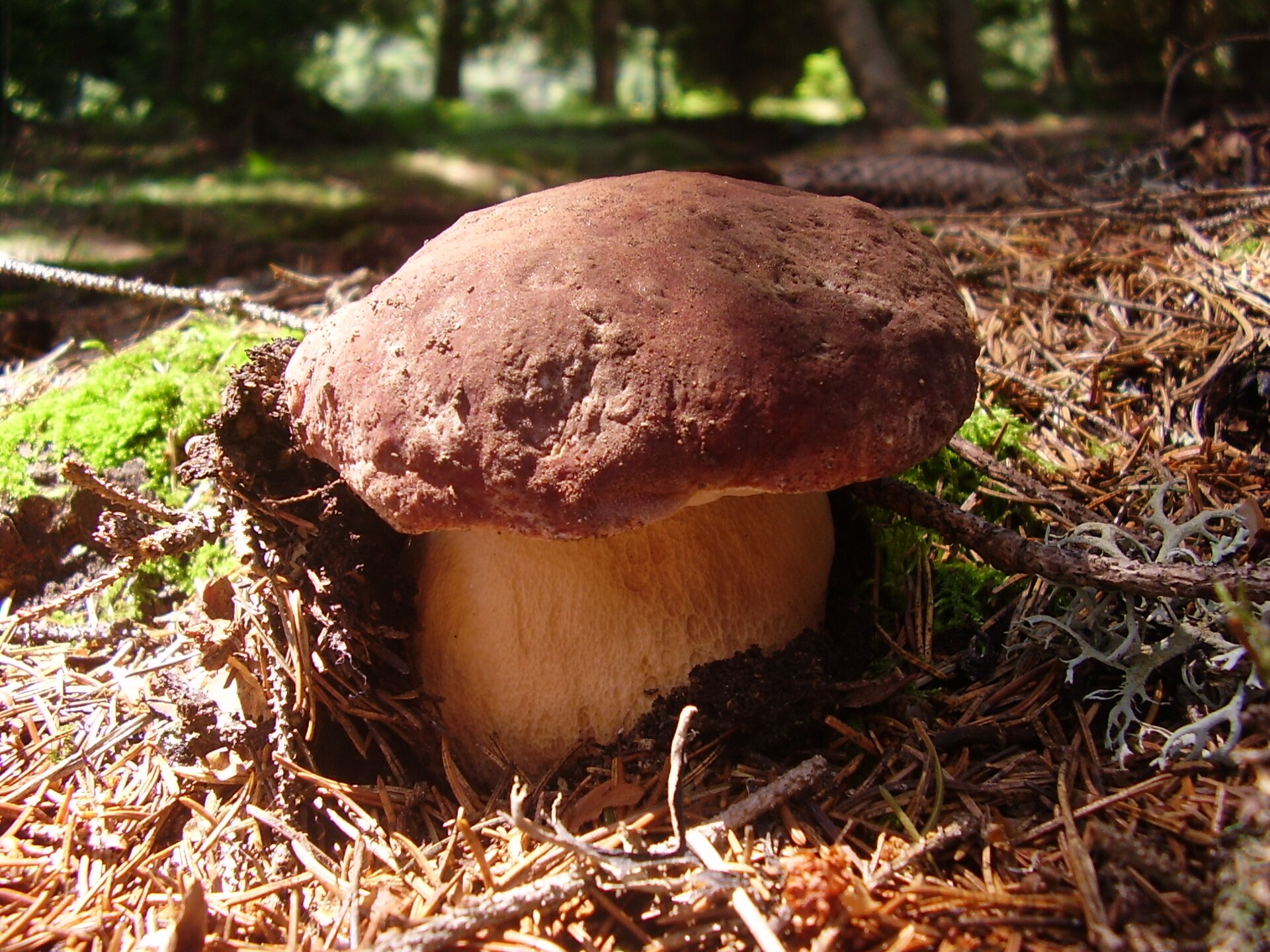
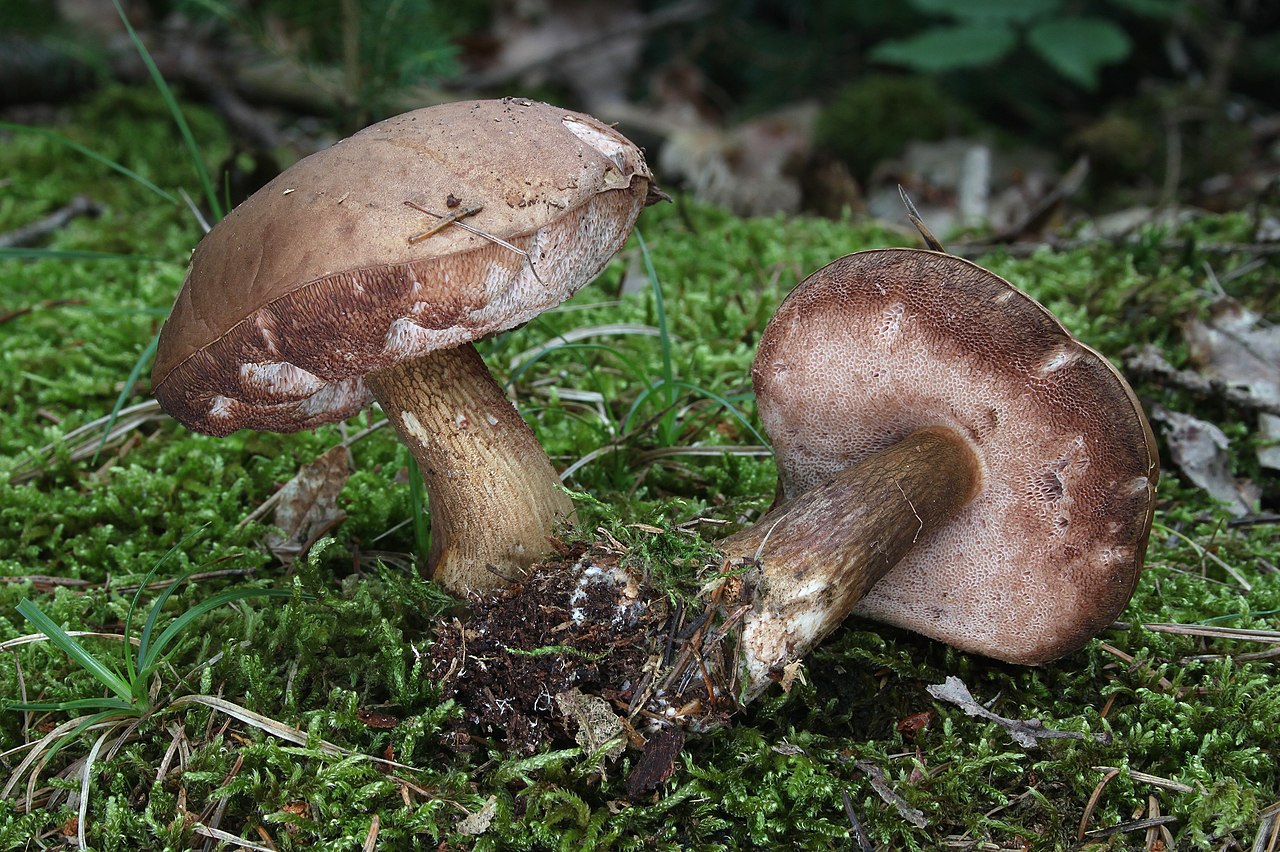
How to Tell Them Apart
Darker, reddish-brown cap compared to the Bitter Bolete's paler tan. Pores are white then yellow-green (not pink). White reticulation on the stem. Flesh is not bitter — mild and slightly sweet.
Side-by-Side Identification
| Trait | Pine Bolete | Bitter Bolete |
|---|---|---|
| Cap | 8-25 cm across (sometimes larger). Convex, thick, and fleshy. Dark reddish-brown to maroon or chestnut, distinctly darker than B. edulis. Surface is smooth to slightly sticky when wet, often with a fine, almost velvety texture. Margin is paler and slightly overhanging the pore surface. | 5–15 cm across. Convex, becoming broadly convex with age. Pale tan to pinkish-brown or grayish-brown. Surface is smooth and dry, occasionally slightly tacky in wet weather. Very similar in color to young porcini. |
| Gills | No gills. Pore surface (tubes) is white when young, aging through cream to olive-yellow. Pores are small and round. Does NOT bruise blue when pressed; this is a critical diagnostic feature. | No gills — this is a bolete with pores. Pore surface starts white in young specimens, then turns distinctly pink with age. This is the key field mark — porcini pores go yellow-green, never pink. Pores bruise brownish. |
| Stem | 8-15 cm tall, 4-8 cm thick. Extremely robust, often barrel-shaped or clavate (club-shaped), especially when young. Pale brown to reddish-brown, covered with a fine white to brown reticulation (net-like pattern), most prominent in the upper half. Solid, dense, and heavy. | 6–12 cm tall, thick and bulbous, often swollen in the middle. Cream to pale brown. Covered with a prominent dark brown net pattern (reticulation) — similar to porcini BUT the net is dark brown on a lighter background, whereas porcini reticulation is pale white on a whitish stem, especially near the cap. |
| Spore print | Olive-brown. | Pinkish-brown to rosy brown — notably different from the olive-brown print of true porcini. |
| Odor | Pleasant, mildly nutty, with a faint, sweet earthiness. Classic porcini aroma. | Mild and pleasant when fresh — not helpful for identification. |
| Habitat | Mycorrhizal with conifers, especially Scots pine (Pinus sylvestris) and Norway spruce (Picea abies). Found in coniferous and mixed forests on acidic, sandy, or heathy soils. Often in mossy, slightly open pine stands. Also reported with birch in some regions. | Mycorrhizal with both conifers (hemlock, pine, spruce) and hardwoods (oak, beech). Found in the same forests and often growing within meters of true porcini. Prefers acidic, well-drained soils. Often found near stumps or along forest paths. |
| Season | Summer through autumn, typically June through October. Often fruits earlier than B. edulis, with peak season in July and August in Scandinavia. A second flush may occur in September-October. | Summer through autumn — June to October in most of the Northern Hemisphere. Peak in August and September. |
Found one of these in the wild? Don't rely on memory — identify it from a photo with Orangutany and check it against both species before you touch it.