Pine Bolete vs Satan's Bolete
Boletus pinophilus compared with Rubroboletus satanas — how to tell them apart in the field.
This is a dangerous confusion.
At least one of these species is toxic. Never eat a wild mushroom based on a photo comparison alone — verify with local experts.
How to Tell Them Apart
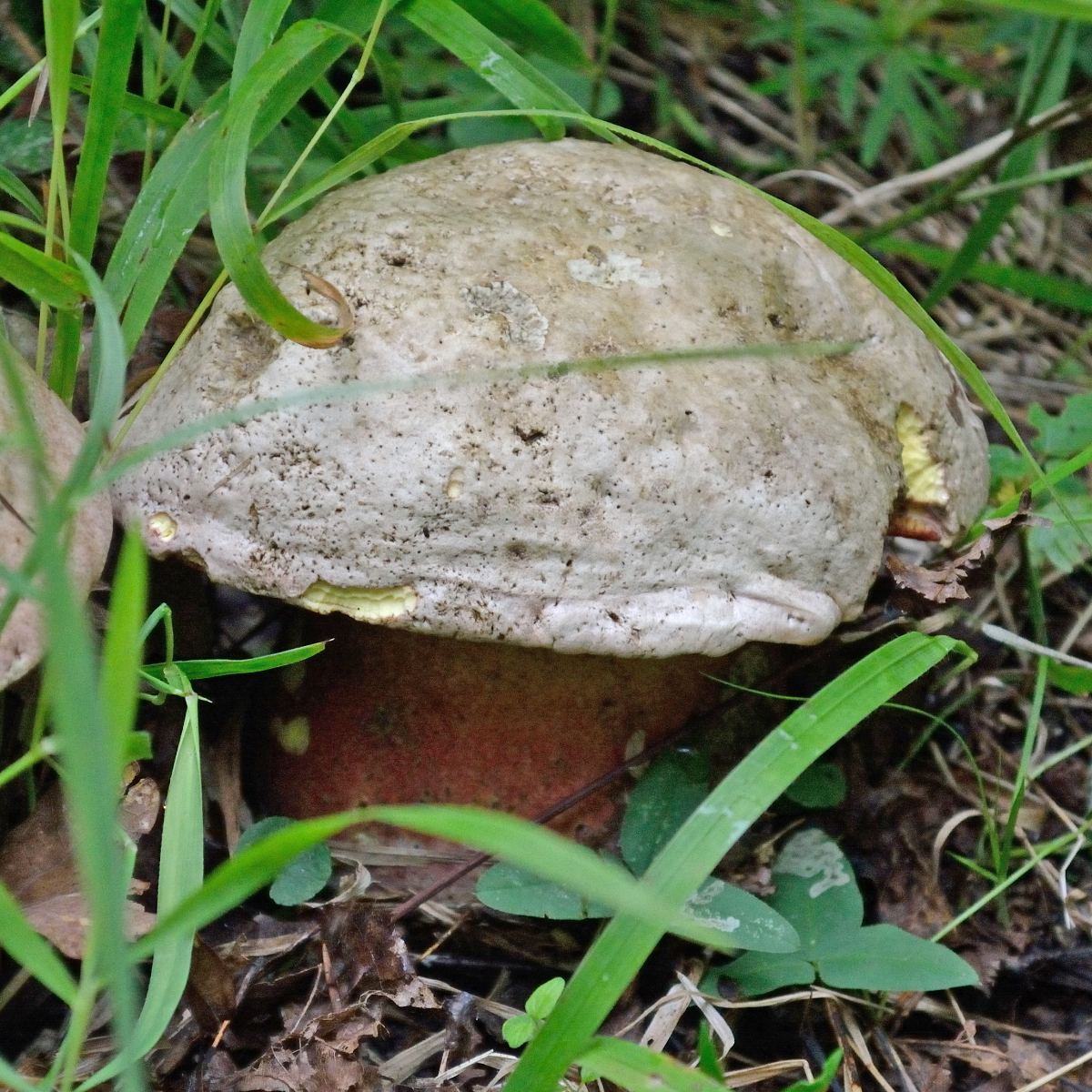
A toxic bolete with a pale grayish-white cap (not dark reddish-brown), blood-red pore surface, and red reticulation on the stem. Bruises blue instantly. Found under oaks on chalky soils, not under pines on acidic soils. The red pores and blue bruising immediately distinguish it from B. pinophilus.
Side-by-Side Identification
| Trait | Pine Bolete | Satan's Bolete |
|---|---|---|
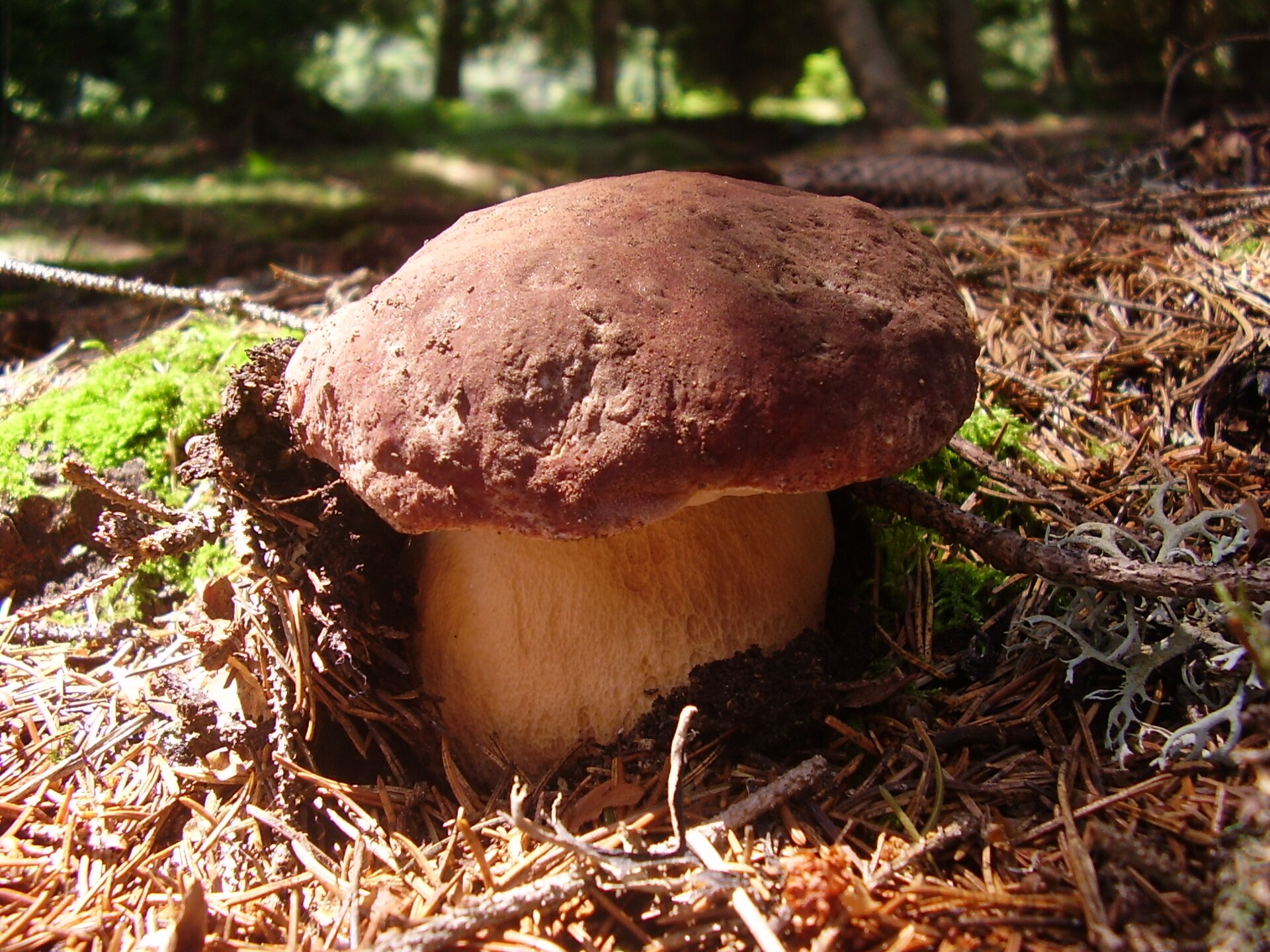
| Cap | 8-25 cm across (sometimes larger). Convex, thick, and fleshy. Dark reddish-brown to maroon or chestnut, distinctly darker than B. edulis. Surface is smooth to slightly sticky when wet, often with a fine, almost velvety texture. Margin is paler and slightly overhanging the pore surface. | 10-25 cm across, sometimes even larger. Starts convex, flattens with age. Surface is smooth, dry, and pale grayish-white to dirty buff — surprisingly bland-looking for something so toxic. Can develop olive tones in older specimens. |
| Gills | No gills. Pore surface (tubes) is white when young, aging through cream to olive-yellow. Pores are small and round. Does NOT bruise blue when pressed; this is a critical diagnostic feature. | No gills — this is a bolete with pores underneath. Pore surface starts yellow in young specimens, ages to orange-red or blood red. Pores are small and round. Bruises blue instantly when pressed. |
| Stem | 8-15 cm tall, 4-8 cm thick. Extremely robust, often barrel-shaped or clavate (club-shaped), especially when young. Pale brown to reddish-brown, covered with a fine white to brown reticulation (net-like pattern), most prominent in the upper half. Solid, dense, and heavy. | 5-15 cm tall, very thick and bulbous — often wider than it is tall. Covered in a fine red mesh-like network (reticulation) over a yellow-to-red background. The red coloring is most intense in the middle section. Stocky and barrel-shaped. |
| Spore print | Olive-brown. | Olive-brown. |
| Odor | Pleasant, mildly nutty, with a faint, sweet earthiness. Classic porcini aroma. | Unpleasant and faintly rotten in mature specimens — sometimes described as like old meat. Young ones can be nearly odorless. |
| Habitat | Mycorrhizal with conifers, especially Scots pine (Pinus sylvestris) and Norway spruce (Picea abies). Found in coniferous and mixed forests on acidic, sandy, or heathy soils. Often in mossy, slightly open pine stands. Also reported with birch in some regions. | Strictly mycorrhizal with broadleaf trees, especially oak (Quercus) and beech (Fagus). Prefers calcareous (chalky/limestone) soils in warm, sunny woodland clearings. Doesn't do well in acidic or dense forests. |
| Season | Summer through autumn, typically June through October. Often fruits earlier than B. edulis, with peak season in July and August in Scandinavia. A second flush may occur in September-October. | Summer through early autumn. Peak fruiting is July-September, depending on rainfall and warmth. |
Found one of these in the wild? Don't rely on memory — identify it from a photo with Orangutany and check it against both species before you touch it.