Porcini vs Bitter Bolete
Boletus edulis compared with Tylopilus felleus — how to tell them apart in the field.
How to Tell Them Apart
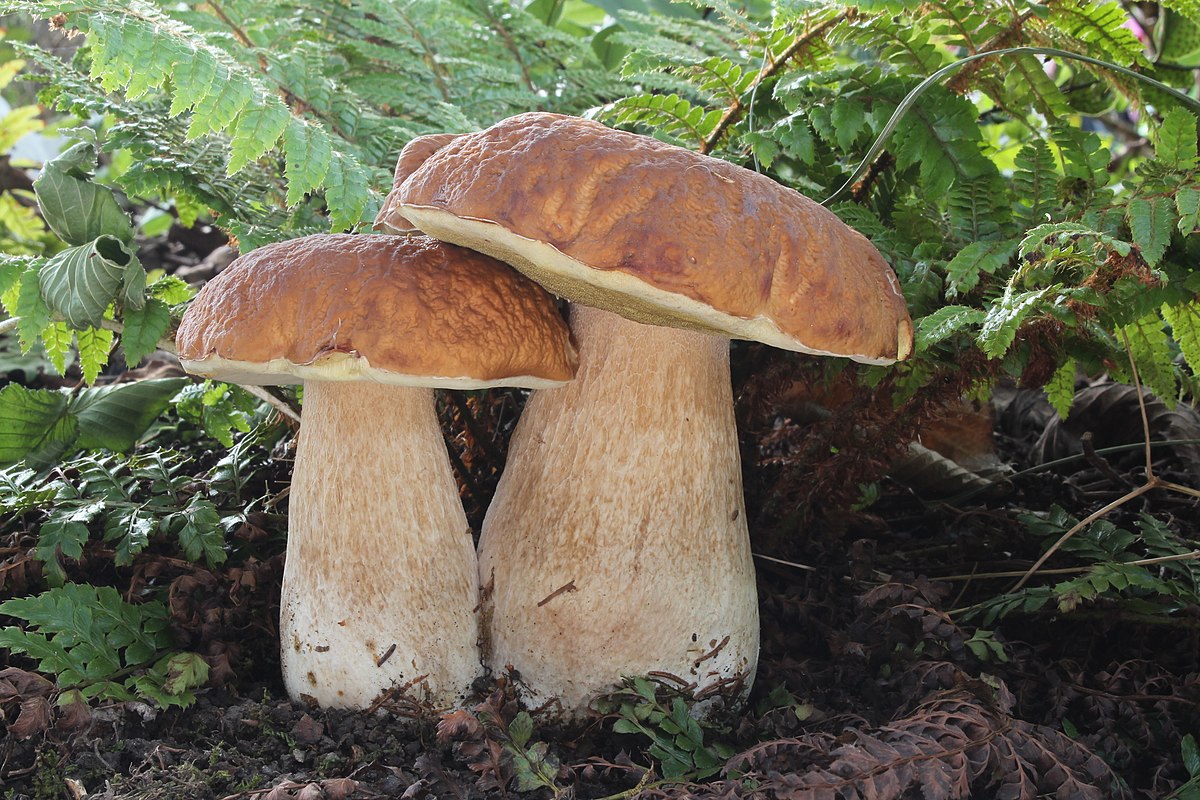
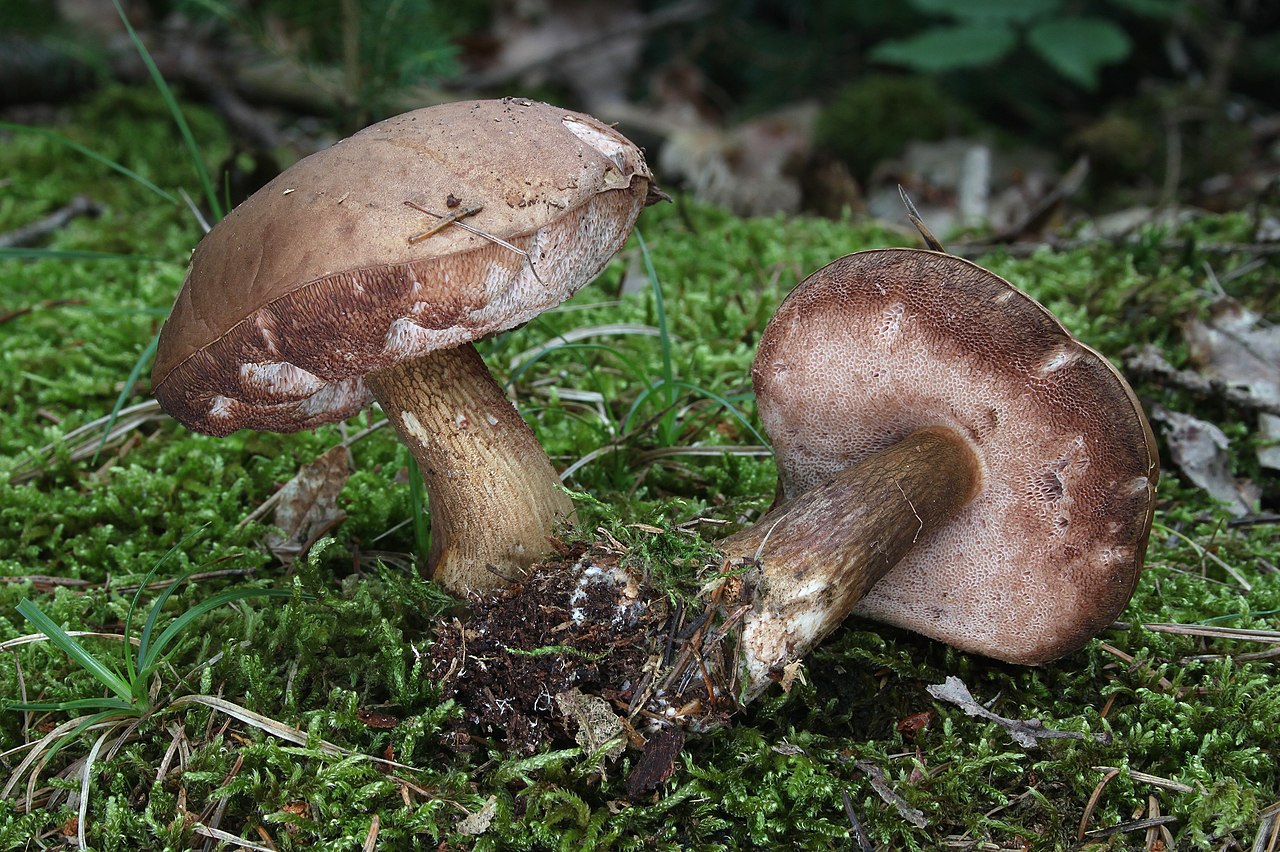
The classic porcini impostor. Looks almost identical at first glance — brown cap, bulbous stem, pore surface. But the net pattern on the stem is darker (brownish, not white), the pores turn pinkish with age, and one tiny taste will tell you everything: it's intensely bitter. A single piece can ruin an entire pot of risotto.
The mushroom everyone wants. White to yellow-green pores (never pink), white net pattern on the stem (not dark brown), and no bitterness — flesh tastes mild and nutty. The tongue test instantly separates the two.
Side-by-Side Identification
| Trait | Porcini | Bitter Bolete |
|---|---|---|
| Cap | 7–30 cm across, sometimes larger. Convex when young, flattening with age. Color ranges from pale tan to dark brown, often with a slightly sticky surface when wet. The edge is sometimes lighter than the center. Young caps feel firm and almost bread-like — hence the English name 'penny bun.' | 5–15 cm across. Convex, becoming broadly convex with age. Pale tan to pinkish-brown or grayish-brown. Surface is smooth and dry, occasionally slightly tacky in wet weather. Very similar in color to young porcini. |
| Gills | No gills. Instead, the underside has a dense sponge-like layer of pores (tubes). White when very young, turning yellowish then olive-green as spores mature. The pore surface doesn't bruise blue when pressed — this is a key identification feature. | No gills — this is a bolete with pores. Pore surface starts white in young specimens, then turns distinctly pink with age. This is the key field mark — porcini pores go yellow-green, never pink. Pores bruise brownish. |
| Stem | Thick and bulbous — 8–25 cm tall and up to 10 cm wide, often wider at the base. White to pale brown, covered with a fine raised network pattern (reticulation) especially near the top. This net pattern is one of the most reliable ways to confirm you've got a real porcini. | 6–12 cm tall, thick and bulbous, often swollen in the middle. Cream to pale brown. Covered with a prominent dark brown net pattern (reticulation) — similar to porcini BUT the net is dark brown on a lighter background, whereas porcini reticulation is pale white on a whitish stem, especially near the cap. |
| Spore print | Olive-brown to dark brown. | Pinkish-brown to rosy brown — notably different from the olive-brown print of true porcini. |
| Odor | Pleasant, nutty, slightly yeasty — often described as 'the smell of a good bakery.' | Mild and pleasant when fresh — not helpful for identification. |
| Habitat | Forms mycorrhizal relationships with a wide range of trees: spruce, pine, birch, beech, oak, and chestnut. Found in coniferous and mixed forests, often along trails, clearings, and forest edges. Prefers well-drained, slightly acidic soils. Frequently appears in the same spots year after year — which is why experienced foragers memorize their patches. | Mycorrhizal with both conifers (hemlock, pine, spruce) and hardwoods (oak, beech). Found in the same forests and often growing within meters of true porcini. Prefers acidic, well-drained soils. Often found near stumps or along forest paths. |
| Season | Late summer through autumn, typically August through November. In warmer Mediterranean climates, a second flush can appear in spring. Peak season is September–October across most of Europe and North America. | Summer through autumn — June to October in most of the Northern Hemisphere. Peak in August and September. |
Found one of these in the wild? Don't rely on memory — identify it from a photo with Orangutany and check it against both species before you touch it.