Porcini vs Pine Bolete
Boletus edulis compared with Boletus pinophilus — how to tell them apart in the field.
How to Tell Them Apart
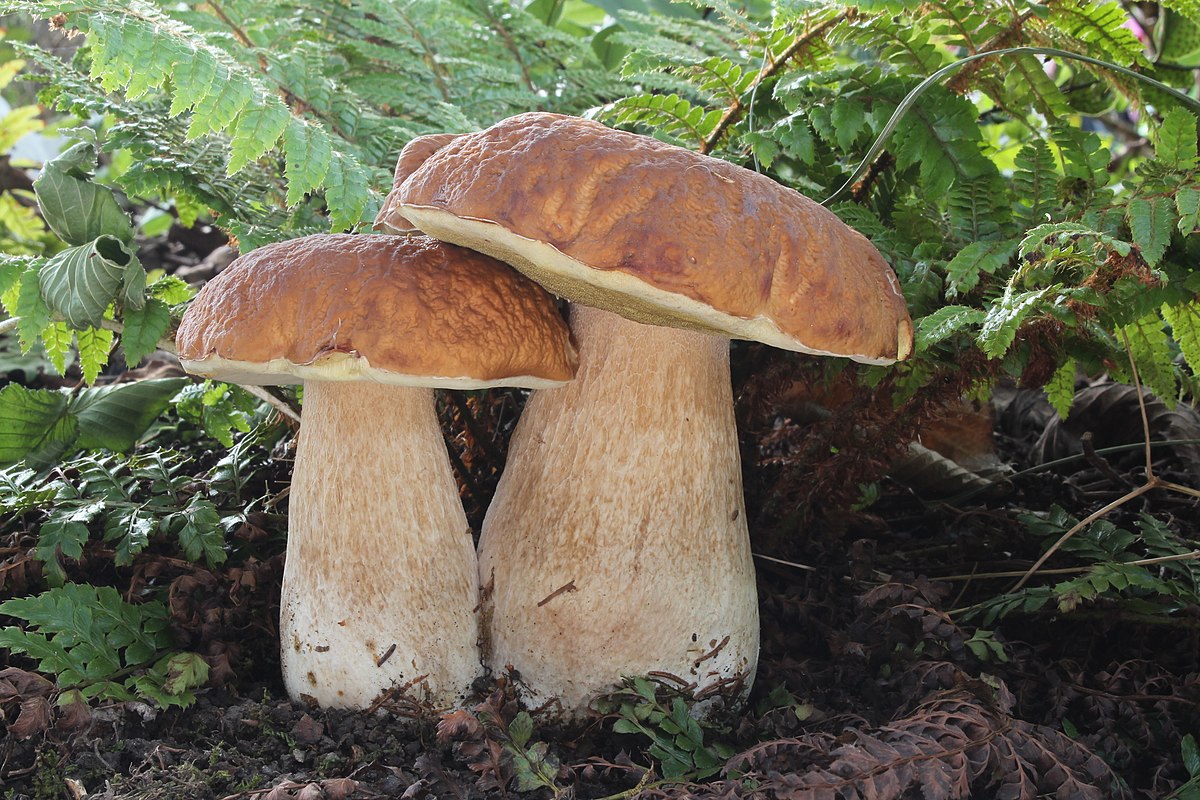
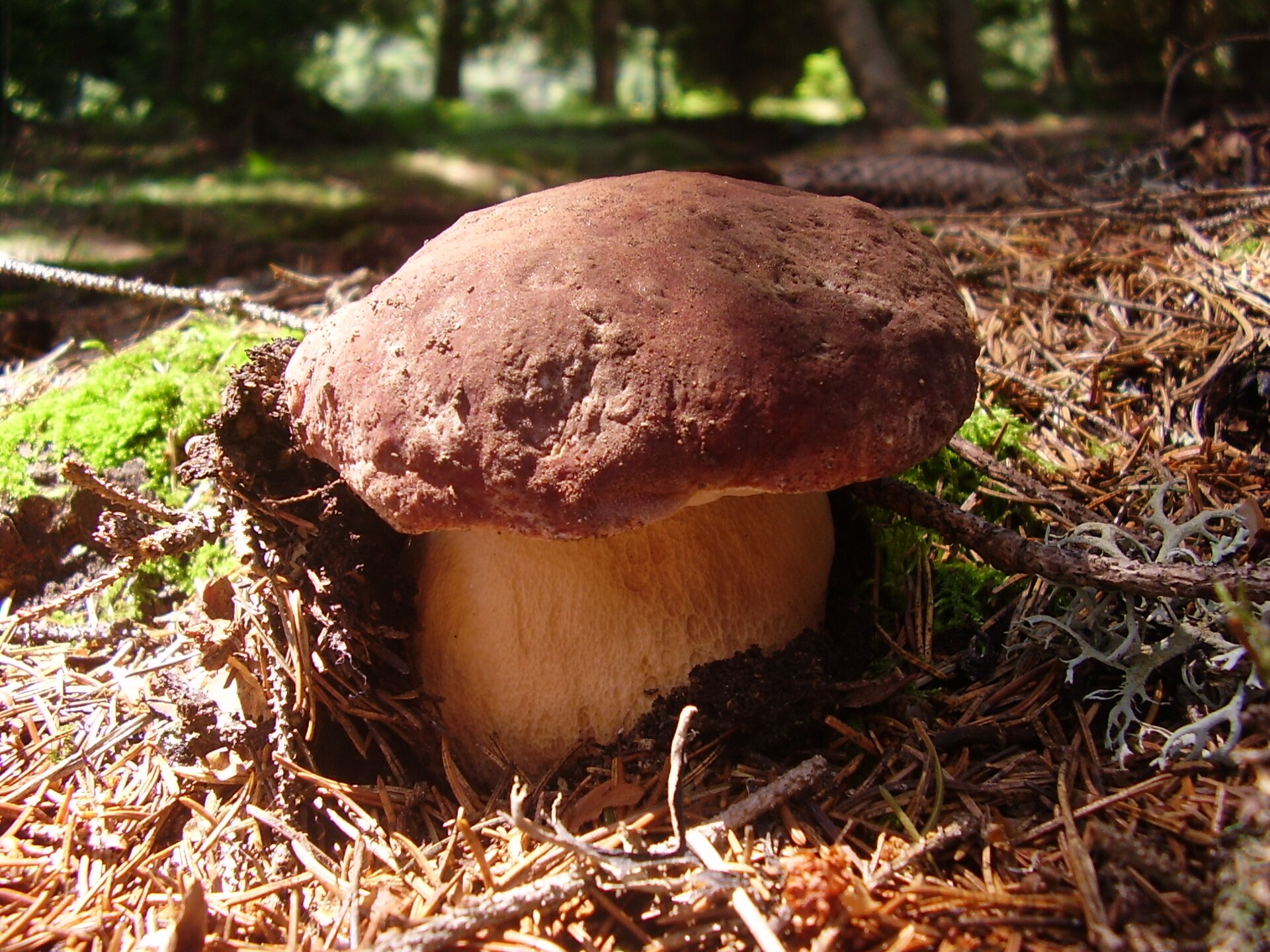
Very closely related and culinarily equivalent. B. edulis has a lighter brown cap (not reddish-brown), is more commonly associated with spruce, oak, and beech (though also found with pine), and has a paler, more uniformly brown cap compared to the deep maroon of B. pinophilus. Both are choice edibles. The practical distinction is academic for the kitchen.
Side-by-Side Identification
| Trait | Porcini | Pine Bolete |
|---|---|---|
| Cap | 7–30 cm across, sometimes larger. Convex when young, flattening with age. Color ranges from pale tan to dark brown, often with a slightly sticky surface when wet. The edge is sometimes lighter than the center. Young caps feel firm and almost bread-like — hence the English name 'penny bun.' | 8-25 cm across (sometimes larger). Convex, thick, and fleshy. Dark reddish-brown to maroon or chestnut, distinctly darker than B. edulis. Surface is smooth to slightly sticky when wet, often with a fine, almost velvety texture. Margin is paler and slightly overhanging the pore surface. |
| Gills | No gills. Instead, the underside has a dense sponge-like layer of pores (tubes). White when very young, turning yellowish then olive-green as spores mature. The pore surface doesn't bruise blue when pressed — this is a key identification feature. | No gills. Pore surface (tubes) is white when young, aging through cream to olive-yellow. Pores are small and round. Does NOT bruise blue when pressed; this is a critical diagnostic feature. |
| Stem | Thick and bulbous — 8–25 cm tall and up to 10 cm wide, often wider at the base. White to pale brown, covered with a fine raised network pattern (reticulation) especially near the top. This net pattern is one of the most reliable ways to confirm you've got a real porcini. | 8-15 cm tall, 4-8 cm thick. Extremely robust, often barrel-shaped or clavate (club-shaped), especially when young. Pale brown to reddish-brown, covered with a fine white to brown reticulation (net-like pattern), most prominent in the upper half. Solid, dense, and heavy. |
| Spore print | Olive-brown to dark brown. | Olive-brown. |
| Odor | Pleasant, nutty, slightly yeasty — often described as 'the smell of a good bakery.' | Pleasant, mildly nutty, with a faint, sweet earthiness. Classic porcini aroma. |
| Habitat | Forms mycorrhizal relationships with a wide range of trees: spruce, pine, birch, beech, oak, and chestnut. Found in coniferous and mixed forests, often along trails, clearings, and forest edges. Prefers well-drained, slightly acidic soils. Frequently appears in the same spots year after year — which is why experienced foragers memorize their patches. | Mycorrhizal with conifers, especially Scots pine (Pinus sylvestris) and Norway spruce (Picea abies). Found in coniferous and mixed forests on acidic, sandy, or heathy soils. Often in mossy, slightly open pine stands. Also reported with birch in some regions. |
| Season | Late summer through autumn, typically August through November. In warmer Mediterranean climates, a second flush can appear in spring. Peak season is September–October across most of Europe and North America. | Summer through autumn, typically June through October. Often fruits earlier than B. edulis, with peak season in July and August in Scandinavia. A second flush may occur in September-October. |
Found one of these in the wild? Don't rely on memory — identify it from a photo with Orangutany and check it against both species before you touch it.