Yellow Fieldcap vs Yellow Houseplant Mushroom
Bolbitius titubans compared with Leucocoprinus birnbaumii — how to tell them apart in the field.
This is a dangerous confusion.
At least one of these species is toxic. Never eat a wild mushroom based on a photo comparison alone — verify with local experts.
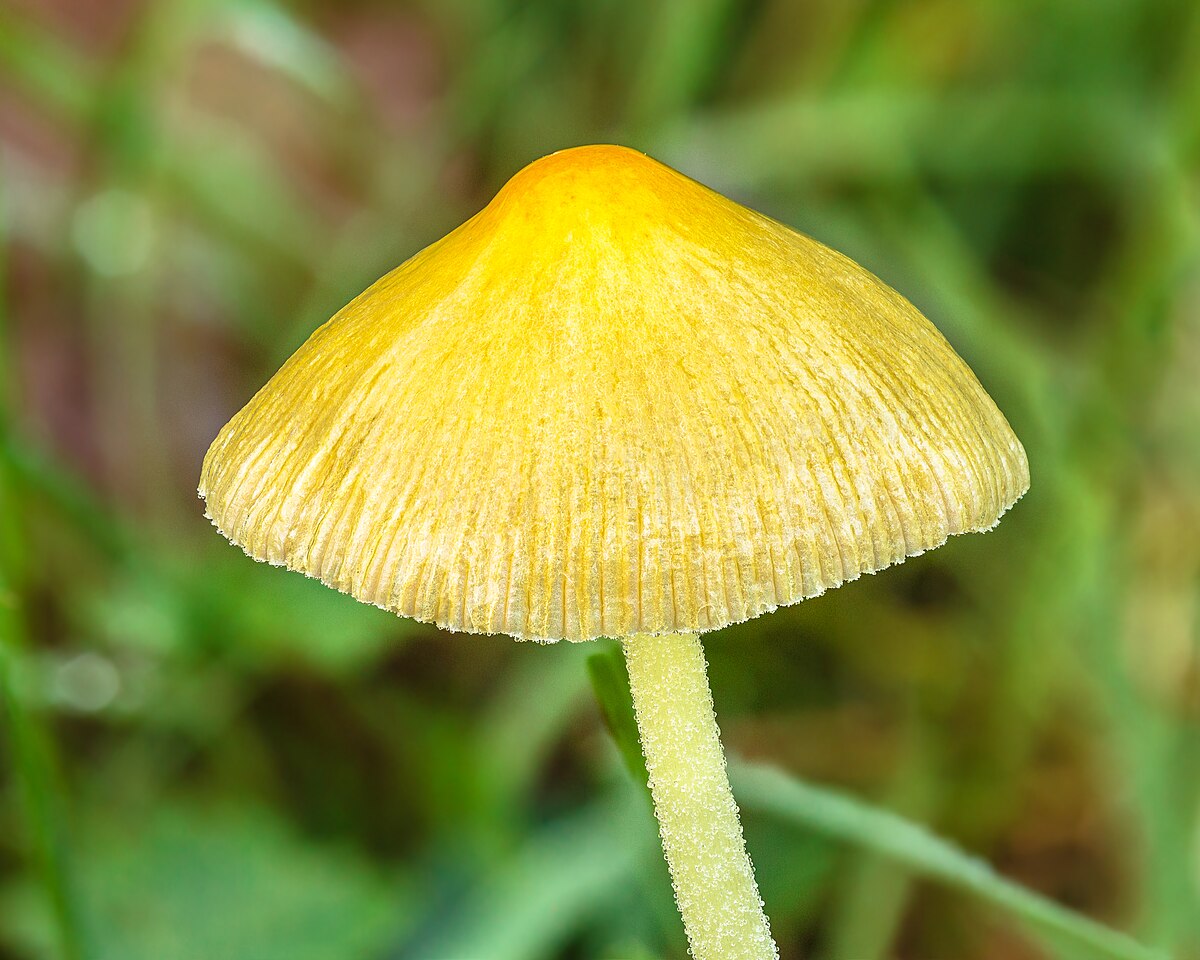
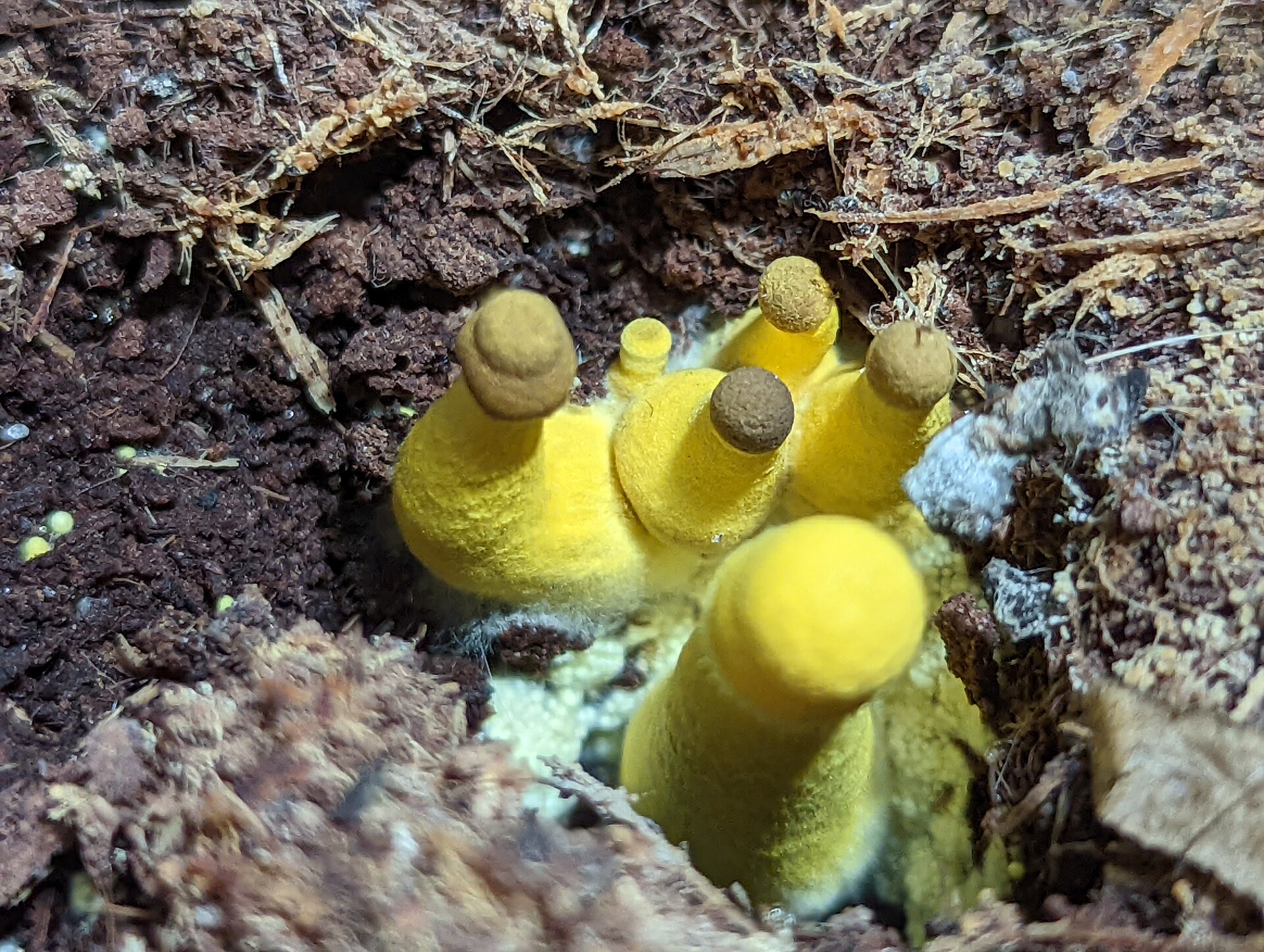
How to Tell Them Apart
Another bright yellow mushroom, but found exclusively in potted plants and greenhouses — not in outdoor pastures. Has a scaly or granular cap surface (not smooth and slimy), white spore print (not rusty brown), and a ring on the stem. Much more persistent than Bolbitius, lasting several days.
Also bright yellow, but found outdoors on grass, dung, or straw, not in houseplants. Has a slimy, viscid cap that dissolves quickly (deliquescent). Spore print is rusty brown, not white. Much more fragile.
Side-by-Side Identification
| Trait | Yellow Fieldcap | Yellow Houseplant Mushroom |
|---|---|---|
| Cap | 2–5 cm across. Ovoid to egg-shaped when very young, expanding to conical, then broadly bell-shaped, finally flattening with a tattered, upturned margin. Surface viscid to glutinous when fresh, smooth and glistening. Bright egg-yolk yellow when young, fading to pale ochre or buff from the margin inward. Strongly striate when expanded, with grooves extending nearly to the center. Flesh extremely thin and fragile, almost tissue-like. | 2-5 cm across. Ovoid when young, expanding to bell-shaped or convex. Bright lemon-yellow throughout, fading slightly with age. Surface is covered in fine powdery granules or small scales, especially on top. Margin is distinctly pleated or striate, showing the gill pattern through the thin cap flesh. |
| Gills | Narrowly attached (adnexed) to nearly free. Crowded. Pale yellow when young, becoming ochre-yellow, then cinnamon-brown as spores mature. Edges slightly fringed. Deliquescent — partially dissolving in wet weather, though far less dramatically than true ink caps. | Free (not attached to stem). Pale yellow to bright yellow. Crowded and thin. Not a useful feature for most observers since the cap shape and color are so distinctive. |
| Stem | 6–12 cm tall, 2–5 mm thick. Very slender, hollow, and extremely fragile — snaps with the lightest touch. White to pale yellow, covered with a fine white pruinose coating (powdery bloom) especially near the apex. Often slightly translucent. No ring. Base may have fine white mycelium. Tends to lean and eventually collapse. | 3-8 cm tall, 2-5 mm thick. Slender, yellow, with a small ring (annulus) that is often fragile and may disappear with age. Base is slightly enlarged. Surface has the same powdery-granular texture as the cap. |
| Spore print | Rusty cinnamon-brown. | White to very pale cream. |
| Odor | Not distinctive. Faintly mushroomy. | Not distinctive. Mild, earthy. |
| Habitat | Saprotrophic. Grows on well-rotted dung (horse, cow), composted straw, wood chip mulch, manured lawns, and nutrient-rich grassland. Also found on rotting hay bales, garden compost heaps, and occasionally in rich woodland leaf litter. Typically appears singly or in small, scattered groups. Prefers warm, wet conditions — often erupts overnight after summer rain. | Saprotrophic on rich organic substrates. Most commonly encountered in potted houseplants, greenhouse beds, and commercial potting soils. Also found outdoors in tropical and subtropical gardens, mulched beds, compost heaps, and disturbed organic-rich soils. Strongly associated with warm, humid indoor environments. |
| Season | Late spring through autumn, typically May through October in the Northern Hemisphere. Peak fruiting in June through September during warm, rainy spells. Fruit bodies are extremely short-lived, often lasting only a single day. | Year-round indoors, whenever temperature and humidity conditions are favorable. Outdoors in temperate regions, summer only. In tropical regions, fruits year-round. Indoor fruiting often follows watering or periods of elevated humidity. |
Found one of these in the wild? Don't rely on memory — identify it from a photo with Orangutany and check it against both species before you touch it.