Destroying Angel vs Paddy Straw Mushroom
Amanita virosa compared with Volvariella volvacea — how to tell them apart in the field.
This is a dangerous confusion.
At least one of these species is potentially deadly. Never eat a wild mushroom based on a photo comparison alone — verify with local experts.
How to Tell Them Apart
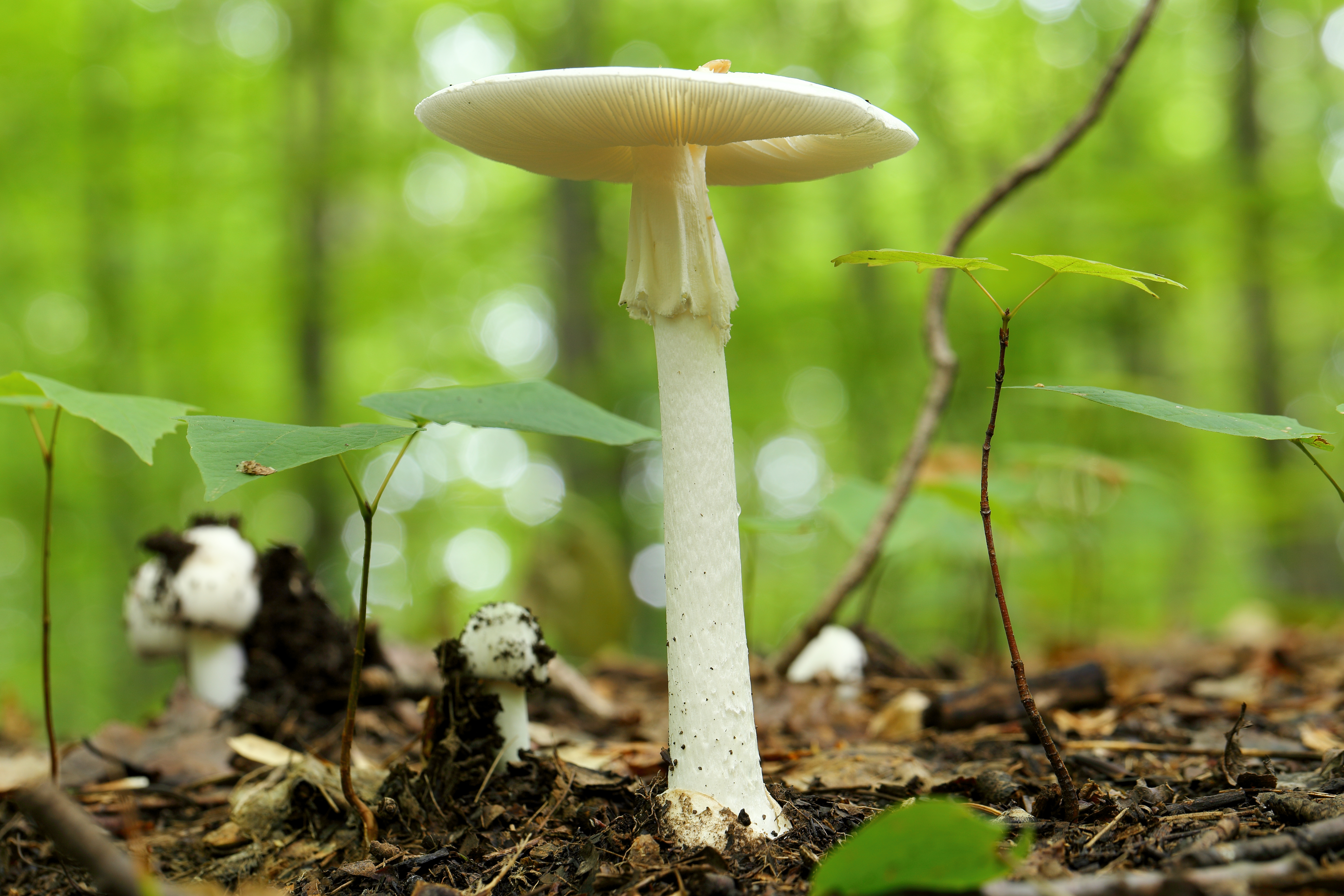
Another deadly Amanita with a prominent volva. Pure white throughout, with white gills and white spore print. V. volvacea has a dark gray-brown cap and gills that mature to pink. A. virosa grows in temperate woodlands, not on compost in tropical settings. The habitat difference should prevent confusion, but immigrants unfamiliar with local species have made this mistake.
Side-by-Side Identification
| Trait | Destroying Angel | Paddy Straw Mushroom |
|---|---|---|
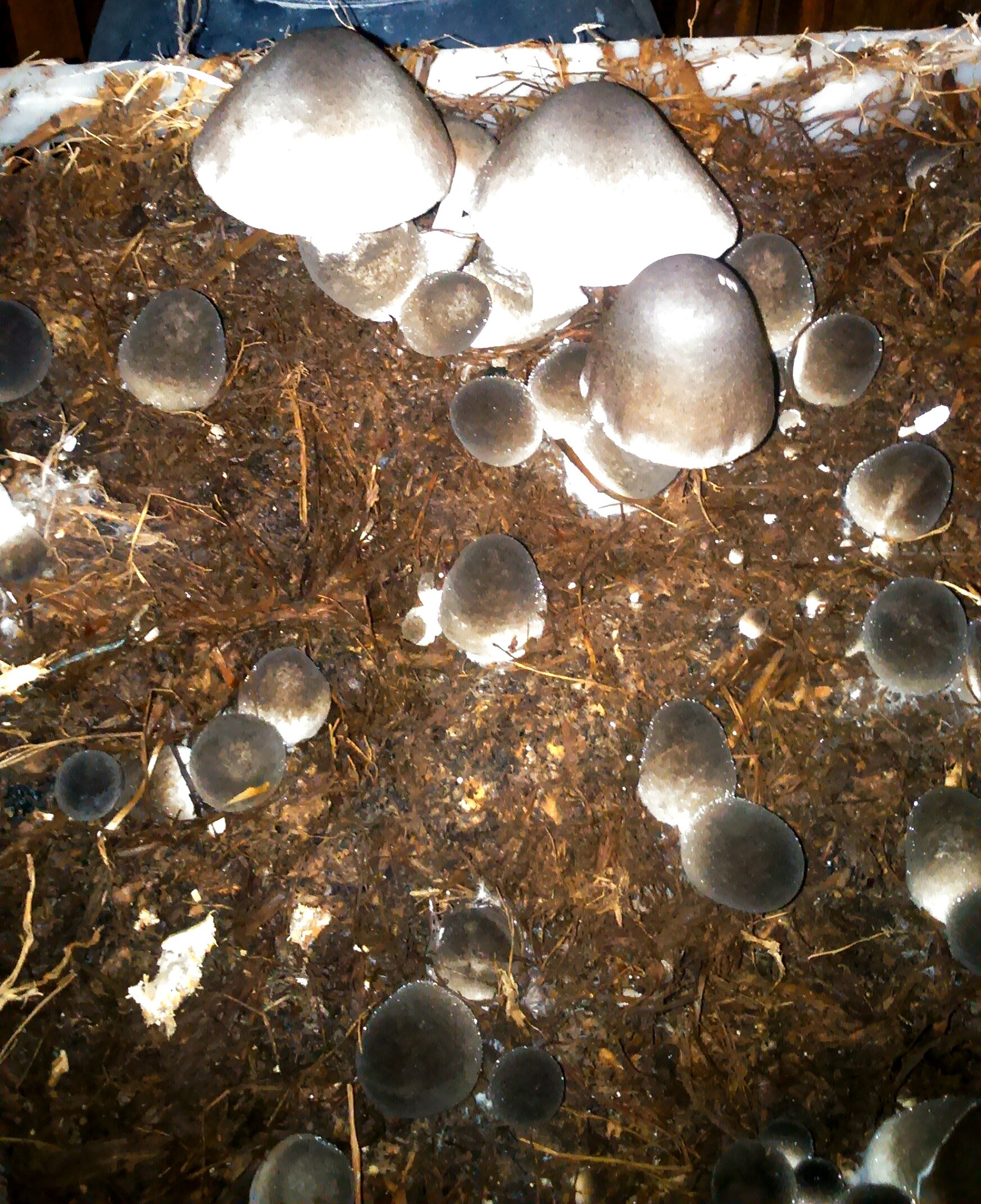
| Cap | 5-12 cm across. Pure white, smooth, and slightly sticky or slimy when wet. Starts egg-shaped when young (enclosed in a universal veil), then opens to convex and eventually flattens out with age. No warts or patches on the surface — just clean, ghostly white. | 5-12 cm across in the expanded stage. Initially enclosed in a dark grayish-brown universal veil (egg stage). When expanded, the cap is conical to convex, dark gray to grayish-brown, often with a slightly striate margin. Surface is dry, smooth to faintly silky. |
| Gills | White, free (not attached to the stem), and closely crowded together. They stay white throughout the mushroom's life — never turning pink or brown like edible Agaricus species do. | Free (not attached to the stem), closely spaced. White when young, becoming pink then pinkish-brown as spores mature. This pink maturation is a key feature distinguishing them from Amanita gills, which remain white. |
| Stem | 10-15 cm tall, white, and slender with a delicate skirt-like ring (annulus) near the top. The base is the critical part: it sits inside a sac-like volva (cup) that's often buried in soil or leaf litter. Always dig up the base carefully — the volva is the single most important identification feature. | 5-10 cm tall, 1-2 cm thick. White to pale grayish, smooth, solid. The base is enclosed in a large, thick, sac-like volva (cup) that is grayish-brown on the outside and white inside. The volva is the most conspicuous feature. |
| Spore print | White. Place the cap gill-side-down on dark paper for several hours to check. | Salmon-pink to pinkish-brown. |
| Odor | Young specimens have little smell. Mature ones develop a sickly sweet, unpleasant odor sometimes described as honey-like or like old ham. If a white mushroom smells cloyingly sweet, back away. | Mild, pleasant, slightly mealy or mushroomy. |
| Habitat | Found in mixed and deciduous woodlands, especially near birch, oak, and beech trees. Forms mycorrhizal partnerships with tree roots. Prefers moist, shaded areas with rich humus soil. Often fruits singly or in small groups, sometimes right at the edge of paths and clearings. | Saprobic on decomposing plant material, especially rice straw, cotton waste, oil palm waste, and composted agricultural residues. In the wild, found on compost heaps, mulch piles, and decaying vegetation in tropical and subtropical regions. Requires warm temperatures (28-35 degrees C) and high humidity for fruiting. |
| Season | Summer through late autumn. Peak fruiting is July through October in the Northern Hemisphere, often after warm rain. | Year-round in tropical regions. In cultivation, crops can be produced every 2-3 weeks. Wild fruiting occurs during warm, wet periods, especially during monsoon seasons. |
Found one of these in the wild? Don't rely on memory — identify it from a photo with Orangutany and check it against both species before you touch it.