Blushing Bride vs The Blusher
Amanita novinupta compared with Amanita rubescens — how to tell them apart in the field.
How to Tell Them Apart
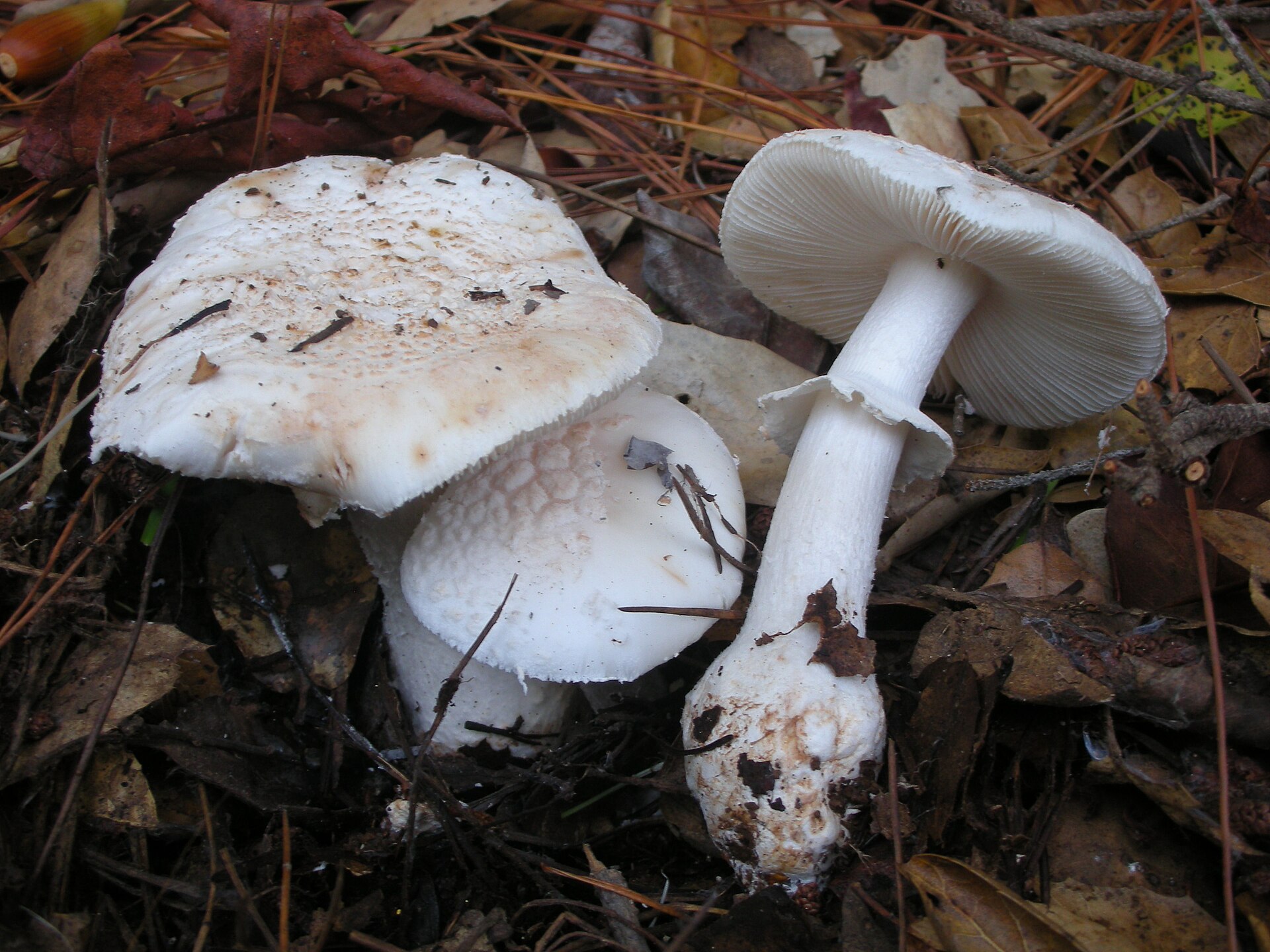
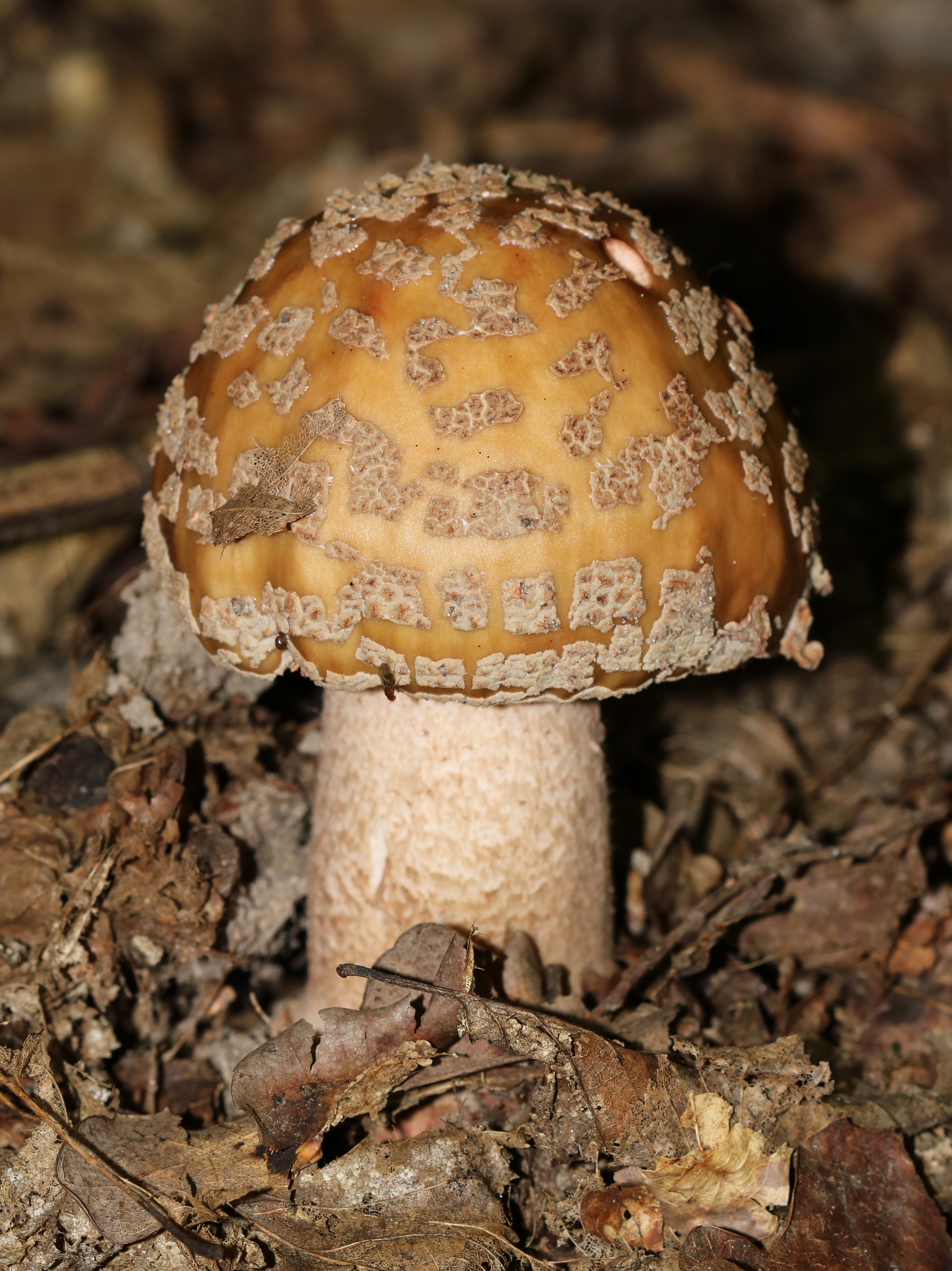
The European and eastern North American counterpart. The Blusher has a darker reddish-brown to vinaceous cap from the start, while the Blushing Bride begins white. The Blusher is taller and less stocky, with greyer warts. Their ranges do not overlap: rubescens in Europe and eastern North America, novinupta in the west. Both blush pink when cut.
The western North American counterpart. Blushing Bride starts white and develops pink tones, while the Blusher has a reddish-brown cap from the start. Blushing Bride is stockier with paler warts. Ranges do not overlap: novinupta in western North America, rubescens in Europe and the east. Both blush pink when cut.
Side-by-Side Identification
| Trait | Blushing Bride | The Blusher |
|---|---|---|
| Cap | 3 to 15 cm across. Convex, expanding to nearly flat. Initially white, developing pinkish areas with age. Surface dry, appearing chalky at first, becoming satiny. Scattered whitish to pale pink wart-like veil patches, sometimes aggregated into a central patch. Margin not striate or only faintly so at maturity. | 5 to 15 cm across. Rounded when young, flattening with age. Pinkish-brown to reddish-brown with scattered greyish or pinkish wart-like patches (veil remnants). Warts wash off in rain. Flesh beneath the skin turns pink when damaged. |
| Gills | White, free or slightly attached. Close to crowded. Bruise pinkish when damaged. | White, crowded, free from the stem. Stain pinkish-red where bruised or cut. Spore print is white. |
| Stem | 2 to 15 cm tall, 1 to 3 cm thick. White, stout. Finely striate at apex, with pale pinkish-brown fine scales below. Prominent bulbous base with collar-like volva remnants (one to several scaly rings on the bulb, not a sac). Bruises pinkish to reddish. Ring is thin, white, fragile, striate on upper surface. | 5 to 15 cm tall, 1.5 to 3 cm thick. White above the ring, pinkish below. Bulbous base without a distinct sac-like volva. Ring is prominent, striate (grooved) on the upper surface. |
| Spore print | White. | White. |
| Bruising | The defining feature: all parts of the flesh slowly turn pink to reddish when cut, bruised, or damaged. The reaction can be slow, developing over several minutes. This distinguishes it from the deadly Amanita ocreata, which does not blush. | The defining feature: all parts of the flesh slowly turn pink to reddish when cut, bruised, or damaged by insects. This reaction is unique among common Amanitas. |
| Odor | Not distinctive. | Faint, not distinctive. Some describe a mild, pleasant mushroom smell. |
| Habitat | Mycorrhizal, primarily with coast live oak (Quercus agrifolia). Also found under Douglas-fir and other conifers. Grows alone, scattered, or in groups in woodland and forest settings. Often fruits alongside Amanita velosa and, dangerously, alongside Amanita ocreata. | Mycorrhizal with both deciduous and coniferous trees, especially oaks, beeches, birches, and pines. Found in mixed and broadleaf woodlands, parklands, and gardens with mature trees. Prefers well-drained, slightly acidic soils. Often fruits along paths and woodland edges where the soil has been disturbed. |
| Season | Late fall through spring (November to April). Fruits during the Pacific Coast rainy season, unlike most Amanitas which appear in summer and fall. | June through November. Peak fruiting in August and September across most of its range. |
Found one of these in the wild? Don't rely on memory — identify it from a photo with Orangutany and check it against both species before you touch it.