American Caesar's Mushroom vs Fly Agaric
Amanita jacksonii compared with Amanita muscaria — how to tell them apart in the field.
This is a dangerous confusion.
At least one of these species is toxic. Never eat a wild mushroom based on a photo comparison alone — verify with local experts.
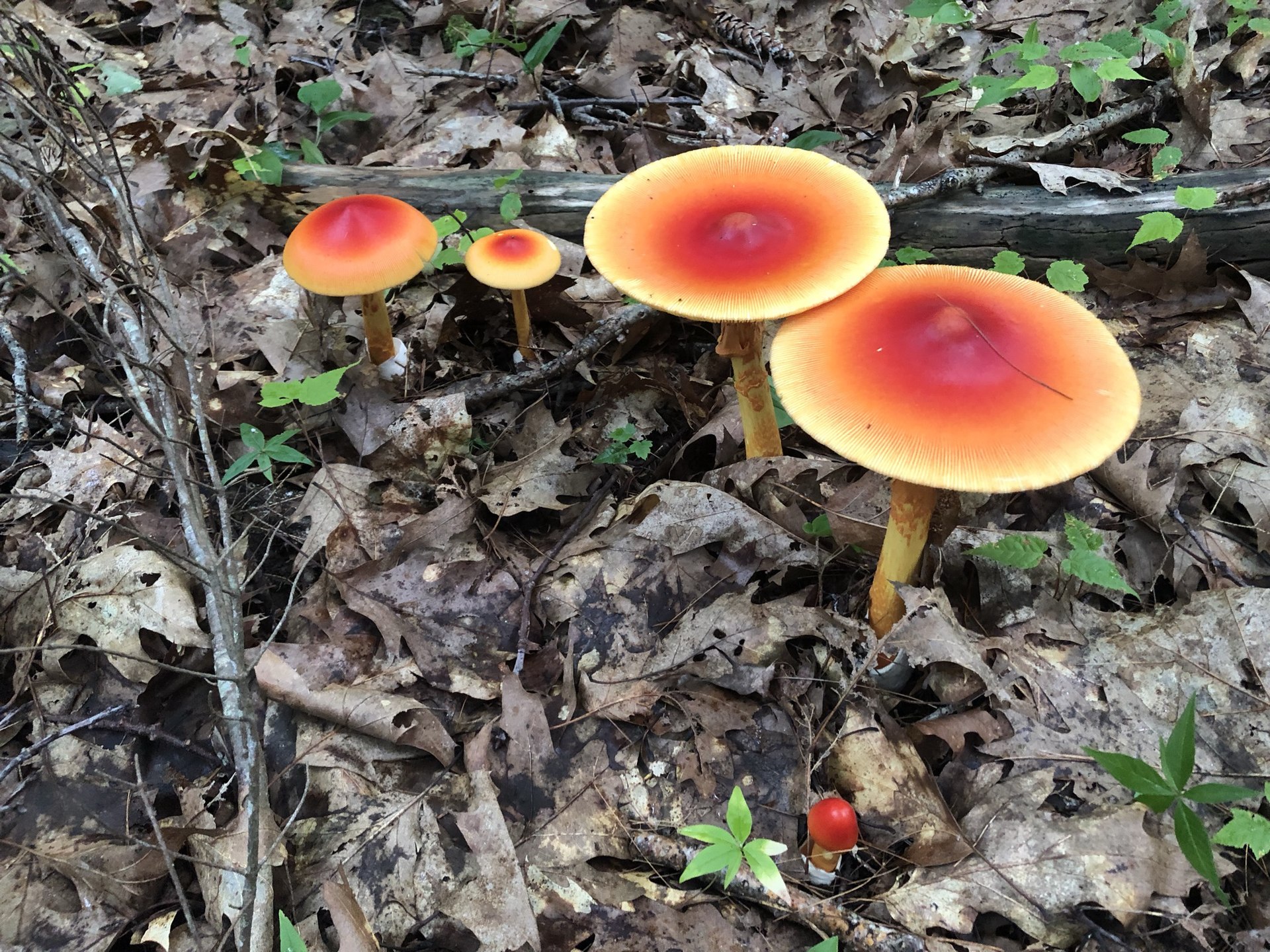
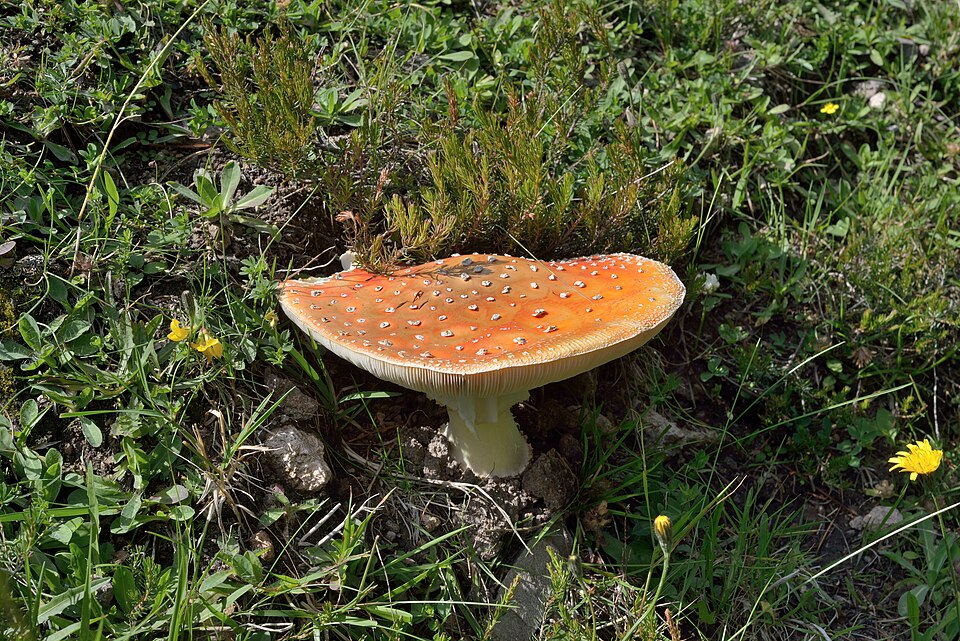
How to Tell Them Apart
Also has a red cap but is covered in white wart-like patches (remnants of universal veil). Has WHITE gills, not yellow. Has a prominent ring (annulus) on the stem. Stem is white, not yellow. Toxic. The white gills and white stem versus yellow gills and yellow stem is the most reliable field distinction.
Side-by-Side Identification
| Trait | American Caesar's Mushroom | Fly Agaric |
|---|---|---|
| Cap | 5-15 cm across. Initially egg-shaped and enclosed in a white volva, then expanding to convex and finally flat. Color is vivid scarlet red to orange-red, sometimes fading to orange with age. Surface is smooth, slightly sticky when wet. Usually lacks the white wart-like patches seen on many other Amanitas (the universal veil tends to remain as a basal sac rather than breaking into cap patches). | 5–20 cm across. Starts as a rounded button, opens to a flat saucer shape with age. Bright scarlet red when fresh — fades to orange or even yellow in older specimens. Covered in white to cream wart-like spots (remnants of the "egg" it hatched from). Rain washes these off, so don't rely on the spots alone. |
| Gills | Free (not attached to the stem). Yellow to orange-yellow. Crowded and broad. This yellow gill color is a critical identification feature that separates it from white-gilled deadly Amanitas. | Packed tightly together, pure white, and free (not attached to the stem). They don't bruise or change color — one of the cleaner-looking undersides you'll find. |
| Stem | 8-18 cm tall, 1-2.5 cm thick. Yellow to orange-yellow, often with faint zigzag banding or patterning. Base is enclosed in a large, thick, persistent white volva (sac). No ring (annulus) on the stem, which is another important distinction from many deadly Amanitas. | Tall and sturdy — 10–25 cm, white, with a skirt-like ring partway up. The base is bulbous and sits inside a cup (volva) that's often buried in soil. Dig carefully if you want to see it. |
| Spore print | White to pale cream. | White — drop the cap on dark paper overnight to check. |
| Odor | Mild, pleasant, slightly nutty. Not distinctive. | Surprisingly mild. Nothing distinctive. |
| Habitat | Mixed hardwood and oak-dominated forests. Mycorrhizal, forming partnerships primarily with oaks and other hardwoods. Prefers well-drained, acidic soils on slopes and ridges. Often found along trails and in open woodland with good light penetration. | Loves birch, pine, spruce, and fir trees — it forms a symbiotic relationship with their roots. You'll find it in forests, heathlands, parks, and even suburban yards if the right trees are nearby. Prefers acidic soils. |
| Season | June through October, with peak fruiting in July and August. Requires warm temperatures and summer rains. | Late summer through November. Peak season is September–October in most of the Northern Hemisphere. |
Found one of these in the wild? Don't rely on memory — identify it from a photo with Orangutany and check it against both species before you touch it.