False Death Cap vs Destroying Angel
Amanita citrina compared with Amanita virosa — how to tell them apart in the field.
This is a dangerous confusion.
At least one of these species is toxic. Never eat a wild mushroom based on a photo comparison alone — verify with local experts.
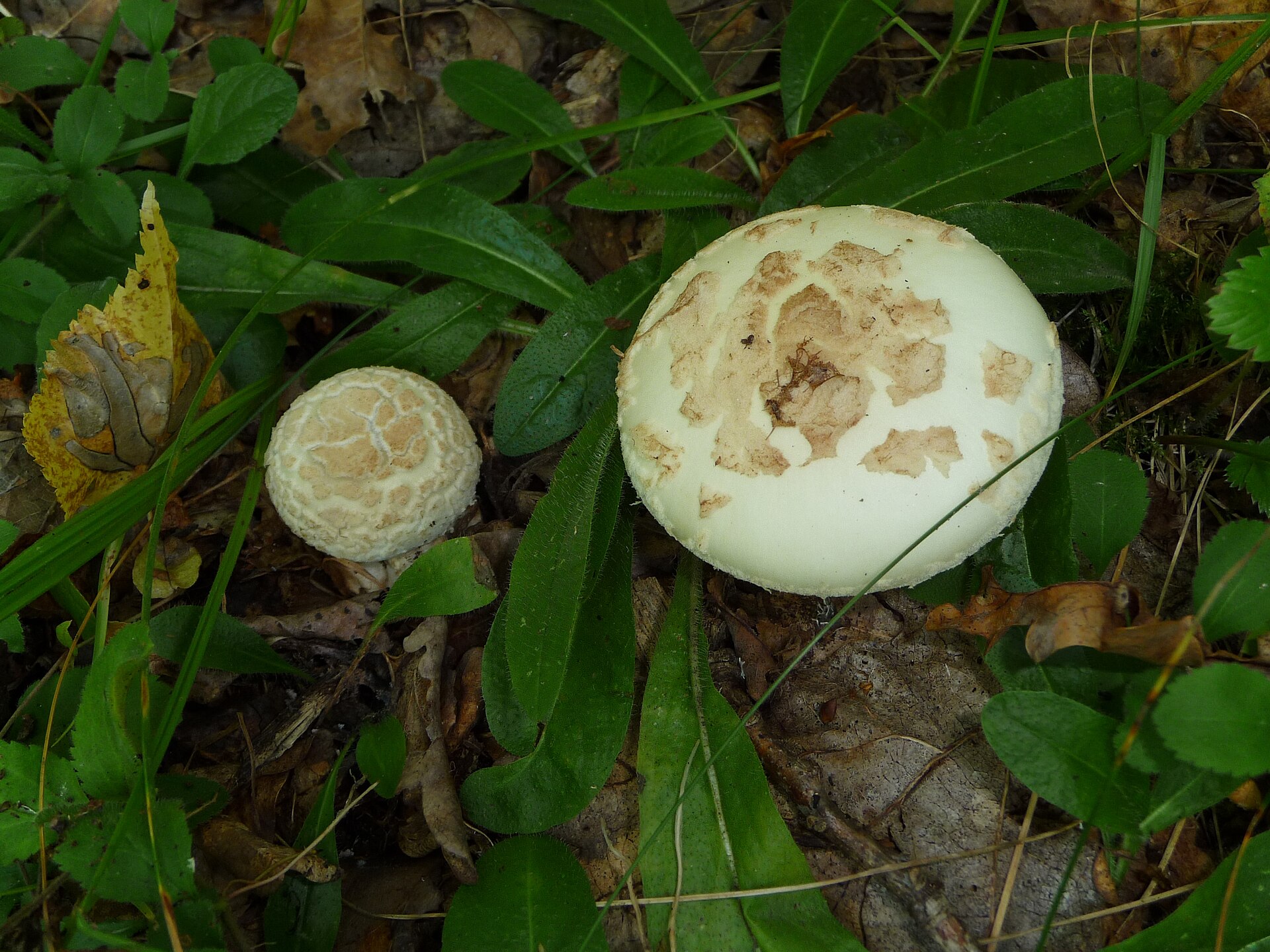
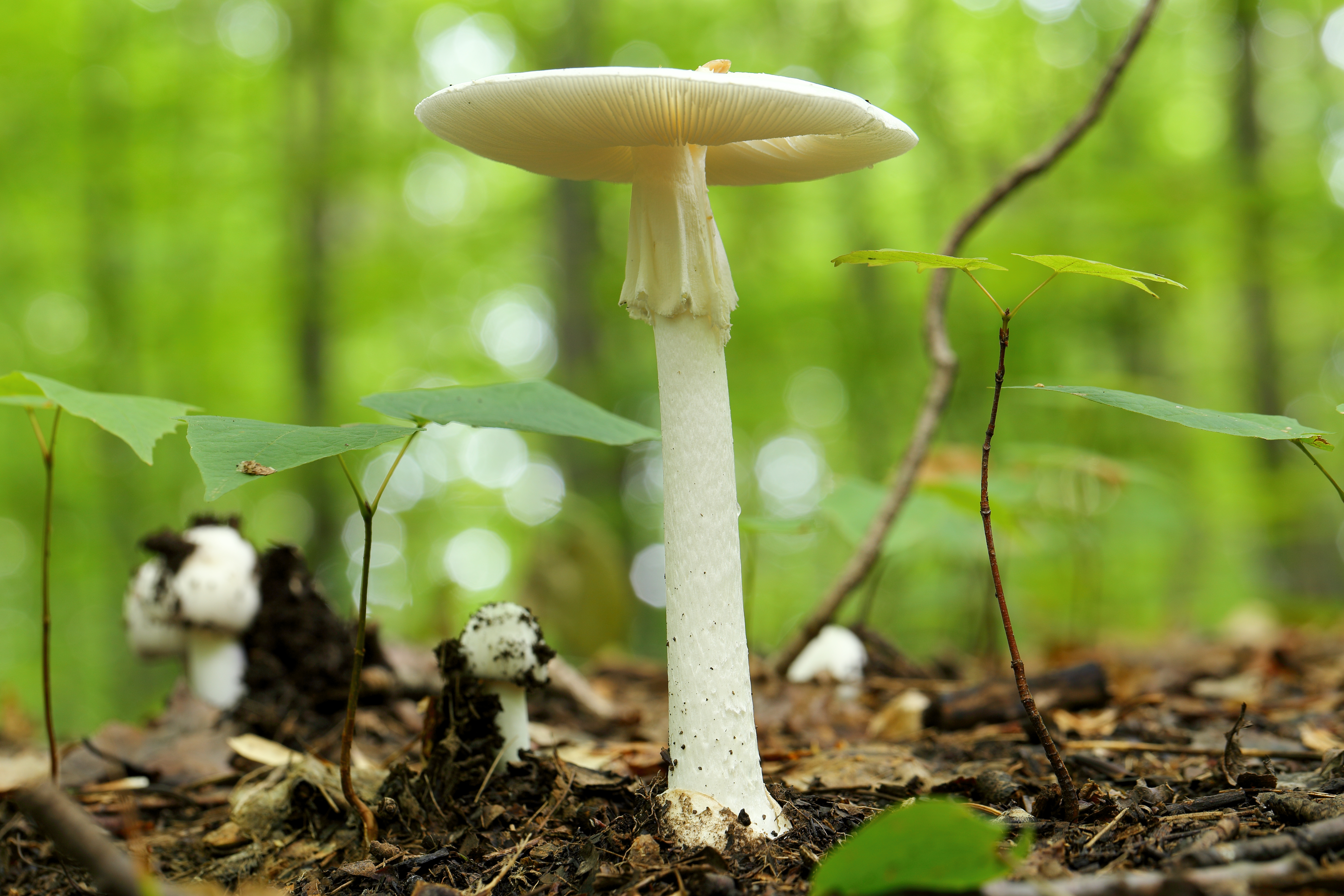
How to Tell Them Apart
Pure white all over, with a shaggy stem, sack-like volva, and no potato smell. Deadly poisonous. White forms of Amanita citrina can overlap in appearance, so always check the volva shape and odor.
Side-by-Side Identification
| Trait | False Death Cap | Destroying Angel |
|---|---|---|
| Cap | 4-10 cm across. Convex, flattening with age. Pale lemon-yellow to greenish-white, sometimes almost white. Surface covered with large, irregular patches of white to pale yellow veil remnants. These patches are flat and map-like, not wart-like. | 5-12 cm across. Pure white, smooth, and slightly sticky or slimy when wet. Starts egg-shaped when young (enclosed in a universal veil), then opens to convex and eventually flattens out with age. No warts or patches on the surface — just clean, ghostly white. |
| Gills | White to pale cream, free from the stem, closely spaced. Remain pale throughout the mushroom's life. | White, free (not attached to the stem), and closely crowded together. They stay white throughout the mushroom's life — never turning pink or brown like edible Agaricus species do. |
| Stem | 6-10 cm tall, white to pale yellow, with a persistent hanging ring near the top. Base has a large, rounded bulb with a gutter-like rim (marginate bulb), not a sack-like volva. | 10-15 cm tall, white, and slender with a delicate skirt-like ring (annulus) near the top. The base is the critical part: it sits inside a sac-like volva (cup) that's often buried in soil or leaf litter. Always dig up the base carefully — the volva is the single most important identification feature. |
| Spore print | White. | White. Place the cap gill-side-down on dark paper for several hours to check. |
| Odor | Strong smell of raw potatoes. This is the single most useful identification feature and is immediately obvious when the flesh is crushed. | Young specimens have little smell. Mature ones develop a sickly sweet, unpleasant odor sometimes described as honey-like or like old ham. If a white mushroom smells cloyingly sweet, back away. |
| Habitat | Mycorrhizal with broadleaf and coniferous trees, especially oak, beech, and birch. Common in deciduous and mixed woodlands, parklands, and mature gardens. Prefers acidic to neutral soils. | Found in mixed and deciduous woodlands, especially near birch, oak, and beech trees. Forms mycorrhizal partnerships with tree roots. Prefers moist, shaded areas with rich humus soil. Often fruits singly or in small groups, sometimes right at the edge of paths and clearings. |
| Season | August through November in the Northern Hemisphere. Most abundant in September and October. | Summer through late autumn. Peak fruiting is July through October in the Northern Hemisphere, often after warm rain. |
Found one of these in the wild? Don't rely on memory — identify it from a photo with Orangutany and check it against both species before you touch it.