False Death Cap vs The Blusher
Amanita citrina compared with Amanita rubescens — how to tell them apart in the field.
This is a dangerous confusion.
At least one of these species is toxic. Never eat a wild mushroom based on a photo comparison alone — verify with local experts.
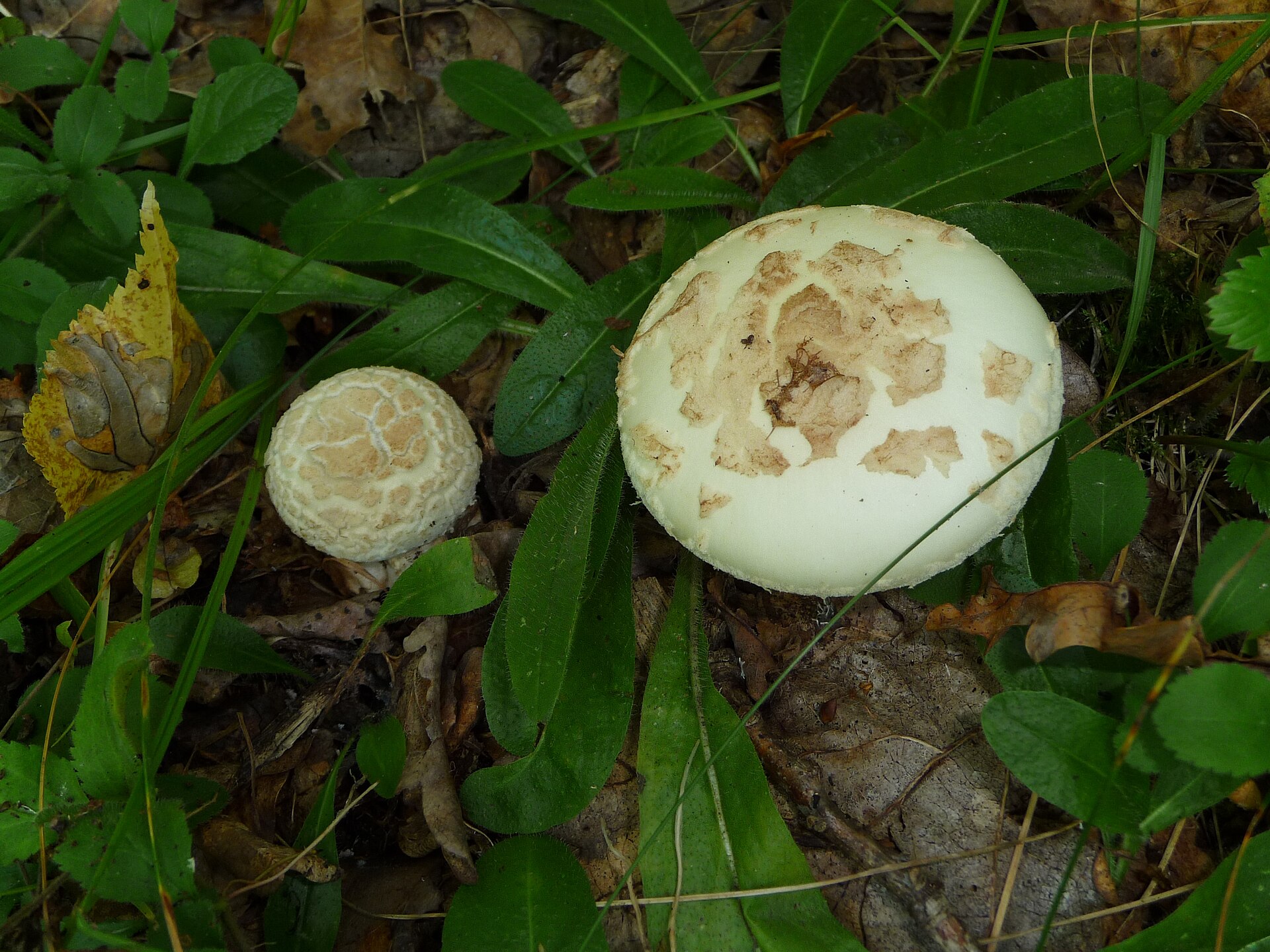
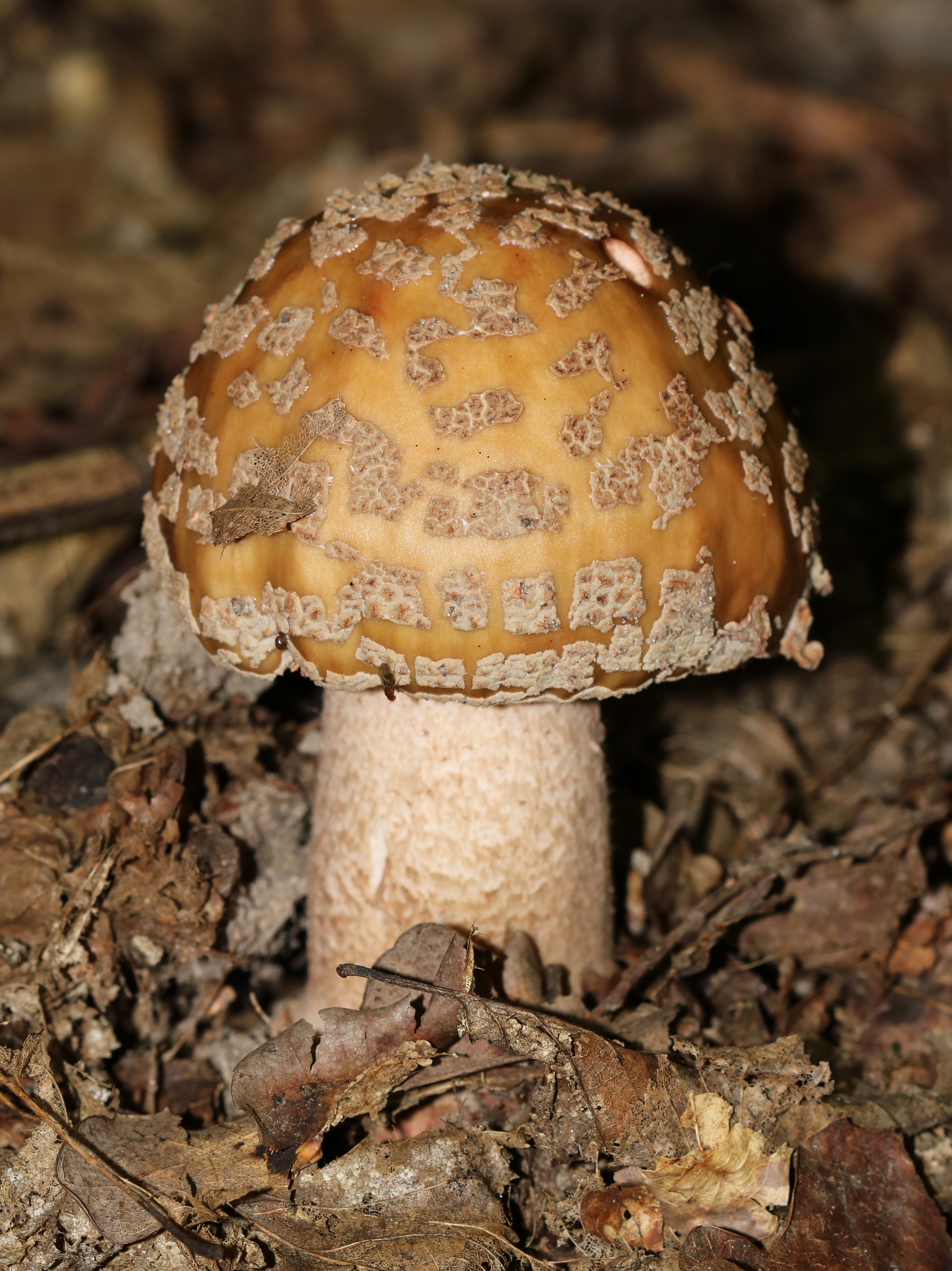
How to Tell Them Apart
Pinkish-brown cap with grayish veil patches. All damaged flesh turns distinctly pink to red. No potato odor. Edible when cooked, but confusion with the False Death Cap is more of a missed-meal risk than a safety risk.
Side-by-Side Identification
| Trait | False Death Cap | The Blusher |
|---|---|---|
| Cap | 4-10 cm across. Convex, flattening with age. Pale lemon-yellow to greenish-white, sometimes almost white. Surface covered with large, irregular patches of white to pale yellow veil remnants. These patches are flat and map-like, not wart-like. | 5 to 15 cm across. Rounded when young, flattening with age. Pinkish-brown to reddish-brown with scattered greyish or pinkish wart-like patches (veil remnants). Warts wash off in rain. Flesh beneath the skin turns pink when damaged. |
| Gills | White to pale cream, free from the stem, closely spaced. Remain pale throughout the mushroom's life. | White, crowded, free from the stem. Stain pinkish-red where bruised or cut. Spore print is white. |
| Stem | 6-10 cm tall, white to pale yellow, with a persistent hanging ring near the top. Base has a large, rounded bulb with a gutter-like rim (marginate bulb), not a sack-like volva. | 5 to 15 cm tall, 1.5 to 3 cm thick. White above the ring, pinkish below. Bulbous base without a distinct sac-like volva. Ring is prominent, striate (grooved) on the upper surface. |
| Spore print | White. | White. |
| Bruising | — | The defining feature: all parts of the flesh slowly turn pink to reddish when cut, bruised, or damaged by insects. This reaction is unique among common Amanitas. |
| Odor | Strong smell of raw potatoes. This is the single most useful identification feature and is immediately obvious when the flesh is crushed. | Faint, not distinctive. Some describe a mild, pleasant mushroom smell. |
| Habitat | Mycorrhizal with broadleaf and coniferous trees, especially oak, beech, and birch. Common in deciduous and mixed woodlands, parklands, and mature gardens. Prefers acidic to neutral soils. | Mycorrhizal with both deciduous and coniferous trees, especially oaks, beeches, birches, and pines. Found in mixed and broadleaf woodlands, parklands, and gardens with mature trees. Prefers well-drained, slightly acidic soils. Often fruits along paths and woodland edges where the soil has been disturbed. |
| Season | August through November in the Northern Hemisphere. Most abundant in September and October. | June through November. Peak fruiting in August and September across most of its range. |
Found one of these in the wild? Don't rely on memory — identify it from a photo with Orangutany and check it against both species before you touch it.