Caesar's Mushroom vs Jewelled Amanita
Amanita caesarea compared with Amanita gemmata — how to tell them apart in the field.
This is a dangerous confusion.
At least one of these species is toxic. Never eat a wild mushroom based on a photo comparison alone — verify with local experts.
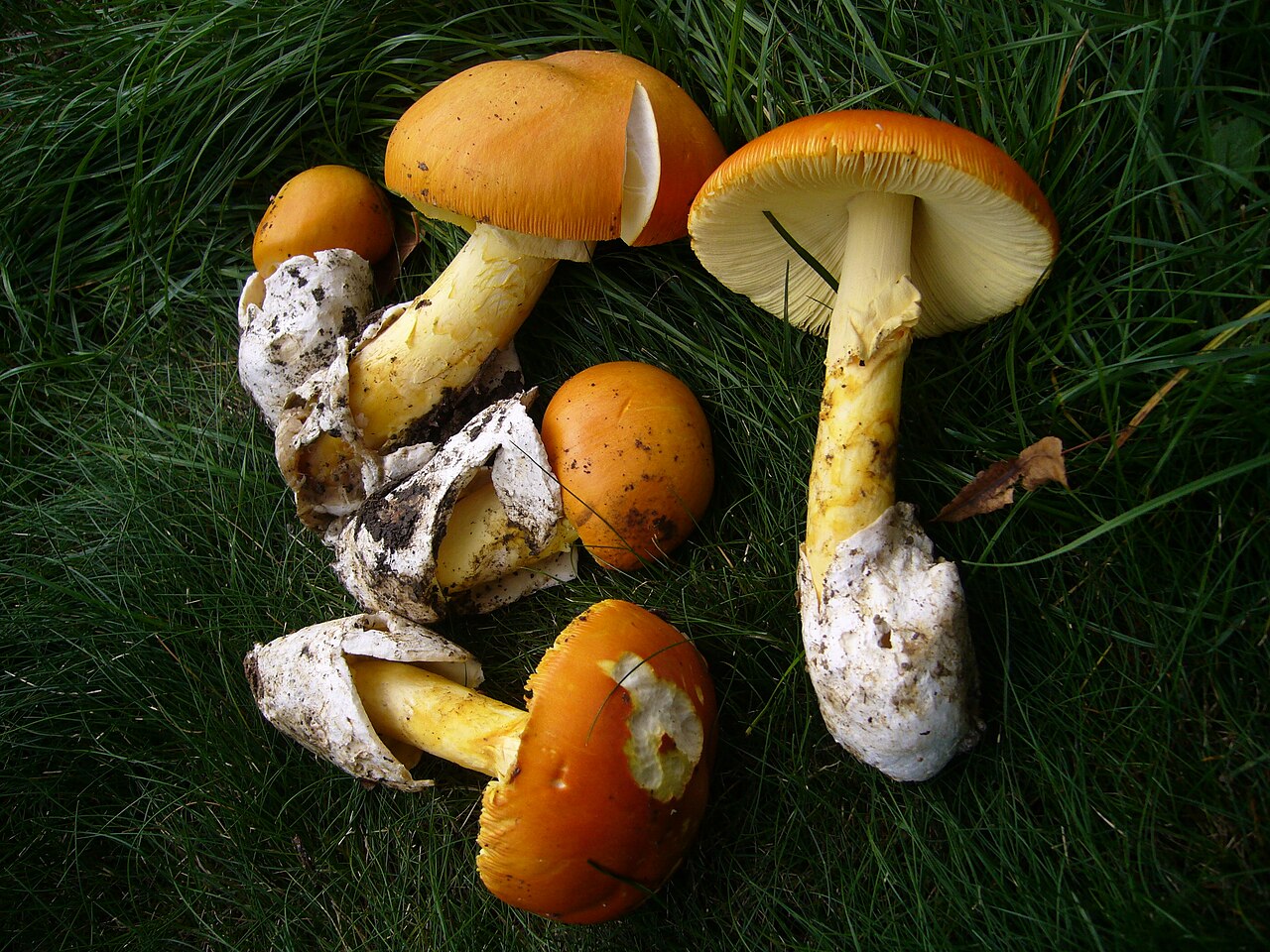
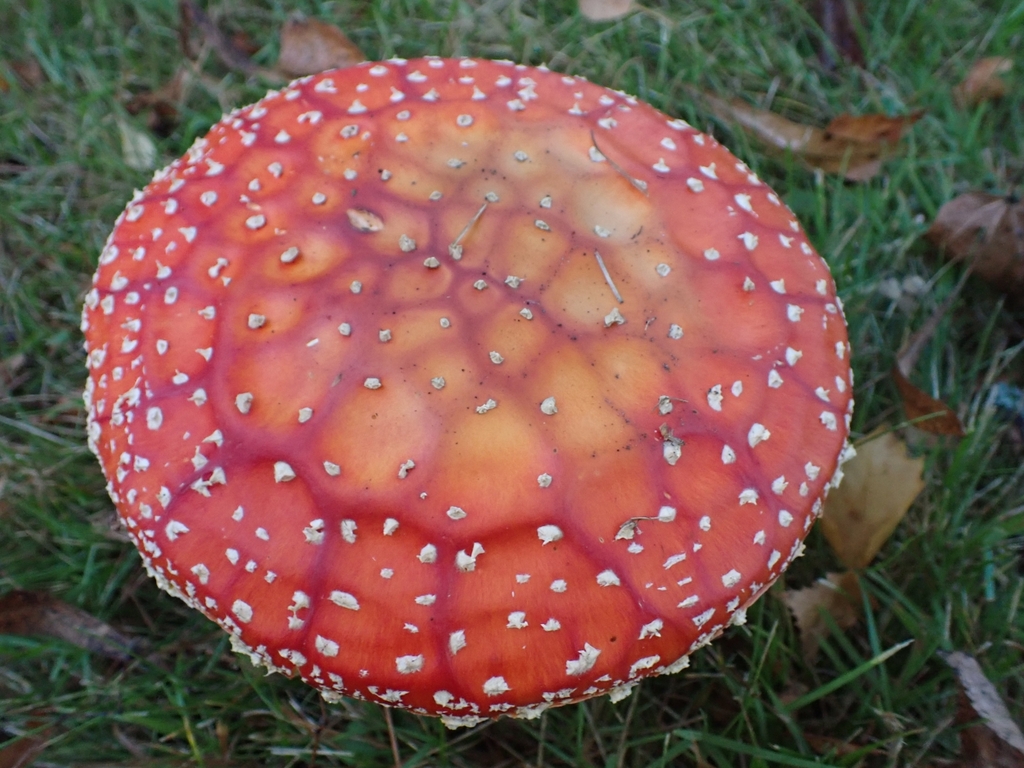
How to Tell Them Apart
The prized edible. Caesar's Mushroom has an orange (not yellow) cap, yellow gills and stem, and a prominent white sack-like volva. Jewelled Amanita has white gills, white stem, and a less conspicuous volva. Range overlap occurs in southern Europe.
Side-by-Side Identification
| Trait | Caesar's Mushroom | Jewelled Amanita |
|---|---|---|
| Cap | 6–20 cm across. Starts enclosed in a thick white egg (universal veil), then expands to convex and finally flat. Bright orange to orange-red, smooth and slightly sticky when wet. No warts or patches on the surface — this is a key distinction from Fly Agaric. The margin often has faint striations (grooves). | 4-10 cm across. Hemispherical at first, expanding to convex or flat. Bright butter-yellow to golden-yellow, sometimes pale cream-yellow. Surface smooth, often with scattered white to cream veil patches (warts). Margin distinctly striate (lined) when mature. |
| Gills | Bright golden yellow — this is the single most important identification feature. Free from the stem, closely spaced, and broad. No other large orange Amanita has yellow gills like this. | White, free from the stem, closely spaced. Remain white throughout. |
| Stem | 8–15 cm tall, sturdy, yellow to golden-yellow (not white!). Has a large, floppy, skirt-like yellow ring partway up. The base sits in a large, sack-like white volva — the remnant of the egg it hatched from. Always dig carefully to see the volva. | 5-12 cm tall, white, slightly fibrous. Ring is thin and fragile, often disappearing quickly. Base has a small, collar-like or sack-like volva that may be reduced to a rim on the bulb. |
| Spore print | White to pale yellow. | White. |
| Odor | Pleasant, mild, slightly nutty. Nothing off-putting. | Mild, not distinctive. Some describe a faint earthy or mushroomy scent. |
| Habitat | Mycorrhizal with oaks, chestnuts, and sometimes pines and beeches. Loves warm, well-drained, calcareous soils. Typically found in Mediterranean-type woodlands, often on south-facing slopes in leaf litter. Thrives in warm summers after good rain. | Mycorrhizal with both conifers and broadleaf trees. Common in pine, spruce, oak, and beech forests. Found in sandy or well-drained soils, forest edges, and clearings. |
| Season | Summer through early autumn. Peak fruiting is July–September in southern Europe. Needs warm soil temperatures — rarely appears before midsummer. | May through October. One of the earlier Amanitas to fruit, often appearing in late spring or early summer. |
Found one of these in the wild? Don't rely on memory — identify it from a photo with Orangutany and check it against both species before you touch it.