Field Mushroom vs Livid Pinkgill
Agaricus campestris compared with Entoloma sinuatum — how to tell them apart in the field.
This is a dangerous confusion.
At least one of these species is toxic. Never eat a wild mushroom based on a photo comparison alone — verify with local experts.
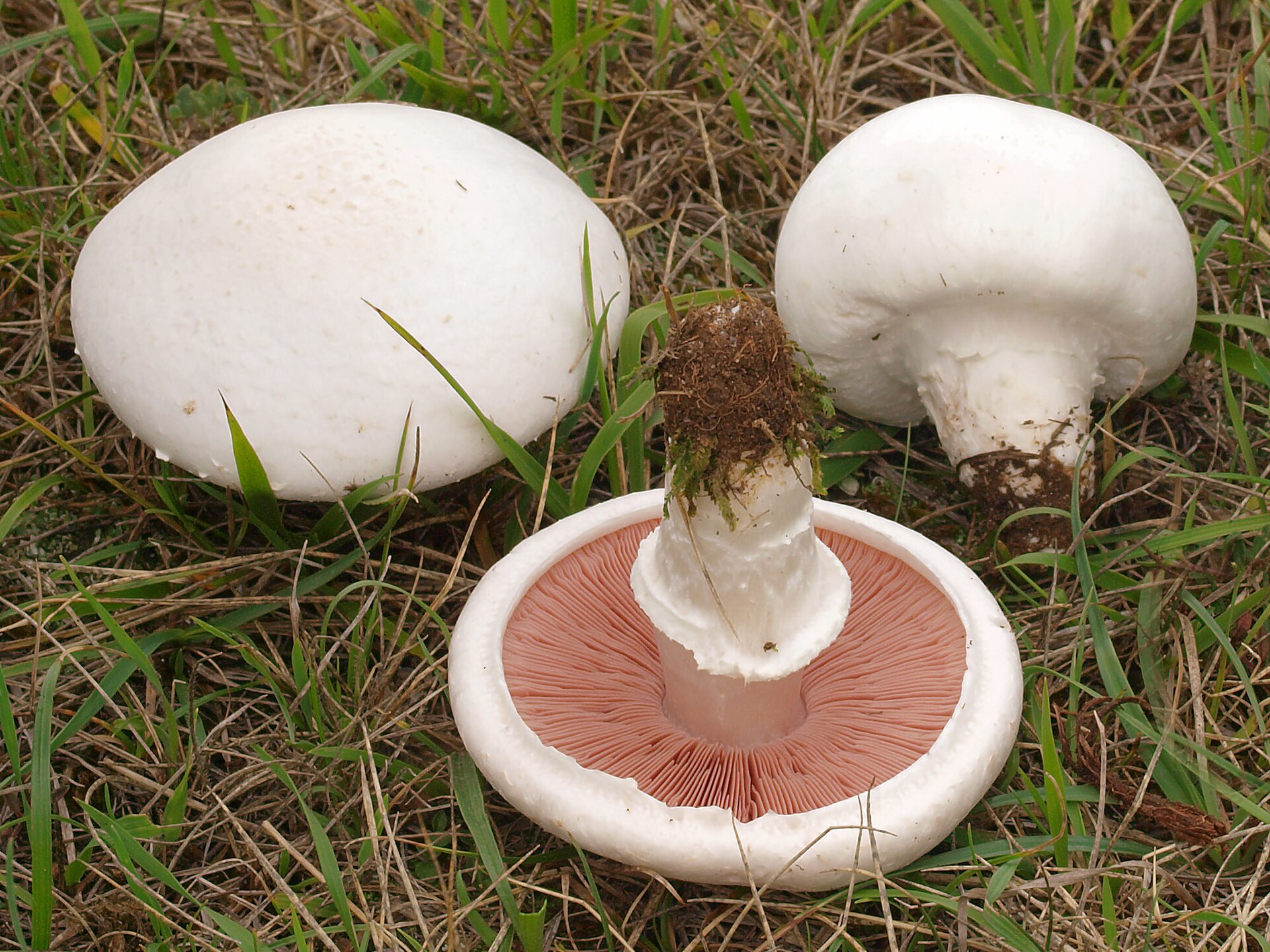
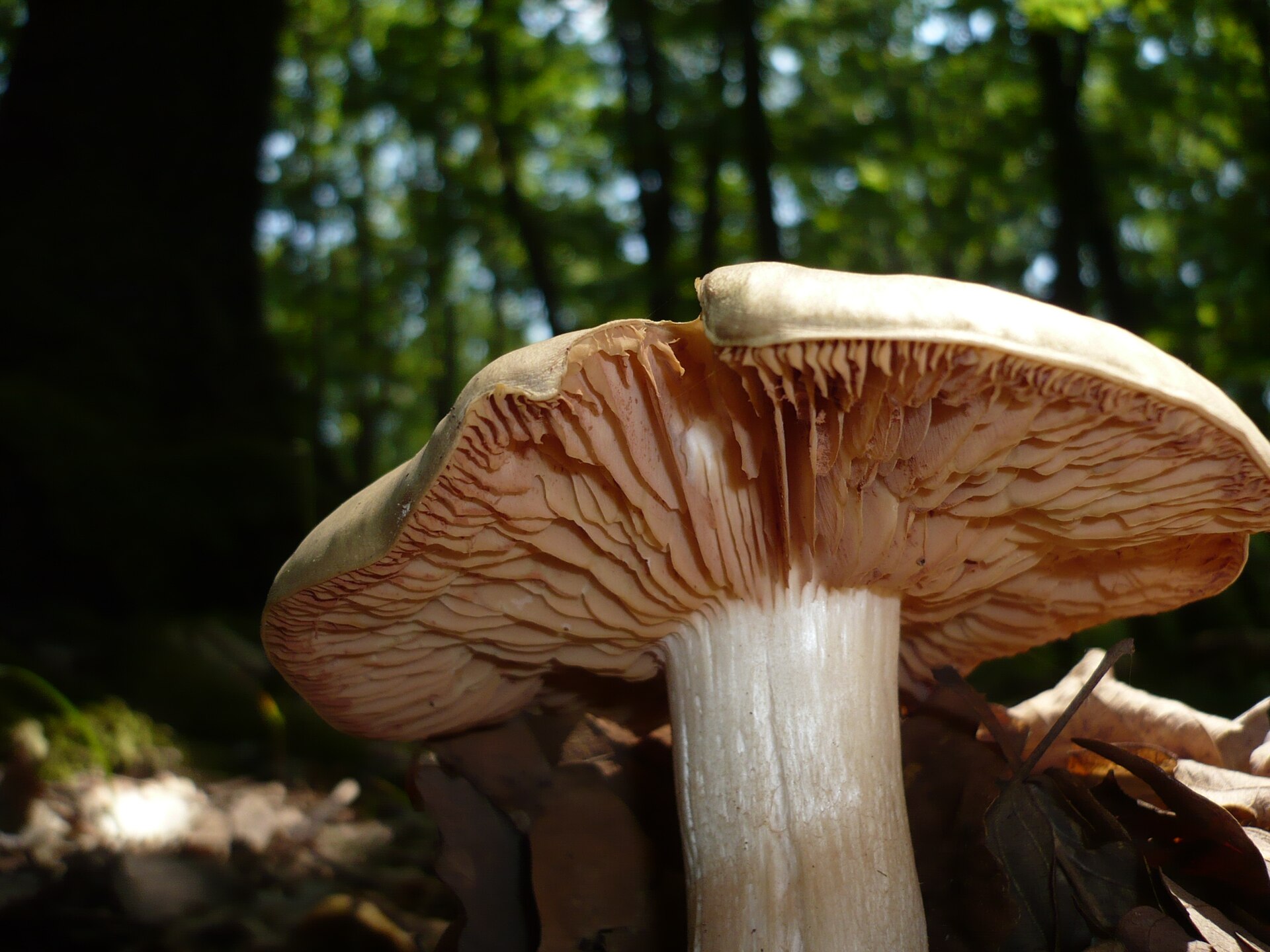
How to Tell Them Apart
Field Mushrooms have chocolate-brown to dark brown spore prints and gills that start pink and darken to brown-black. The Livid Pinkgill has salmon-pink spores and gills that start pale and turn pink. Field Mushrooms also grow in open grassland, not near trees.
Side-by-Side Identification
| Trait | Field Mushroom | Livid Pinkgill |
|---|---|---|
| Cap | 3–10 cm across. Starts as a smooth white dome, opens to a broad convex shape, sometimes flattening with age. Surface is dry, white to cream, occasionally developing fine brownish scales in the center. Feels silky when young. | 6-20 cm across, making it one of the larger toxic mushrooms. Convex at first, becoming broadly convex to irregular with wavy edges. Ivory white to pale grayish or slightly yellowish. Surface smooth and slightly greasy when wet. |
| Gills | The key ID feature. Start bright pink in young specimens, darken to chocolate brown, then near-black as spores mature. Closely spaced, free (not attached to the stem). NEVER white — if they're white, you're looking at something else, possibly deadly. | Sinuate (notched where they meet the stem). Initially pale yellow, gradually turning salmon-pink as spores mature. This pink tinge is the critical warning sign. |
| Stem | 3–10 cm tall, white, sturdy but not bulky. Has a thin, fragile ring partway up that often disappears with age. No volva (cup) at the base — this is critical. Death Caps have a volva; Field Mushrooms don't. | 6-15 cm tall, stout and solid, white to pale gray. No ring. Often slightly off-center. Firm and fibrous. |
| Spore print | Dark chocolate brown — almost black. Drop it on white paper overnight. | Salmon pink. This is the definitive identification feature. |
| Odor | Pleasant, mushroomy. That classic 'fresh mushroom' smell you know from the grocery store. | Mealy or cucumber-like, described as similar to fresh flour. Can be pleasant, which adds to the deception. |
| Habitat | Grasslands, pastures, meadows, lawns, and parks — anywhere with rich soil and short grass. Loves fields grazed by horses and cattle. A saprobe that feeds on decaying organic matter in the soil, not on tree roots. Avoids dense forests. | Found in deciduous woodlands, parklands, gardens, and hedgerows. Often grows near oak, beech, and hazel on calcareous (chalky) or clay-rich soils. Frequently appears in well-maintained park grasslands near trees. |
| Season | Late summer through autumn. Peak fruiting after warm rain in August–October in the Northern Hemisphere. Can appear as early as June in mild years. | August through November. Peaks in September and October. |
Found one of these in the wild? Don't rely on memory — identify it from a photo with Orangutany and check it against both species before you touch it.