Button Mushroom vs Field Mushroom
Agaricus bisporus compared with Agaricus campestris — how to tell them apart in the field.
How to Tell Them Apart
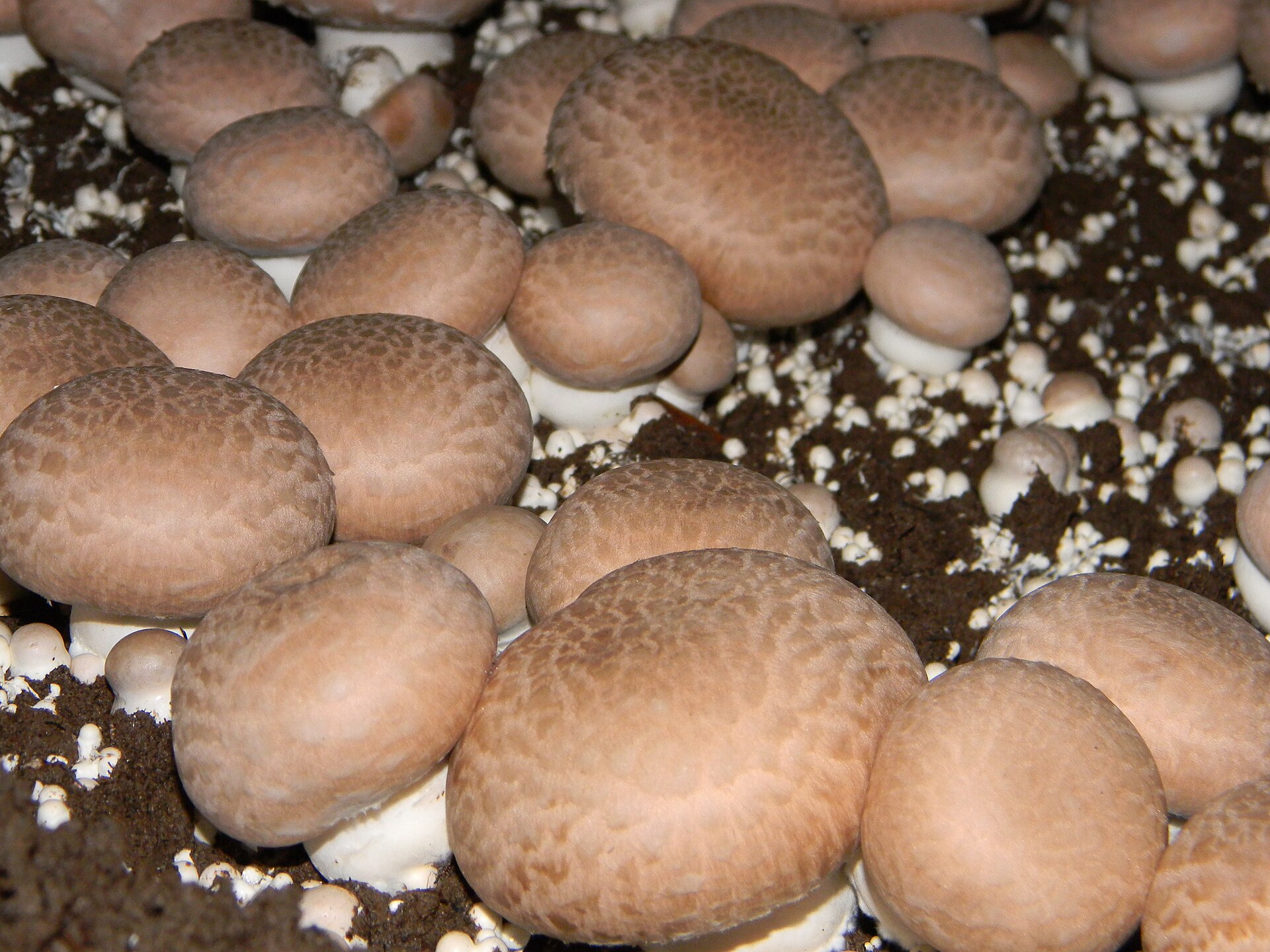
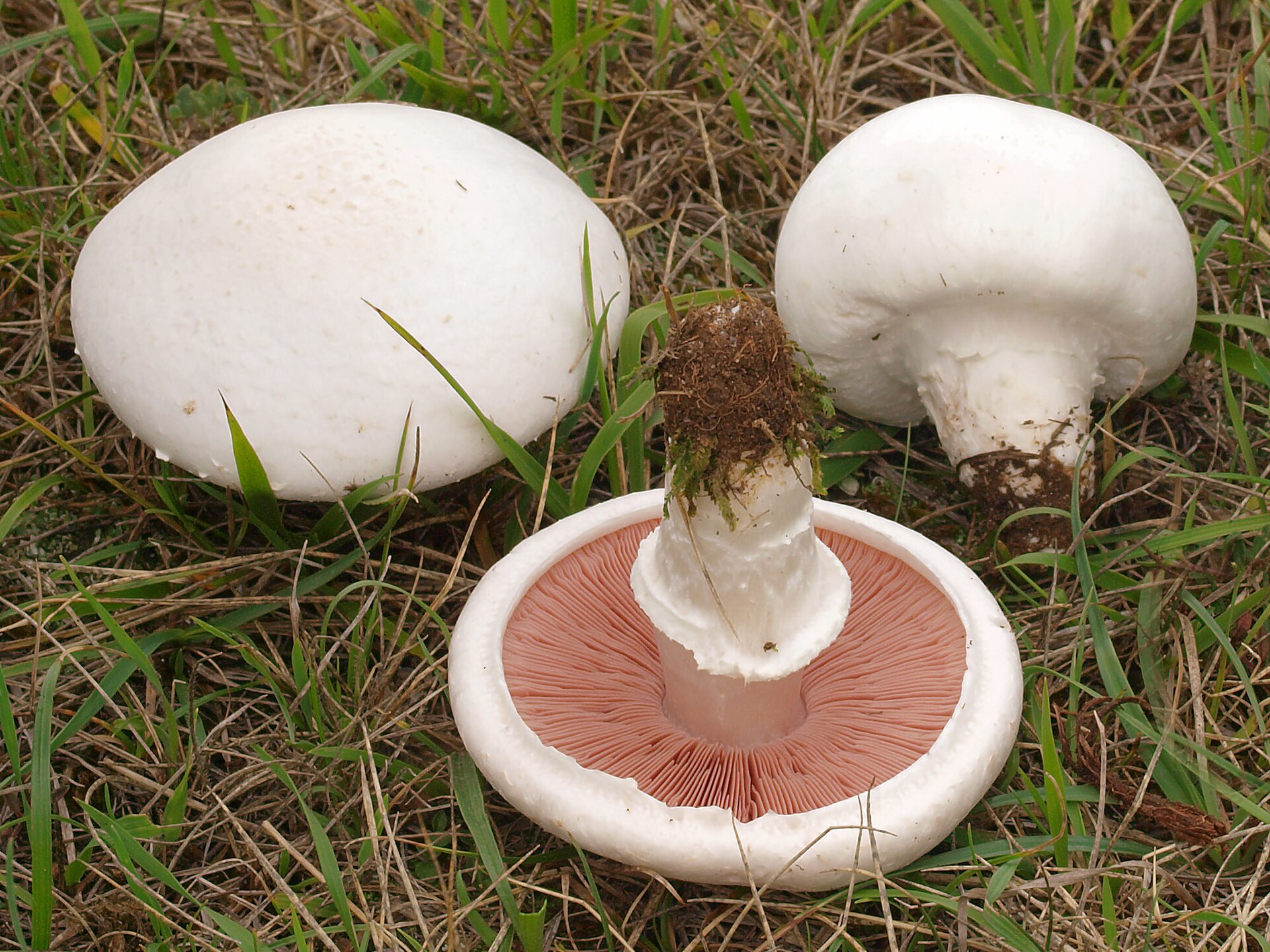
Very closely related and nearly identical in the field. A. campestris typically has a thinner, more fragile ring, slightly smaller stature, and 4-spored basidia (vs. 2-spored in A. bisporus). The practical distinction matters little for foragers since both are edible. Microscopic spore analysis is needed for definitive separation.
Side-by-Side Identification
| Trait | Button Mushroom | Field Mushroom |
|---|---|---|
| Cap | Wild form: 5-10 cm across, convex, brown to dark brown with fine fibrillose scales. Cultivated white form: smooth, white, 3-8 cm. Cultivated brown (cremini/portobello): 4-15 cm, tan to dark brown. Portobello stage shows exposed dark gills with cap fully expanded. | 3–10 cm across. Starts as a smooth white dome, opens to a broad convex shape, sometimes flattening with age. Surface is dry, white to cream, occasionally developing fine brownish scales in the center. Feels silky when young. |
| Gills | Free (not attached to stem). Start pale pink in young specimens (button stage), darkening through chocolate brown to nearly black as the mushroom matures and the cap opens. In the sealed button stage, gills are hidden by a partial veil. | The key ID feature. Start bright pink in young specimens, darken to chocolate brown, then near-black as spores mature. Closely spaced, free (not attached to the stem). NEVER white — if they're white, you're looking at something else, possibly deadly. |
| Stem | 3-6 cm tall, 1-2.5 cm thick. White, smooth, solid. Has a thin, fragile ring (remnant of the partial veil) that is often reduced to a faint zone in mature specimens. No volva at the base. | 3–10 cm tall, white, sturdy but not bulky. Has a thin, fragile ring partway up that often disappears with age. No volva (cup) at the base — this is critical. Death Caps have a volva; Field Mushrooms don't. |
| Spore print | Dark chocolate brown. | Dark chocolate brown — almost black. Drop it on white paper overnight. |
| Odor | Mild, pleasant, the classic 'mushroom' smell that defines the category for most people. Faintly earthy. | Pleasant, mushroomy. That classic 'fresh mushroom' smell you know from the grocery store. |
| Habitat | Wild: coastal grasslands and composted soils in California and possibly Mediterranean Europe. Cultivated: grown on composted horse manure, straw, and agricultural waste in climate-controlled facilities worldwide. A saprobic species that feeds on decaying organic matter. | Grasslands, pastures, meadows, lawns, and parks — anywhere with rich soil and short grass. Loves fields grazed by horses and cattle. A saprobe that feeds on decaying organic matter in the soil, not on tree roots. Avoids dense forests. |
| Season | Wild: autumn and winter in coastal California. Cultivated: year-round, with production cycles of approximately 6-8 weeks from spawning to harvest. | Late summer through autumn. Peak fruiting after warm rain in August–October in the Northern Hemisphere. Can appear as early as June in mild years. |
Found one of these in the wild? Don't rely on memory — identify it from a photo with Orangutany and check it against both species before you touch it.