The Truffle Industry's Biggest Problem: Fraud
By Elena Marchetti · Orangutany · March 2026
A white truffle the size of a tennis ball can sell for $3,000. A large specimen, the kind auctioned at Alba's annual truffle fair, can exceed $100,000. At those prices, fraud is not a side effect of the truffle industry. It is built into its economics.
The global truffle market is estimated at $6 billion annually. Within it, fraud takes every conceivable form: cheap Chinese truffles relabeled as Italian or French, truffle oil manufactured entirely from synthetic chemicals with no truffle content whatsoever, fresh truffles injected with water or packed with dirt to inflate their weight, and Romanian or Moroccan truffles laundered through Italian middlemen to claim a Piedmont or Perigord origin.
Most consumers have never tasted a real truffle. What they think is truffle flavor, the pungent, garlicky aroma on their fries or pasta, is almost certainly a petrochemical derivative called 2,4-dithiapentane. The truffle industry's biggest problem is not supply or climate change. It is that the product itself has been so thoroughly counterfeited that most people cannot tell the difference.
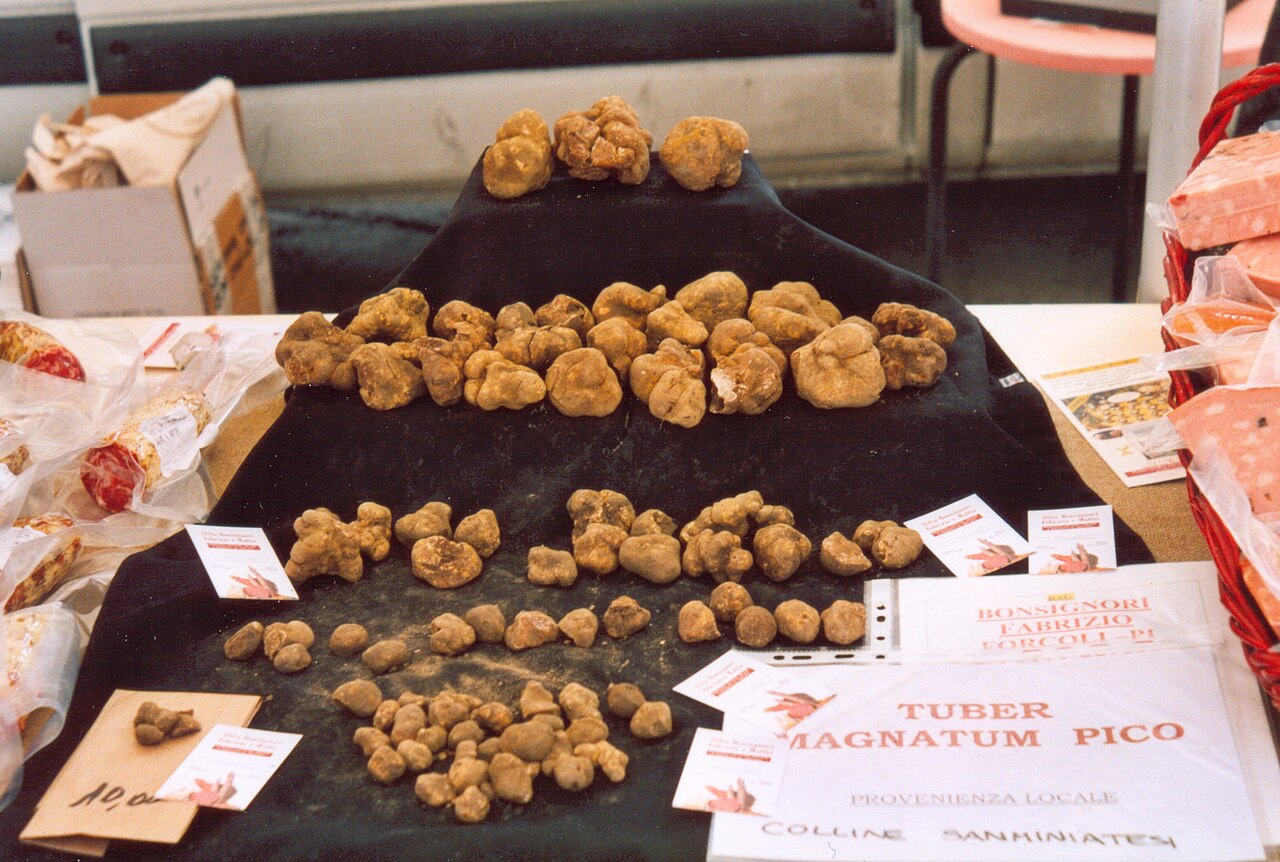
What Truffles Actually Cost
Understanding truffle fraud starts with understanding truffle prices. The two most prized species command extraordinary sums:
White Truffle (Tuber magnatum)
Also called the Alba truffle or Piedmont truffle. Found wild in northern Italy (primarily Piedmont, Emilia-Romagna, and parts of Tuscany), Croatia, and small pockets of southeastern Europe. Cannot be commercially cultivated. Wholesale prices range from $3,000 to $5,000 per pound in a normal year, with exceptional specimens reaching far higher at auction. The 2024 season saw prices spike above $5,000/lb due to drought-reduced harvests.
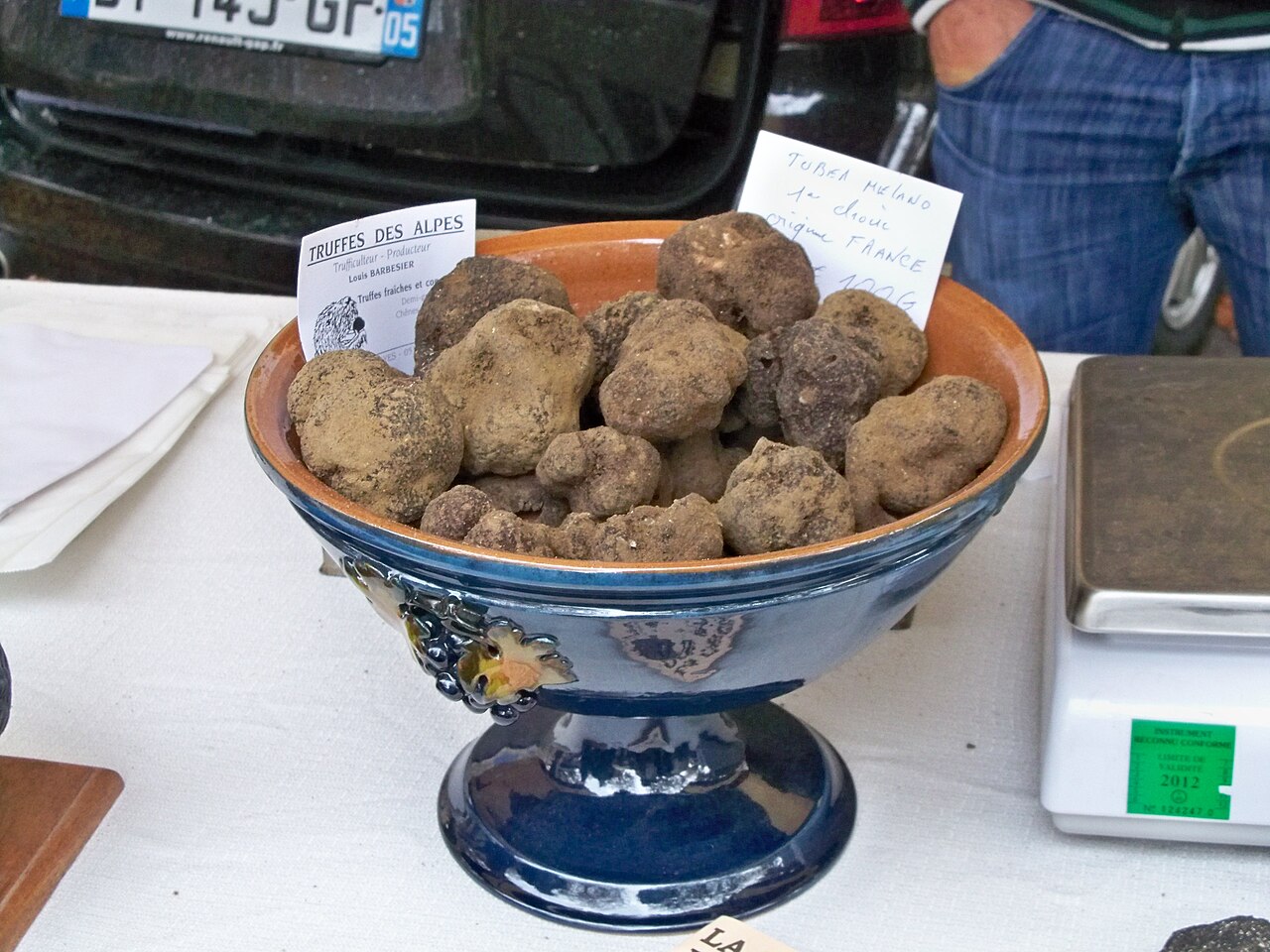
Black Truffle (Tuber melanosporum)
Also called the Perigord truffle (France) or Norcia truffle (Italy). Found wild in southern France, Spain, and Italy. Can be cultivated in truffieres (orchards of inoculated oak and hazel trees). Wholesale prices range from $1,000 to $2,000 per pound. Cultivated specimens from Australia, which fruits in the Southern Hemisphere winter (June–August), trade at the lower end.
At these prices, the incentive for fraud is overwhelming. A kilogram of Chinese black truffle (Tuber indicum) costs $20–50 wholesale. Relabeled as Tuber melanosporum from Perigord, that same kilogram is worth $2,000–4,000. The markup for successful fraud is 50x to 100x.
Species Substitution: The Chinese Truffle Problem
The most widespread form of truffle fraud is species substitution. Tuber indicum, the Chinese black truffle, grows abundantly in Yunnan and Sichuan provinces. Externally, it closely resembles Tuber melanosporum: dark, warty exterior, similar size and shape. Cut it open, and the internal marbling (the "gleba") is similar enough that a casual buyer cannot tell the difference.
But the aroma and flavor are incomparable. T. indicum has a fraction of the aromatic intensity of T. melanosporum. The volatile compounds that make Perigord truffles one of the most prized ingredients in gastronomy, a complex mixture of dimethyl sulfide, 2-methylbutanal, and dozens of other aromatics, are present in Chinese truffles at far lower concentrations.
Despite this, T. indicum is routinely sold as T. melanosporum at every level of the supply chain. A 2015 investigation by the Italian food fraud unit (the Corpo Forestale dello Stato, before its merger into the Carabinieri) found that an estimated 30–40% of "Italian black truffles" sold in domestic markets were actually Chinese imports. The truffles were shipped to Italy in bulk, repackaged, and sold with Italian labels.
The practice extends to other low-value species as well. Tuber aestivum (the summer truffle, worth $200–400/lb) is sometimes sold as T. melanosporum. Tuber brumale (the winter truffle, worth $300–600/lb) is mixed into batches of T. melanosporum to increase volume. In the restaurant trade, where truffles are typically shaved tableside and the customer never sees the whole specimen, detection is nearly impossible without laboratory analysis.
Truffle Oil: The $0 Truffle Product
If you have ever had "truffle fries" or "truffle pizza" at a restaurant, the truffle flavor almost certainly came from a bottle of oil that contains no truffle at all.
The vast majority of commercial truffle oil is olive oil or sunflower oil infused with 2,4-dithiapentane, a synthetic compound that mimics one of the dominant aromatic notes in real truffles. It is manufactured in a laboratory and costs pennies per liter. A bottle of "truffle oil" that sells for $15–25 in a grocery store typically contains zero truffle. Some brands include a small piece of truffle in the bottle for visual effect, but the flavor is entirely synthetic.
This is technically legal in many jurisdictions. In the United States, there is no FDA regulation requiring products labeled "truffle oil" to contain actual truffle. In the European Union, labeling rules are stricter, but enforcement is uneven. Italian and French consumer groups have pushed for protected designation, but the synthetic truffle oil industry has successfully resisted regulation.
The problem goes beyond consumer deception. Synthetic truffle oil has a one-dimensional, overwhelming flavor profile, nothing like the complex, layered aroma of real truffle. It has trained an entire generation of consumers to associate "truffle flavor" with a chemical that bears only a passing resemblance to the real thing. Chefs like Gordon Ramsay and Daniel Boulud have publicly denounced truffle oil. "That is not truffle," Ramsay has said. "That is perfume."
Weight Fraud: Dirt, Water, and Metal
When truffles sell by the gram, every gram of added weight is money. Weight fraud is rampant in the truffle trade and takes several forms:
- Soil packing: Truffles are sold uncleaned or with soil deliberately pressed into their crevices. A single truffle can carry 10–20% of its apparent weight in dirt. At $5,000/lb for white truffles, that dirt is worth $500–1,000 per pound.
- Water injection: Small amounts of water are injected into truffles using a fine syringe, adding weight while being difficult to detect visually. The practice accelerates spoilage, meaning the buyer gets a heavier truffle that rots faster.
- Metal insertion: In extreme cases, small metal fragments, nails, or lead shot have been found inside truffles at market. This is less common than soil packing but has been documented by Italian food inspectors.
- Worm damage concealment: Truffles infested by insect larvae lose value. Sellers sometimes pack damaged areas with a paste of truffle fragments and soil to disguise the infestation. Buyers discover the fraud only when they cut the truffle open.
Professional truffle buyers protect themselves by cleaning and inspecting every specimen before weighing. At auction houses like Alba's Fiera del Tartufo, truffles are presented clean and inspected by a panel of experts before sale. But in less regulated markets, particularly wholesale transactions and cross-border trade, weight fraud is pervasive.
Origin Fraud: The Laundering of Truffles
Italian and French truffles command the highest prices. This creates a lucrative trade in origin laundering: buying truffles from lower-prestige (and lower-priced) origins and reselling them as Italian or French.
Romania, Bulgaria, Hungary, and Morocco all produce Tuber melanosporum and Tuber aestivum. These are the same species as those found in France and Italy, with comparable quality. But they trade at significant discounts because the market values provenance. A Romanian black truffle might sell for $600/lb wholesale. Relabeled as Italian, it sells for $1,500/lb.
The laundering works through intermediaries. A broker in Romania buys from local hunters, ships the truffles to a partner in Italy, who repackages them with Italian labeling and sells them to restaurants and distributors as domestic product. The documentation trail is fabricated or simply absent. In the truffle trade, much of the business is done in cash, making paper trails difficult to follow.
A 2019 investigation by Italian financial police (Guardia di Finanza) uncovered a network that had laundered an estimated 40 tonnes of foreign truffles through Italian markets over three years. The truffles came primarily from Romania and Bulgaria. The operation involved falsified phytosanitary certificates and complicit Italian distributors.
White truffle origin fraud is even harder to detect because Tuber magnatum grows in a relatively small area. Most white truffles labeled as "Alba" or "Piedmont" are genuinely Italian, but some originate from Croatia, where the species also grows wild. Croatian white truffles are excellent in quality but trade at a 30–50% discount to Italian specimens. The incentive to relabel is obvious.
How Experts Detect Fraud
The truffle industry's first line of defense is sensory expertise. Experienced truffle dealers can distinguish species and quality by smell and texture within seconds:
- Aroma: T. melanosporum has an intense, complex aroma with notes of chocolate, earth, and forest floor. T. indicum has a faint, rubbery smell with minimal complexity. An experienced nose can distinguish them instantly.
- Internal structure: When cut, T. melanosporum shows dense white veining against a dark purple-black background. T. indicum has a similar pattern but with less contrast and a grayish rather than purple-black ground color.
- Texture: Authentic T. magnatum has a smooth, slightly marbled exterior. Counterfeits or lesser species often have a rougher or more uniformly colored surface.
For definitive identification, laboratories use DNA analysis. Polymerase chain reaction (PCR) testing can identify the exact Tuber species from a tiny tissue sample. A 2021 study published in Food Chemistry developed a rapid PCR protocol that can distinguish T. melanosporum from T. indicum in under three hours. Some high-end distributors now DNA-test random samples from each batch.
Isotope analysis can determine geographic origin. The ratio of stable isotopes (carbon-13, nitrogen-15, sulfur-34) in a truffle reflects the soil and climate where it grew. A truffle from Piedmont has a different isotopic signature than one from Romania or China. This technique is expensive but has been used in fraud investigations and is increasingly adopted by premium truffle houses.
Truffle Dogs vs. Truffle Pigs
A brief aside on harvesting, because it is often misunderstood. Traditionally, truffles in France were hunted using pigs, whose natural attraction to the truffle's aroma (which contains androstenol, a compound also found in boar saliva) made them effective detectors. The problem: pigs eat the truffles. A sow that finds a $3,000 truffle and eats it before the hunter can intervene is an expensive problem.
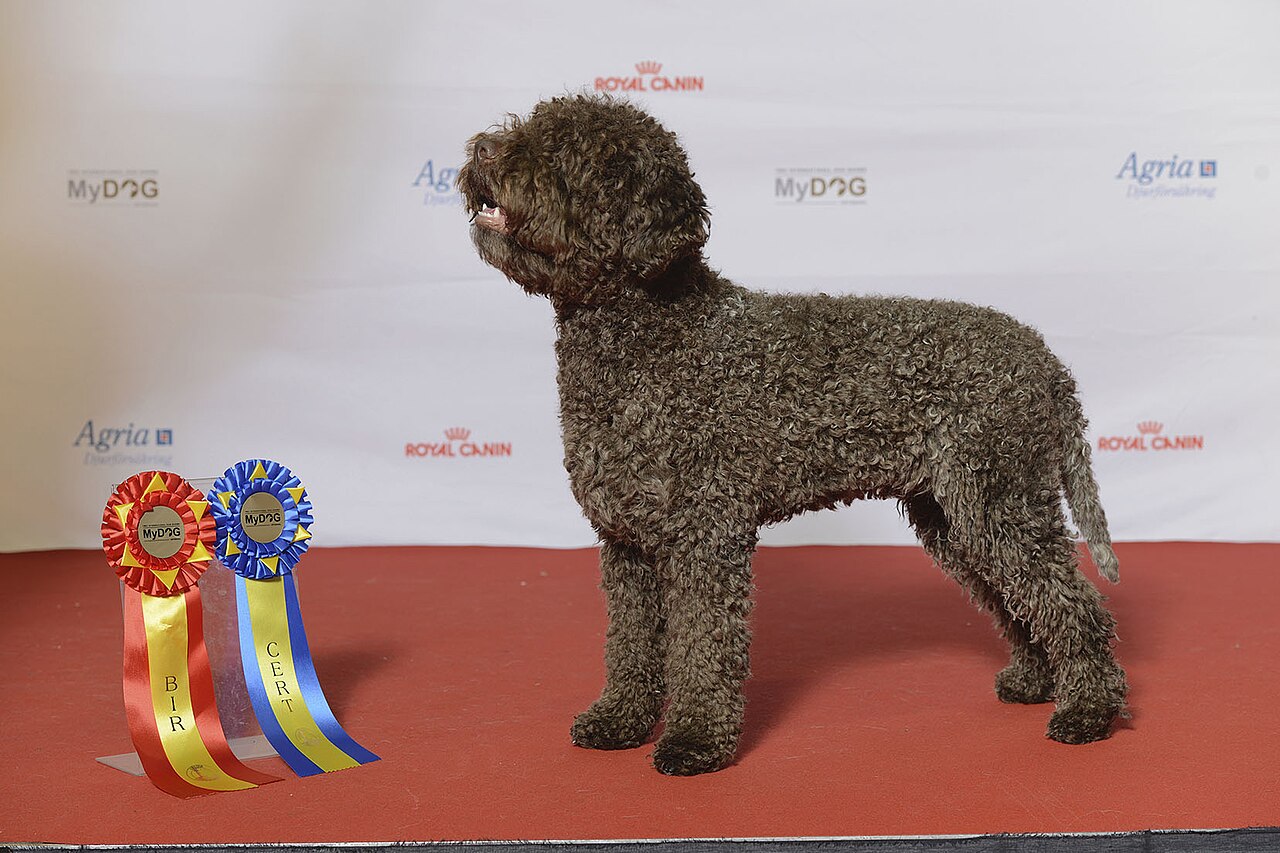
Today, virtually all truffle hunting uses trained dogs. Dogs have no innate interest in truffles and must be trained to find them, but they are obedient, portable, and do not eat the product. The Lagotto Romagnolo, an Italian water dog breed, is the most popular truffle dog, though any breed with a strong nose can be trained.
France banned the use of pigs for truffle hunting in 1985 due to damage they caused to the soil and the truffle mycelium (pigs dig aggressively, damaging the underground network). Italy followed suit. The romantic image of a French peasant with a pig on a leash is now history.
The Impact on Legitimate Truffle Hunters
Truffle hunting in Italy and France is a livelihood for thousands of rural families. In Piedmont alone, an estimated 10,000 people hold truffle hunting licenses. Many are part-time hunters who supplement their income during the autumn and winter truffle season.
Fraud undercuts these hunters directly. When cheap Chinese truffles are sold as Italian, they depress the price that legitimate Italian hunters can command. When consumers lose trust in truffle products because of widespread synthetic truffle oil, demand for real truffles is undermined. The hunters who wake before dawn, walk for hours through cold forests with their dogs, and carefully extract each truffle by hand are competing against a global supply chain of counterfeits.
The situation has bred a culture of secrecy and even violence. Truffle hunters guard their best locations obsessively. In Italy, there have been documented cases of truffle dogs being poisoned by rivals, meatballs laced with strychnine or antifreeze left in forests. In 2023, Italian media reported over 200 truffle dogs poisoned in a single season in Piedmont and Umbria. The perpetrators are rarely caught.
Theft is also common. Truffle poaching, hunting on someone else's land without permission, is technically illegal in Italy but poorly enforced. Some landowners have hired private security to patrol their truffle grounds during the season.
Recent Fraud Cases
- 2018, London: A Michelin-starred restaurant was found to be serving Tuber indicum labeled as T. melanosporum on its tasting menu ($350 per person). The fraud was uncovered by a food critic who sent a sample for DNA analysis. The restaurant blamed its supplier.
- 2019, Italy: The Guardia di Finanza seized 2.5 tonnes of Chinese truffles in a warehouse near Milan that were being repackaged as Italian. Estimated fraud value: over €2 million.
- 2021, United States: A class-action lawsuit was filed against a major truffle oil brand for marketing its product as "made with real truffles" when independent testing found it contained only synthetic flavoring. The case was settled out of court.
- 2023, France: French customs intercepted a shipment of 800 kg of Tuber aestivum (summer truffle) entering from Morocco with forged documentation claiming French origin. The shipment was valued at approximately €500,000 at fraudulent French-origin prices.
How Consumers Can Protect Themselves
Complete certainty is impossible without DNA testing, but informed consumers can reduce their risk:
- Avoid truffle oil unless it specifies real truffle extract. If the ingredient list includes "aroma," "flavor," or "2,4-dithiapentane," it is synthetic. Genuine truffle oil exists but is rare and expensive ($50+ for a small bottle).
- Buy from reputable specialists. Established truffle dealers with direct relationships with hunters are far less likely to sell counterfeits than anonymous online sellers or general-purpose gourmet shops. Ask where the truffle was sourced and by whom.
- Smell before buying. A genuine T. melanosporum has an intense, complex aroma. A Chinese truffle smells faint and rubbery. If a "black truffle" barely smells like anything, it is not what the label says.
- Be skeptical of low prices. If someone is selling "Italian white truffle" for $500/lb, it is not Italian white truffle. Real T. magnatum does not trade at discount prices. Ever.
- Check the season. Northern Hemisphere white truffles are in season October through January. Black truffles are in season November through March. "Fresh" truffles offered outside these windows are either Southern Hemisphere cultivated (legitimate, but should be labeled as such) or frozen/preserved and being sold as fresh (fraud).
- Ask for the Latin name. A seller who knows their product can tell you the species. "It's a black truffle" is not sufficient. There are dozens of black truffle species, ranging from the sublime (T. melanosporum) to the mediocre (T. indicum).
The truffle industry operates in a space where enormous value meets minimal regulation. Unlike wine, which has elaborate appellation systems and fraud enforcement, or olive oil, which at least has EU quality standards, truffles exist in a regulatory gray zone. There is no international certification body. There is no truffle equivalent of the Denominazione di Origine Controllata.
Until that changes, fraud will remain the industry's defining feature. The hunters who do honest work, the dealers who verify their supply chains, and the chefs who insist on the real thing are fighting an uphill battle against an economic incentive that makes counterfeiting irresistible.
The truffle is one of nature's most extraordinary creations: a subterranean fungus that has, for centuries, commanded a price rivaling gold. It deserves better than to have its name plastered on bottles of flavored olive oil and bags of Chinese imports with Italian flags on the label.