The Post-Fire Morel Rush: Hunting Mushrooms in Burned Forests
By James Whitfield · Orangutany · March 2026
The forest is black. Charred trunks stand like poles stripped of bark. The ground is ash and cinder. Nothing looks alive. And then, pushing up through the scorched earth — morels. Thousands of them.
Every spring following a major wildfire, a remarkable phenomenon repeats itself across the western United States and Canada. Morels (Morchella species) erupt in extraordinary numbers from the ashes of burned conifer forests. A single burn scar can produce hundreds of pounds of morels per acre — densities that would be unthinkable in unburned forest.
This creates what foragers call a “morel rush.” Thousands of pickers — recreational foragers, professional harvesters, and first-timers chasing social media posts — descend on burned areas for a brief, intense harvest window. It is part treasure hunt, part endurance event, and part gold rush, with the same mix of excitement, competition, and occasional conflict that implies.
Why Fire Triggers Morel Fruiting
Morels have a complicated relationship with trees. Some species are mycorrhizal, forming partnerships with living tree roots. Others are saprotrophic, feeding on decaying organic matter. Many morel species appear to be both, shifting their nutritional strategy depending on conditions.
When a wildfire kills a forest, it triggers a cascade of changes in the soil that morel mycelium exploits. The leading theory is that fire-associated morel fruiting is a stress response. The mycelium that was living in association with tree roots suddenly loses its host. The trees are dead. The partnership is over. In response, the fungus redirects its energy into reproduction — producing fruiting bodies (the morels we see above ground) to release spores and colonize new habitat.
Fire also changes the soil chemistry in ways that favor morel growth. The combustion of organic matter releases a pulse of nutrients, particularly potassium and phosphorus. Soil pH increases (becomes more alkaline) from the ash. The canopy is removed, allowing sunlight to warm the soil surface earlier in spring. The removal of competing fungi and bacteria creates open ecological niches.
The result is a one-time eruption of morels in the spring following the fire. In most cases, the flush is strongest in the first spring after the burn, weaker in the second year, and largely absent by the third. The window is narrow: typically a two-to-six-week period when soil temperatures are between 50 and 60 degrees Fahrenheit (10–15°C) and soil moisture is adequate.
Recent Fire Seasons and Morel Opportunities
The past decade of historically severe wildfire seasons across western North America has created unprecedented morel hunting opportunities. The scale of modern wildfires — megafires burning hundreds of thousands of acres — means burn scars now cover enormous areas.
Major fire years like 2020 and 2021 in Oregon, Washington, California, and British Columbia produced extensive morel harvests the following springs. The 2020 Labor Day fires in Oregon alone burned over one million acres, and the spring 2021 morel season in those burn areas was described by long-time commercial pickers as one of the best in memory.
British Columbia's record-breaking 2023 fire season, which burned over 2.8 million hectares, set the stage for massive morel harvests in spring 2024 across the BC interior. The 2024 and 2025 seasons in the American West have continued the pattern, with fires in Idaho, Montana, and northern California creating fresh burn scars for the morel hunting community.
The irony is unavoidable: the same climate change that is intensifying wildfire seasons is also creating more habitat for post-fire morels. For foragers, this is a silver lining in an otherwise devastating trend.
How to Find Burn Morels
Finding burn morels is both straightforward and deeply nuanced. The broad strokes are simple: go to where a conifer forest burned the previous summer, arrive in spring when the soil warms up, and look. The details are where experience separates a casual picker from someone filling grocery bags.
Timing
Elevation is the primary variable. In the western US, burn morels typically start at lower elevations (2,000–4,000 feet) in mid-April and progress upward through May and into June at higher elevations (5,000–7,000+ feet). Track soil temperature: morels tend to fruit when soil temps at 2–4 inches deep reach 50–60°F. A soil thermometer is one of the most useful tools a morel hunter can carry.
Terrain
North-facing slopes retain moisture longer and often produce morels later in the season but in greater abundance. South- facing slopes warm up first and produce earlier flushes. Drainages, creek beds, and areas where water collects tend to be productive. Flat ridgetops and areas with heavy ash deposits are often less productive.
Tree Species
Not all burns are equal. The most productive burn morel habitat in the western US is mixed conifer forest — particularly areas with Douglas fir, grand fir, and ponderosa pine. Burns in pure lodgepole pine or spruce tend to produce fewer morels. Hardwood burns (e.g., oak woodland fires in California) can produce morels but typically at lower densities than conifer burns.
Burn Severity
Moderate-severity burns tend to be the sweet spot. Light burns that only scorched the understory may not trigger significant fruiting. Extreme burns that incinerated the soil and all organic matter can sterilize the mycelium. The ideal zone is where the trees are dead but the soil was not completely cooked — look for areas where the duff layer is charred but not entirely consumed.
Natural Morels vs. Burn Morels
Foragers and chefs often distinguish between “natural” or “landscape” morels — those found in unburned forests, orchards, and river bottoms — and burn morels. There are real differences between the two.
Abundance. Natural morels are notoriously scattered and unpredictable. A good day in unburned forest might yield a few pounds. Burn morels can carpet the ground. Experienced pickers in productive burn areas routinely harvest 20–50 pounds per day, and exceptional days of 100+ pounds are not unheard of.
Size. Burn morels tend to be larger on average than natural morels, sometimes reaching 6–8 inches tall. The combination of reduced competition and nutrient-rich ash soil may contribute to this.
Species. The dominant burn morel species in western North America are typically Morchella exuberans and Morchella sextelata (both in the black morel clade), which are genetically distinct from the species that fruit in unburned habitats. The taxonomy of morels has been significantly revised in recent years through DNA analysis, and what was once considered a single species is now understood to be dozens.
Flavor. Opinions vary. Some chefs consider burn morels slightly less flavorful than natural morels from old-growth forests or orchards. Others detect no difference. The smokiness sometimes attributed to burn morels is largely psychological — the mushrooms do not absorb smoke flavor from the charred environment.
The False Morel Danger
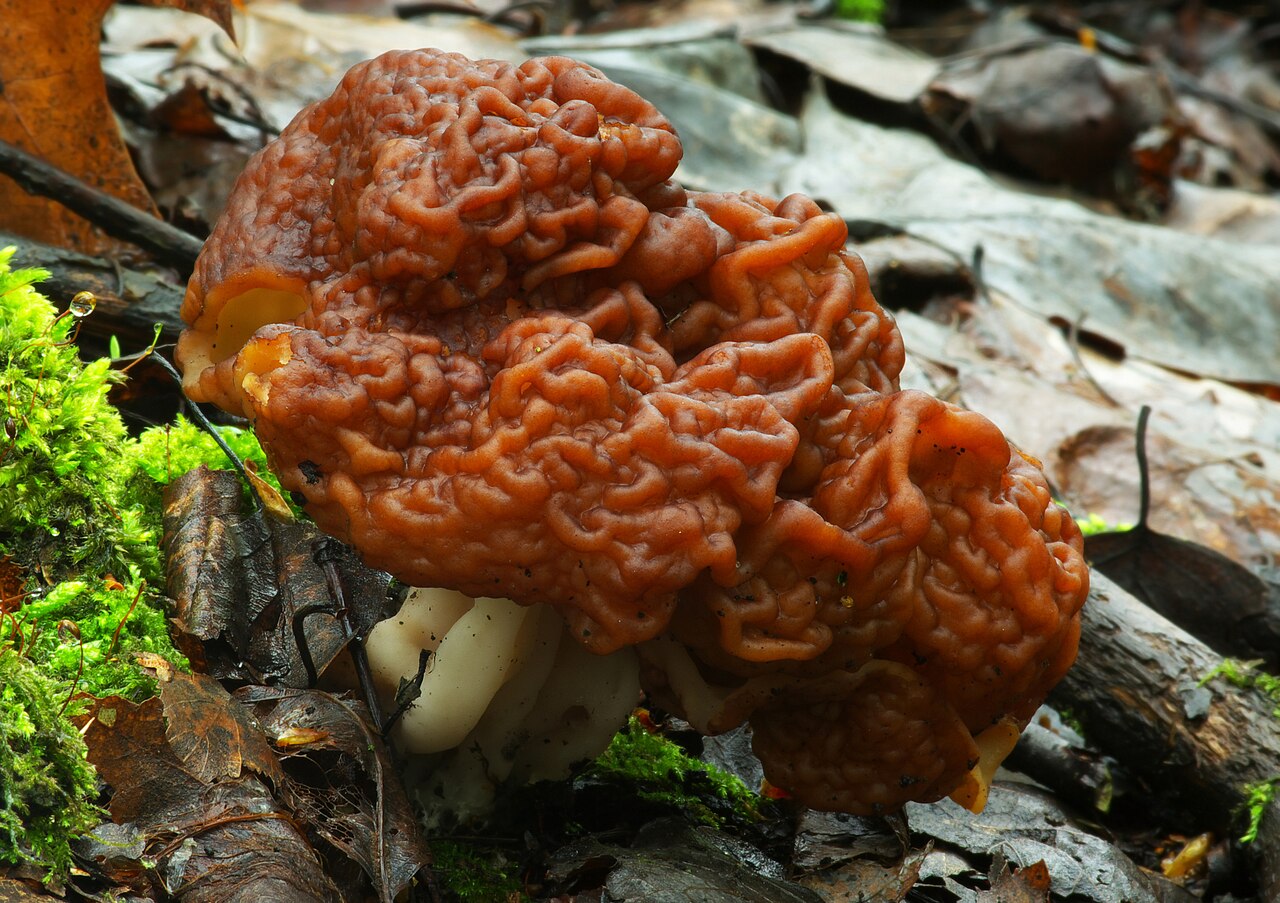
Anywhere morels fruit, false morels may also appear. The most significant species is Gyromitra esculenta, a brain-shaped mushroom that contains gyromitrin, a compound that metabolizes into monomethylhydrazine (MMH) — the same chemical used as rocket fuel.
Gyromitra esculenta can cause severe liver and kidney damage and has been responsible for fatalities, particularly in Europe. In North America, it fruits in conifer forests in spring, overlapping with morel season. It is most common in the Great Lakes region, the Northeast, and parts of the Pacific Northwest.
Distinguishing true morels from false morels is straightforward once you know what to look for:
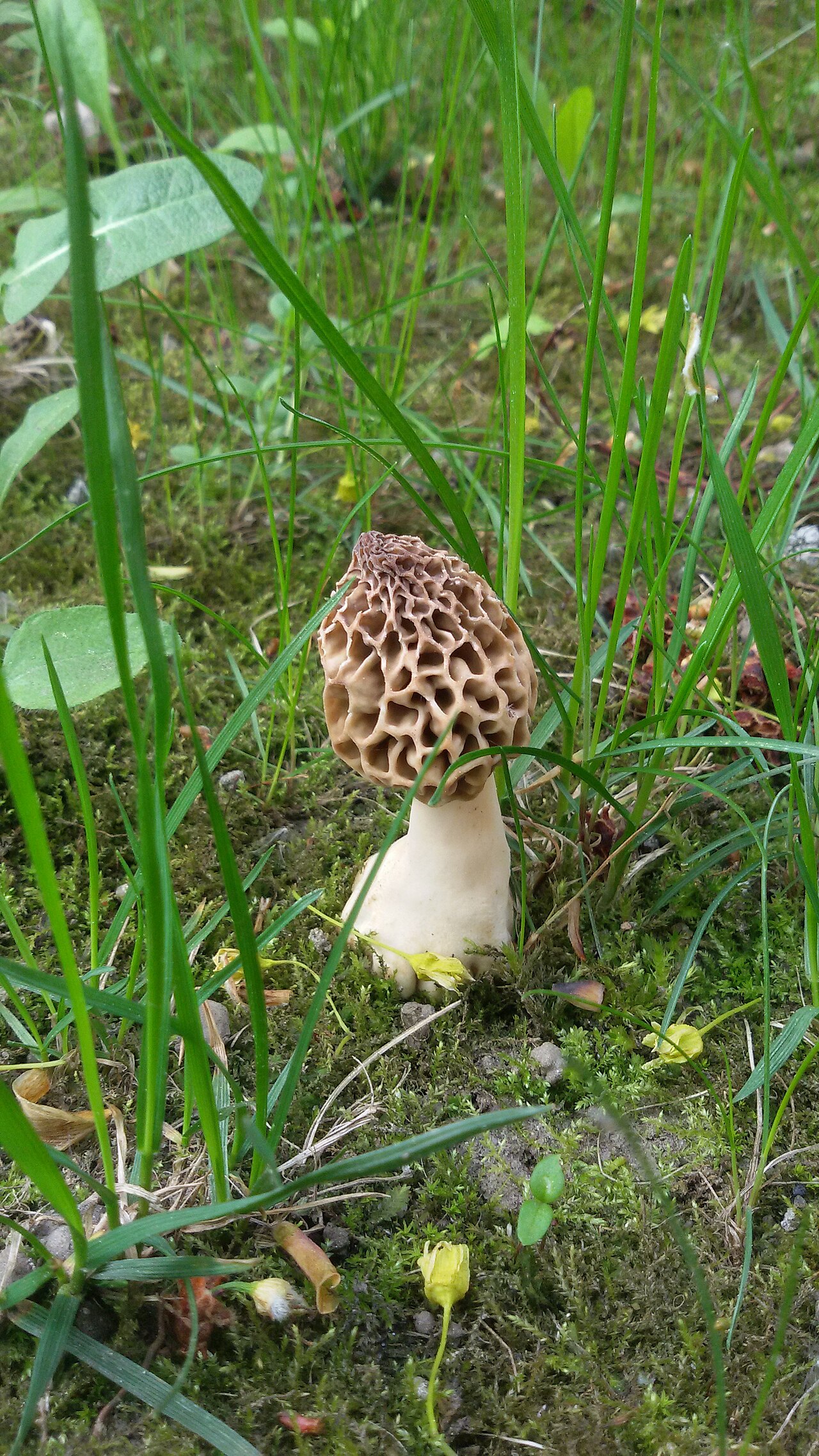
- True morels have a honeycomb-patterned cap with defined pits and ridges. The cap is attached to the stem at the base. When sliced vertically, the interior is completely hollow from top to bottom.
- False morels (Gyromitra) have a wrinkled, brain-like, irregularly lobed cap. The cap may hang freely from the stem or be attached at multiple points. When sliced, the interior is chambered or cottony, not cleanly hollow.
The “hollow test” — slicing the mushroom in half lengthwise to confirm a single, continuous hollow cavity — is the simplest and most reliable way to confirm you have a true morel. Make it a habit with every morel you pick, especially in areas where Gyromitra species are known to occur.
Commercial Picking and Permit Requirements
Post-fire morel harvesting is a significant economic activity. Fresh burn morels sell for $15–$40 per pound at buying stations that set up near productive burn areas each spring. Dried morels can fetch $150–$300 per pound retail. For commercial pickers, a good burn season can generate tens of thousands of dollars in income over a few weeks.
In the United States, mushroom harvesting on National Forest land requires a permit from the U.S. Forest Service. There are two types:
- Personal use permits are typically free or cost a nominal fee ($5–$20) and allow harvesting of limited quantities (usually 1–5 gallons per day) for personal consumption.
- Commercial harvest permits are required for anyone selling their harvest. Costs vary by National Forest and year, typically ranging from $50 to $200 for a season permit. Some forests also set daily or seasonal harvest limits.
Individual National Forests have discretion over permit requirements and may impose area closures in active burn zones due to safety concerns (falling trees, unstable terrain). Check with the local Ranger District before heading out.
In British Columbia, commercial mushroom harvesting on Crown land requires a permit from the BC Ministry of Forests. BC's system is more formalized than the US, with designated harvesting areas and permit quotas.
Harvesting on private land always requires landowner permission. Harvesting in National Parks is generally prohibited in both the US and Canada.
Environmental Ethics of Foraging in Recovering Landscapes
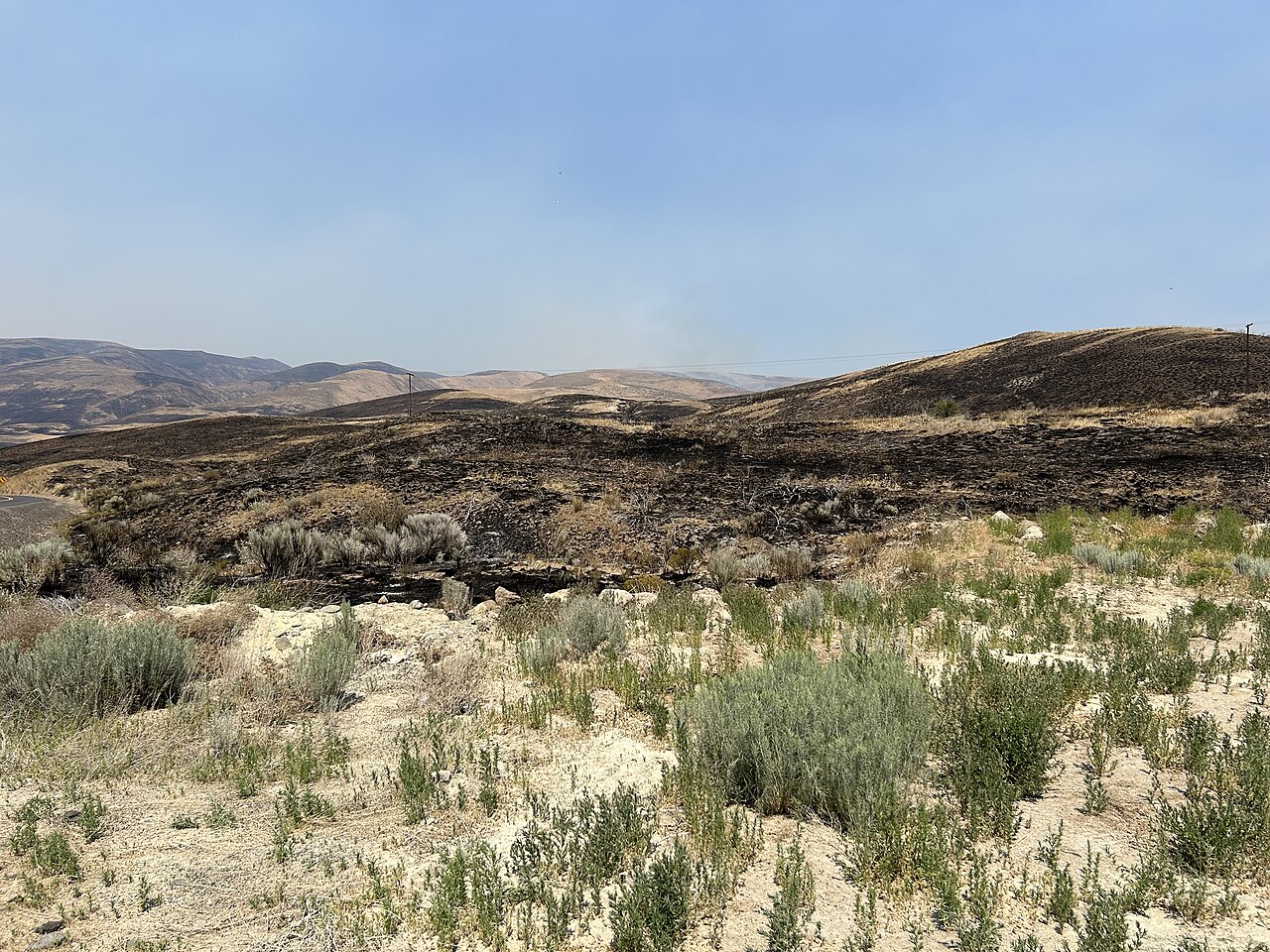
Burned forests are recovering ecosystems. In the first years after a fire, the landscape is fragile. Soil crusts are reforming, seedlings are germinating, and the remaining root networks are stabilizing hillsides against erosion. When thousands of foragers descend on a burn scar, the ecological impact is real.
Soil compaction and erosion. Foot traffic on burned hillsides, especially on steep slopes, can accelerate erosion. Burned soil lacks the root networks and organic cover that hold it in place. Trails carved by heavy foot traffic can become channels for water runoff.
Vehicle damage. The morel rush often brings hundreds of vehicles into areas with minimal road infrastructure. Driving off established roads in burn areas causes lasting damage to recovering soils.
Disturbance to wildlife. Post-fire landscapes are critical habitat for certain species. Woodpeckers and other cavity-nesting birds depend on standing dead trees (snags). Ground-nesting species may be displaced by heavy human activity during nesting season.
Camp and waste impacts. Extended camping in burn areas, common among commercial pickers who stay for weeks, can create sanitation and waste problems in areas with no infrastructure.
Responsible practices for burn morel foraging include:
- Stay on established roads and trails wherever possible.
- Use mesh bags for harvesting to allow spore dispersal as you walk.
- Cut morels at the base rather than pulling them up, which disturbs the soil and mycelium.
- Pack out all trash. Leave the burn area cleaner than you found it.
- Respect area closures. They exist for safety reasons — falling dead trees (snags) in burn areas kill people every year.
- Be mindful of the broader ecosystem. You are a guest in a recovering landscape.
Safety in Burn Areas
Burned forests are genuinely dangerous places. The romance of morel hunting in blackened landscapes should not obscure the real risks.
Falling snags are the primary hazard. Dead trees with burned root systems can topple without warning, especially on windy days. Multiple fatalities have occurred among morel hunters struck by falling snags. Always be aware of the trees above you and avoid hunting in high winds.
Unstable terrain. Burned hillsides can have hidden holes, collapsed root cavities, and loose soil. Ankle injuries and falls are common.
Ash pits. Stumps and large root systems can burn underground for months, leaving deep pits of fine ash that look like solid ground. Stepping into an ash pit can cause serious burns even months after the fire.
Remote locations. Many productive burn areas are far from roads and cell service. Carry appropriate backcountry gear, inform someone of your plans, and consider carrying a personal locator beacon.
The post-fire morel rush is one of the most extraordinary intersections of ecology, economics, and outdoor recreation in North America. It is a direct consequence of wildfire, which is itself a direct consequence of drought, forest management, and climate change. The morels fruiting in the ashes are a reminder that destruction and renewal are inseparable processes in forest ecosystems.
For the forager, a productive burn offers a once-in-a-lifetime harvest. For the ecologist, it offers a window into how fungal networks respond to catastrophic disturbance. And for anyone willing to hike into a blackened landscape and look closely at the ground, it offers something rarer still: evidence that the first signs of life returning to a devastated forest are not green shoots but gray, honeycombed mushrooms pushing up through the ash.