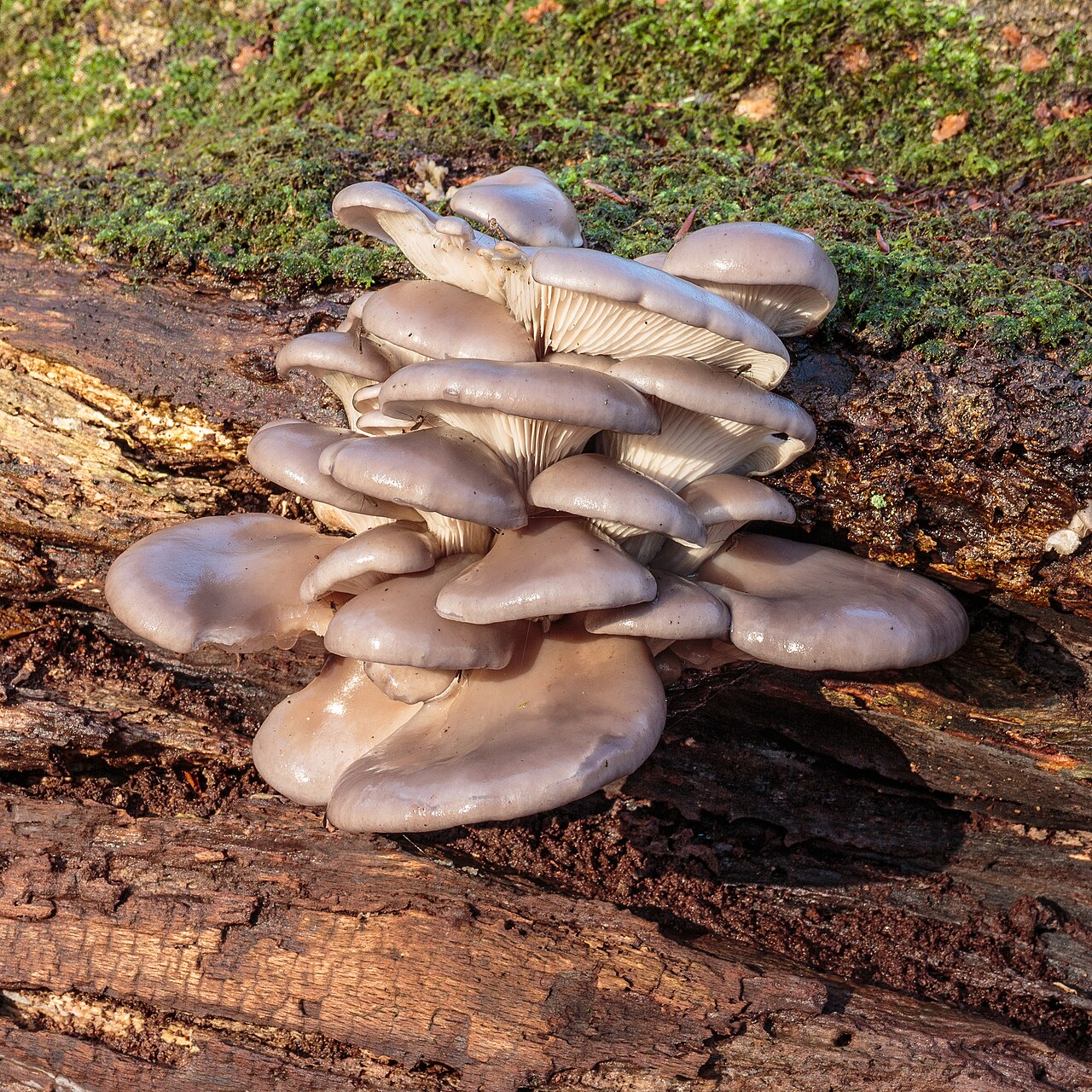
Oyster Mushroom Katsu
Photo by Famberhorst · Wikimedia Commons · CC BY-SA 4.0
Japanese katsu, traditionally made with pork or chicken, works surprisingly well with large oyster mushroom caps. The mushroom holds together through the breading and frying, and you end up with something that has a crispy outside and a soft, savory inside. With tonkatsu sauce, shredded cabbage, and rice, this is proper comfort food.
Ingredients
- 4-6 large oyster mushroom caps (the biggest you can find)
- 60g all-purpose flour
- 2 eggs, beaten
- 120g panko breadcrumbs
- Neutral oil for frying (about 3cm deep)
- Tonkatsu sauce (or mix: 2 tbsp ketchup + 2 tbsp Worcestershire + 1 tsp soy sauce + 1 tsp sugar)
- Shredded cabbage, steamed rice, lemon wedges
Method
- 1
Select the largest oyster mushroom caps. Gently press them flat between your palms to compress slightly (this helps them hold the breading).
- 2
Set up a breading station: flour in one dish, beaten eggs in another, panko in a third. Season the flour with salt and pepper.
- 3
Dredge each mushroom cap in flour (shake off excess), dip in egg, then press firmly into panko on both sides.
- 4
Heat oil to 170C/340F in a deep pan. Fry the katsu pieces for 2-3 minutes per side until deep golden brown. Drain on a wire rack.
- 5
Slice into strips, arrange over shredded cabbage with rice. Drizzle with tonkatsu sauce and serve with lemon wedges.
Forager's tip
Oyster mushrooms are one of the easiest wild mushrooms to identify. They grow in shelf-like clusters on dead or dying hardwood trees, have white to grey caps, and decurrent gills running down a stubby off-center stem. No deadly species exist within the Pleurotus genus. However, angel wings (Pleurocybella porrigens), a different genus, can be confused with them. Angel wings are thinner, grow on conifer wood, and have caused fatalities in Japan. Stick to hardwood-growing oysters and you're safe.
What it tastes like
Oyster mushrooms have a mild, slightly anise-like flavor. The taste is gentle, almost delicate, which makes them a perfect blank canvas for bold seasonings. In katsu form, the crispy panko contrasts with the silky mushroom inside. Think of a chicken nugget, but softer and more interesting.
Where to find Oyster Mushroom in the wild

Based on reported sightings worldwide
Truly cosmopolitan — found on every continent except Antarctica. Throughout North America, Europe, Asia, Australia, Africa, and South America. One of the most widely distributed edible mushrooms on Earth. Full species guide →
Found something in the wild you can't identify? Try Orangutany, it can ID mushrooms from a photo.